Summary: A UCL-led study finds that the brain treats money obtained through harming others as less valuable than money earned without harming anyone.
Source: UCL
Ill-gotten gains register as less valuable in the brain than ethically earned rewards, new study shows
A new study led by researchers at University College London (UCL) and published in Nature Neuroscience reveals that the brain devalues monetary rewards obtained by harming others. Funded by Wellcome, the research identifies neural mechanisms that may explain why most people are reluctant to seek profits at someone else’s expense.
“When we make choices, a network of brain regions computes how valuable each option is,” said lead author Dr Molly Crockett of the University of Oxford, who conducted the research while at the UCL Wellcome Centre for Neuroimaging. “Rewards gained through immoral actions evoke weaker responses in that value network, which helps explain why many people find ill-gotten gains less appealing.”
The study monitored volunteer participants with functional MRI while they made decisions that traded money for the delivery of mild electric shocks. The experimental design allowed the team to compare how the brain values profit when the cost is inflicted on oneself versus on another person. The results build on earlier work by the same group showing that people generally dislike harming others more than harming themselves.
Twenty-eight pairs of participants were anonymously matched and randomly assigned to the roles of “decider” or “receiver.” Deciders chose between different monetary amounts paired with varying numbers of electric shocks. Half of the choices concerned shocks applied to the decider; the other half concerned shocks applied to the receiver. In every case, the decider received the money if they accepted the option. Shocks were calibrated individually so they were mildly painful but tolerable. Deciders made their choices while undergoing fMRI scanning.
Across choices, a brain network known to compute value—centred on the striatum—became active. This network signalled how advantageous each option was as participants weighed higher payments against fewer shocks. Crucially, the striatal response to money was reduced when the payment was contingent on harming another person, compared with payments tied to harming one’s self. That reduction in striatal value signals was seen most clearly in participants who chose ethically and avoided profiting from harming others.
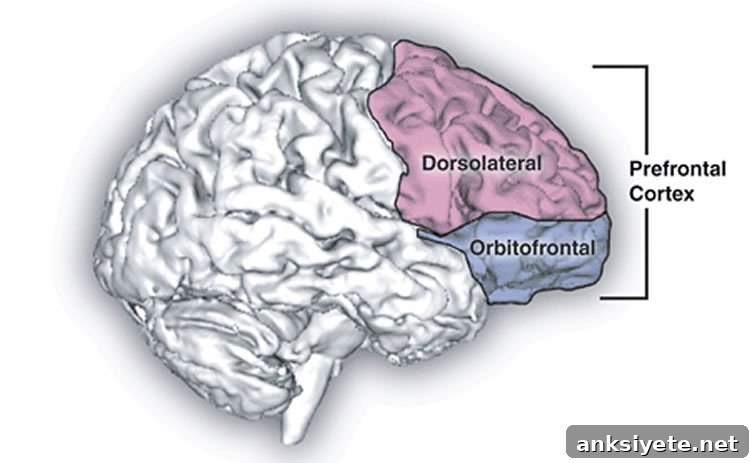
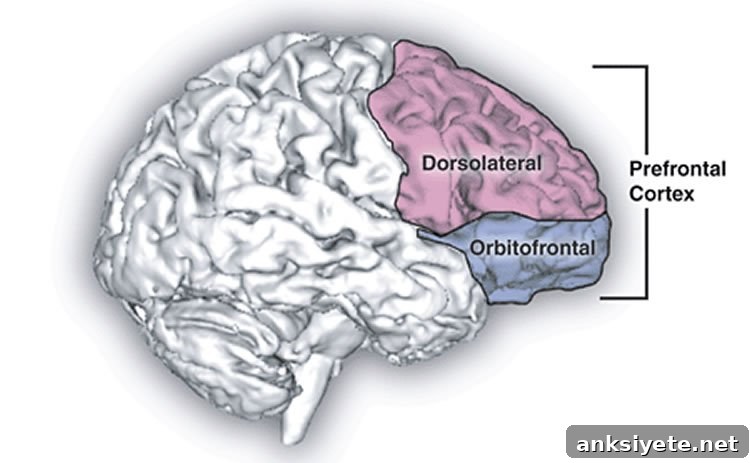
At the same time, activity in the lateral prefrontal cortex (LPFC)—a region implicated in moral reasoning and rule-based judgments—was highest on trials where inflicting pain produced only small monetary benefits. In a follow-up task, participants rated the blameworthiness of choices that harmed others for money; the most blameworthy actions matched those trials that elicited strong LPFC responses. Together, the findings indicate that the LPFC encodes assessments of moral blame and interacts with value-sensitive regions such as the striatum.
Functional connectivity analyses showed that when participants refused to profit from harming others, the LPFC communicated more strongly with the dorsal striatum. This suggests a neural pathway by which moral rules—represented in prefrontal cortex—can suppress or modulate the striatal coding of reward for actions that harm others. In other words, moral evaluation appears to reduce the subjective value of ill-gotten gains.
“Our findings suggest the brain internalizes how others might judge our actions, simulating potential blame even when anonymity is assured,” Dr Crockett explained. Senior author Professor Ray Dolan (UCL Max Planck Centre for Computational Psychiatry and Ageing Research) added: “We show how decision values flexibly reflect moral consequences. A key question for future work is when and how this circuitry is altered in contexts such as antisocial behaviour.”
Funding: Wellcome
Source: UCL, Chris Lane. Image adapted from the UCL news release; used for illustrative purposes.
Original research: Article titled “Moral transgressions corrupt neural representations of value” by Molly J Crockett, Jenifer Z Siegel, Zeb Kurth-Nelson, Peter Dayan & Raymond J Dolan. Published in Nature Neuroscience, online May 1, 2017. DOI: 10.1038/nn.4557
Moral transgressions corrupt neural representations of value
Moral systems universally discourage harming others for personal gain, but how moral principles shape neural valuation is not well understood. Using a task that quantified how much participants discounted profit when it required harming others versus themselves, the study investigated relationships between moral behavior, profit, and pain encoding in the brain. Most participants placed a higher subjective cost on harming others than on harming themselves. Those with stronger moral preferences showed reduced dorsal striatal responses to profit that resulted from harming others. The lateral prefrontal cortex encoded profit gained from harming others and tracked perceived blameworthiness; moral decisions also increased functional connectivity between lateral prefrontal cortex and a profit-sensitive dorsal striatal region. These results suggest that moral behavior in this paradigm is associated with a devaluation of ill-gotten rewards, mediated by prefrontal modulation of striatal value representations.
This summary synthesizes findings from the published study and accompanying press release. The research contributes to understanding how moral judgments and social blame can alter the neural valuation of rewards, providing insight into why many individuals refrain from profiting at others’ expense.