
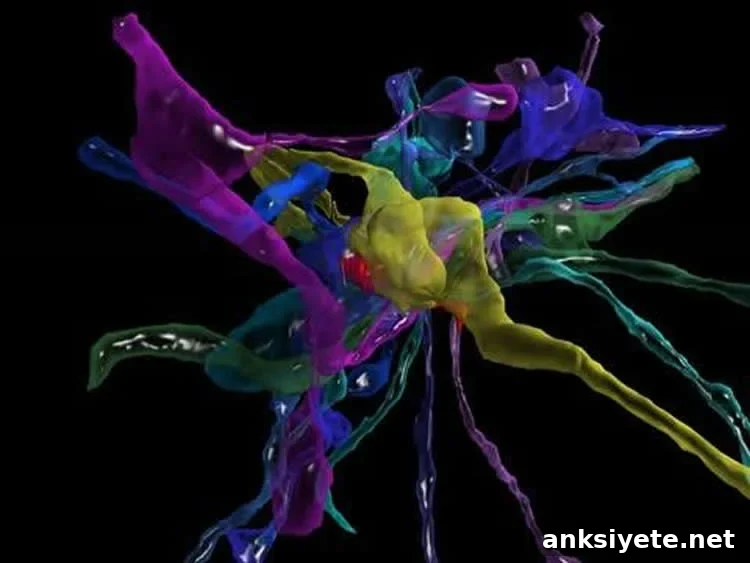
A new imaging tool developed by researchers in Boston promises to transform how we explore the brain, much like how the telescope transformed space exploration. In the first published demonstration of the technology, appearing July 30 in the journal Cell, the team generated nanoscale-resolution images of an adult mouse brain region—revealing structural detail at a scale previously unattainable. The long-term aim of the project is to establish a publicly accessible national brain observatory to support broad scientific inquiry.
“I’m a strong believer in bottom-up science,” says senior author Jeff Lichtman of Harvard University. “I would rather generate hypotheses from the data and then test them. For imaging specialists, being able to see these details is extraordinary. We now have an opportunity to peer into a structure that has been difficult to examine in depth for a long time.”
The research team began mining their dense imaging datasets by focusing on the part of the mouse cortex that receives sensory input from whiskers—highly sensitive tactile organs that mice use for orientation. To separate and identify every microstructure in the volume, they used VAST, a visualization and annotation tool developed by co-author Daniel Berger (Harvard and MIT). The software allowed researchers to color-code and isolate individual objects such as neurons, glial cells, and blood vessel cells for detailed analysis.
“The brain’s complexity far exceeds what we imagined,” says first author Narayanan “Bobby” Kasthuri of Boston University School of Medicine. “We once pictured neurons following a neat, orderly plan. The actual wiring is much messier, with patterns that are not explained by simple randomness. Still, careful inspection reveals reproducible structure and organization that can now be studied quantitatively.”
One important insight from their saturated reconstruction is that physical proximity alone does not reliably predict synaptic connections. By tracing the trajectories of every excitatory axon and recording both synaptic and non-synaptic juxtapositions with dendritic spines, the team showed that closeness between axons and spines is insufficient to determine connectivity—a key result for models of brain wiring and connectomics.
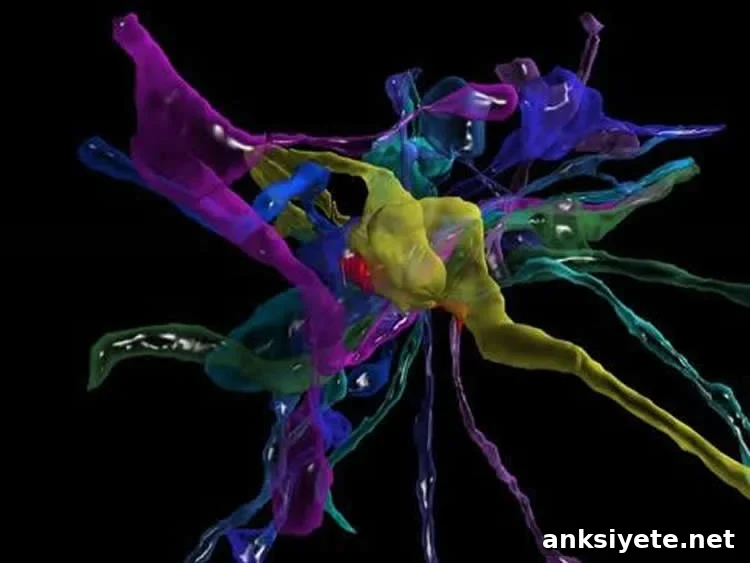
The new platform gives researchers the ability to ask precise structural questions about brain health and disease. It can reveal how a neurological disorder alters connections, how human brains differ from other species, and how individual experience shapes neural wiring. Comparing neuron-to-neuron connectivity across individuals—for example between an infant, a mathematical expert, and someone with schizophrenia—could dramatically advance our understanding of how neural circuits influence cognition, behavior, and mental health.
Currently, the expense and data storage requirements for nanoscale whole-volume imaging remain substantial, but the team expects costs to fall over time, following patterns seen in genomic technologies. To enable broad access to these rich datasets, the researchers are partnering with Argonne National Laboratory with the vision of creating a national brain laboratory accessible to neuroscientists worldwide in the coming years.
“Some colleagues view this work as an expensive diversion from more immediate research questions,” Lichtman acknowledges. “But when data consistently uncovers unexpected features, you know the investment is yielding discovery. Every time we examine this dataset we find new structures or relationships we hadn’t seen before.”
Funding: This research was supported by NIH/NINDS, Conte, the MURI Army Research Office, NSF, DARPA, the Human Frontier Science Program, JHU Applied Physics Laboratory, the Research Program for Applied Neuroscience, the Howard Hughes Medical Institute, Nvidia, Intel, and Google.
Source: Joseph Caputo – Cell Press
Image Credit: Kasthuri et al., Cell 2015
Original Research: Abstract for “Saturated Reconstruction of a Volume of Neocortex” by Narayanan Kasthuri et al., published online June 1, 2015. DOI: 10.1016/j.cell.2015.06.054
Abstract
Saturated Reconstruction of a Volume of Neocortex
Highlights
• Tape-based pipeline for electron microscopic reconstruction of brain tissue
• Annotated database of 1,700 synapses from a saturated reconstruction of cortex
• Excitatory axon proximity to dendritic spines is not sufficient to predict synapses
Summary
The authors describe automated technologies for probing neural tissue structure at nanometer resolution and apply them to produce a saturated reconstruction of a sub-volume of mouse neocortex. In this reconstruction, all cellular objects (axons, dendrites, and glia) and many subcellular components (synapses, synaptic vesicles, spines, spine apparatus, postsynaptic densities, and mitochondria) are rendered and catalogued in a searchable database. Using these data, the team examined physical properties of brain tissue and tested assumptions about connectivity rules. By tracing all excitatory axons and recording their juxtapositions with every dendritic spine, they demonstrated that mere physical proximity does not suffice to predict synaptic connectivity, challenging the so-called Peters’ rule. This online, minable database provides open access to the intrinsic complexity of neocortex and enables further data-driven investigations.