
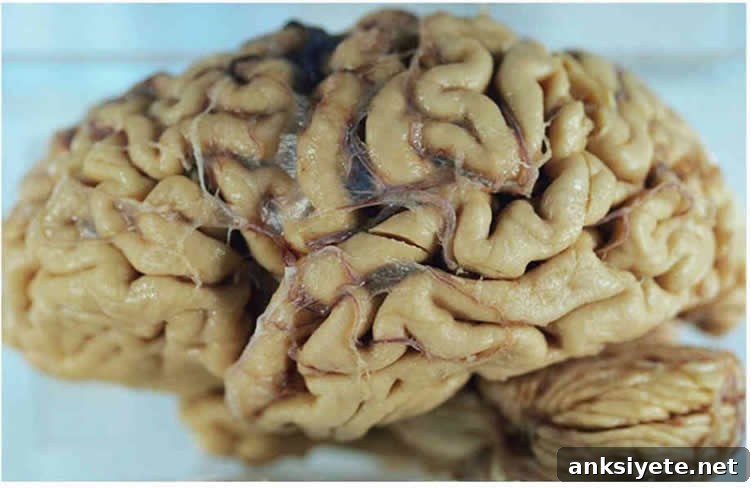
Delayed Word Processing on EEG May Predict Alzheimer’s Risk in Patients with Mild Cognitive Impairment
Summary: Researchers at the University of Birmingham report that a delayed neural response to written words, detected by EEG, could indicate a higher risk of developing Alzheimer’s disease among people with mild cognitive impairment (MCI).
Source: University of Birmingham
Overview
New research led by the University of Birmingham suggests that subtle delays in how the brain processes written words may be an early sign that a person with mild cognitive impairment (MCI) is at increased risk of developing Alzheimer’s disease. The study used electroencephalography (EEG) to measure the timing and pattern of brain activity as participants read single words following short category cues.
Study design and participants
Researchers recorded EEG data from a group of 25 participants that included healthy older adults, individuals diagnosed with MCI, and a subset of MCI patients who went on to develop Alzheimer’s disease within three years of their MCI diagnosis. The team placed scalp electrodes to capture the brain’s electrical responses while participants completed a word comprehension task on a computer screen.
Why language processing?
Language decline is a prominent feature of Alzheimer’s disease, but it often appears later in the course of the illness. The research team focused on language processing to determine whether early, subtle anomalies in the neural networks that support comprehension could serve as a biomarker indicating future conversion from MCI to Alzheimer’s disease.
Experimental task and EEG measurements
In the experiment, each trial began with an auditory category description (for example, “a type of wood”) followed by a single visual target word that was either semantically congruent (e.g., “oak”) or incongruent with the category. Previous studies have shown that the brain typically generates a measurable response to a written word within about 250 milliseconds, which can be tracked with EEG.
Key findings
The researchers found pronounced differences in EEG oscillatory activity between the groups. Specifically, participants who later converted from MCI to Alzheimer’s showed a reduced early posterior-parietal theta response (3–5 Hz) triggered by the first presentation of the target word. This early theta activity is associated with access to lexical and syntactic properties of a word.
Additionally, those MCI converters exhibited distinct oscillatory patterns when processing semantically congruent words compared with both MCI non-converters and healthy controls. Both MCI groups also showed atypical alpha-band responses (9–11 Hz) related to verbal learning and memory: unlike controls, the expected reduction in alpha suppression on repeated presentations of the same word was not observed in either MCI group.
Interpretation and implications
These results indicate that a breakdown in the brain networks supporting basic lexical access and semantic processing may precede the more obvious language impairments seen in later-stage Alzheimer’s disease. The authors propose that these early anomalies in EEG oscillations could serve as a non-invasive, low-cost biomarker to help identify which MCI patients are at greatest risk of converting to Alzheimer’s.
Dr. Ali Mazaheri of the University of Birmingham commented that language processing is a crucial cognitive domain and that detecting early neural anomalies could guide timely intervention. Dr. Katrien Segaert added that the observed EEG abnormalities in converters were unexpected given language typically declines later in Alzheimer’s, suggesting this neural breakdown may be an important early indicator.
Next steps
The research team plans to validate this potential biomarker in larger patient populations in the UK to determine whether it specifically predicts Alzheimer’s disease or more generally indicates temporal-lobe-related dementias. If validated, EEG-based measures of word processing could be incorporated into routine clinical evaluations for patients who present to primary care with memory concerns, enabling earlier pharmacological or therapeutic interventions.
About the research
This study was conducted by the University of Birmingham’s School of Psychology and Centre for Human Brain Health in collaboration with researchers from the Universities of Kent and California. The work was published in the journal NeuroImage: Clinical under the title “EEG oscillations during word processing predict MCI conversion to Alzheimer’s disease.” The authors include Ali Mazaheri, Katrien Segaert, John Olichney, Jin‑Chen Yang, Yu‑Qiong Niu, Kim Shapiro, and Howard Bowman.
Abstract (summary)
Only a subset of MCI patients progress to dementia. This study examined whether subtle EEG anomalies during a word comprehension task could predict conversion from MCI to Alzheimer’s disease. Participants included amnestic MCI patients—some of whom converted to Alzheimer’s within three years—and elderly controls. The MCI converters showed reduced early posterior-parietal theta activity during initial word presentation and distinct oscillatory responses to semantically congruent words, indicating basic anomalies in lexical and semantic processing. Both MCI groups displayed atypical alpha-band responses to repeated words compared with controls. The findings suggest that early breakdowns in language-related brain networks may foreshadow conversion to Alzheimer’s disease.
Credits: University of Birmingham. Article summary prepared from the published research and institutional reporting.