Summary: Researchers present a unified framework for naming and classifying the many cell types of the cerebral cortex, a step that could clarify how brain networks are organized and function.
Source: Columbia University
The human brain contains roughly 100 billion neurons, connected in enormously complex networks—the kind of biological labyrinth that Spanish neuroanatomist Ramón y Cajal once described as “impenetrable jungles.”
Decoding how the brain operates, and how it malfunctions in disease, depends on a clear understanding of the distinct classes of neurons and how those classes interconnect. Knowing which cell types exist, how they differ, and how they form circuits is fundamental to mapping brain function.
In a recent Nature Neuroscience paper, an international team led by Columbia University researchers proposes a standardized, community-driven nomenclature for neurons of the cerebral cortex—the brain’s outer layer responsible for attention, perception, memory, language, and consciousness.
“A broadly accepted classification system is essential for cataloguing hundreds of neuronal types and their properties,” said Rafael Yuste, professor in Columbia’s Department of Biological Sciences. “If we can understand how the cortex is assembled and operates, we move closer to a scientific understanding of the mind.”
Classifying neurons has challenged neuroscientists since the field’s beginnings. Attempts based solely on anatomy, physiology, or molecular markers often ran into difficulty because of the enormous diversity among cortical cells. Differences in methodology, limited sample sizes, and inconsistent terminology have all hindered consensus.
Over the past two decades, however, advances developed in the wake of the Human Genome Project have enabled high-throughput molecular profiling of individual cells. Single-cell RNA sequencing and related techniques can now profile thousands to tens of thousands of cells, revealing gene-expression patterns that distinguish cell populations with much greater precision than before.
“This molecular revolution is producing datasets that are increasingly complete, accurate, and permanent—the qualities biologists strive for in foundational resources,” Yuste noted. By sequencing RNA from individual cells at scale, researchers can systematically map the transcriptomic signatures that underlie cell identity.
These large transcriptomic datasets allow researchers to identify clusters of cells with shared molecular profiles. In many cases, these transcriptomic clusters align with cell types previously defined by shape or electrical behavior and appear conserved across cortical areas and even across species. That convergence strengthens the case for adopting transcriptome-based definitions as a central pillar of cell-type taxonomy.
Two years ago, delegates at an international meeting on cortical neurons in Copenhagen recognized that the field had reached a point where creating a unified classification was feasible and timely. Following those discussions, a group of 74 scientists proposed a community-wide framework using single-cell RNA sequencing as the backbone for naming and organizing cortical cell types. This proposal, termed the “Copenhagen Classification,” is presented in the Nature Neuroscience article.
“Establishing a shared framework could be a historic step toward resolving one of neuroscience’s central problems,” Yuste said. A standardized taxonomy would benefit experimentalists and clinicians alike, shaping how data are archived, compared, and interpreted across laboratories.
The authors stress that a practical classification must be flexible and iterative. As neuroscience increasingly generates digital data, the proposed system should support regular updates and community contributions. The paper recommends using computational tools and data-aggregation strategies—akin to methods used in software industries—to integrate new datasets and refine classifications over time.
Such a community-based, probabilistic taxonomy would not only formalize current knowledge about neocortical cell types but also accommodate findings from different experimental approaches, developmental stages, and species. The authors argue that this model could serve as a template for building cell-type atlases in other parts of the body as well.
“It’s exciting to think that, with today’s technology and collaborative approaches, neuroscientists may finally overcome a long-standing impasse,” Yuste said. A unified, dynamic classification could accelerate research into how circuits form, process information, and fail in disease, enabling more precise experiments and therapies.
About this neuroscience research article
Source:
Columbia University
Contacts:
Carla Cantor – Columbia University
Image Source:
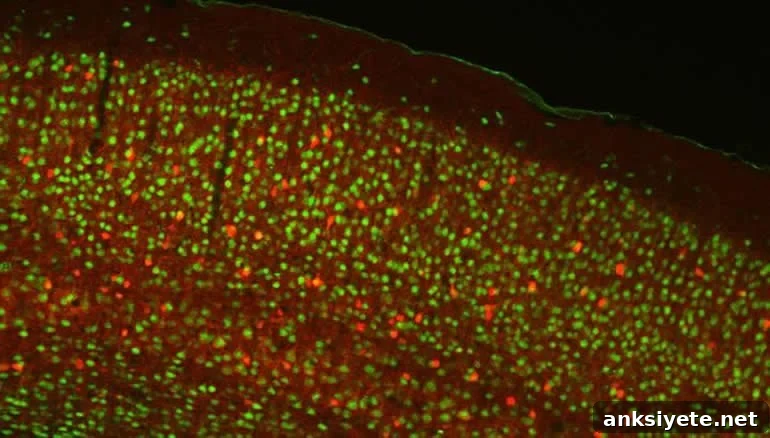
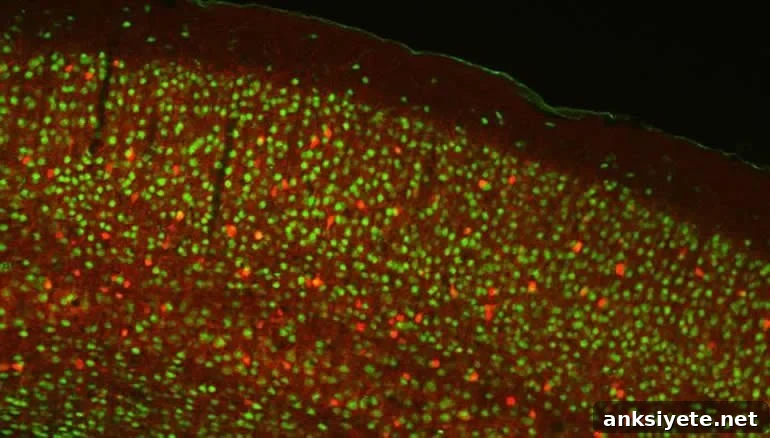
The image is credited to Yuste Lab, Columbia University.
Original Research: Open access
“A community-based transcriptomics classification and nomenclature of neocortical cell types” by Rafael Yuste, Michael Hawrylycz, Nadia Aalling, Argel Aguilar-Valles, Detlev Arendt, Ruben Armananzas Arnedillo, Giorgio A. Ascoli, Concha Bielza, Vahid Bokharaie, Tobias Borgtoft Bergmann, Irina Bystron, Marco Capogna, Yoonjeung Chang, Ann Clemens, Christiaan P. J. de Kock, Javier DeFelipe, Sandra Esmeralda Dos Santos, Keagan Dunville, Dirk Feldmeyer, Richárd Fiáth, Gordon James Fishell, Angelica Foggetti, Xuefan Gao, Parviz Ghaderi, Natalia A. Goriounova, Onur Güntürkün, Kenta Hagihara, Vanessa Jane Hall, Moritz Helmstaedter, Suzana Herculano, Markus M. Hilscher, Hajime Hirase, Jens Hjerling-Leffler, Rebecca Hodge, Josh Huang, Rafiq Huda, Konstantin Khodosevich, Ole Kiehn, Henner Koch, Eric S. Kuebler, Malte Kühnemund, Pedro Larrañaga, Boudewijn Lelieveldt, Emma Louise Louth, Jan H. Lui, Huibert D. Mansvelder, Oscar Marin, Julio Martinez-Trujillo, Homeira Moradi Chameh, Alok Nath, Maiken Nedergaard, Pavel Němec, Netanel Ofer, Ulrich Gottfried Pfisterer, Samuel Pontes, William Redmond, Jean Rossier, Joshua R. Sanes, Richard Scheuermann, Esther Serrano-Saiz, Jochen F. Steiger, Peter Somogyi, Gábor Tamás, Andreas Savas Tolias, Maria Antonietta Tosches, Miguel Turrero García, Hermany Munguba Vieira, Christian Wozny, Thomas V. Wuttke, Liu Yong, Juan Yuan, Hongkui Zeng & Ed Lein. Nature Neuroscience.
Abstract
A community-based transcriptomics classification and nomenclature of neocortical cell types
Understanding cortical circuit function requires a reliable catalog of the cells that compose those circuits. Previous classification attempts based on anatomy, physiology, or limited molecular markers did not produce a universally accepted taxonomy, in part because data were sparse and varied. Single-cell transcriptomics now enables robust, high-throughput profiling of individual cortical cells, producing datasets that can achieve broad coverage and reproducibility. Statistical analysis of these data uncovers clusters corresponding to previously recognized cell types and patterns that are conserved across cortical areas and species. To leverage these advances, the authors propose adopting a hierarchical, transcriptome-based taxonomy for mammalian neocortex that uses standardized nomenclature and probabilistic definitions of cell types. This framework should integrate multiple data types, developmental stages, and comparative species information. A community-driven classification supported by data aggregation tools—such as a shared knowledge graph—would create a common foundation for studying cortical circuits and could serve as a model for cell atlases in other tissues.