
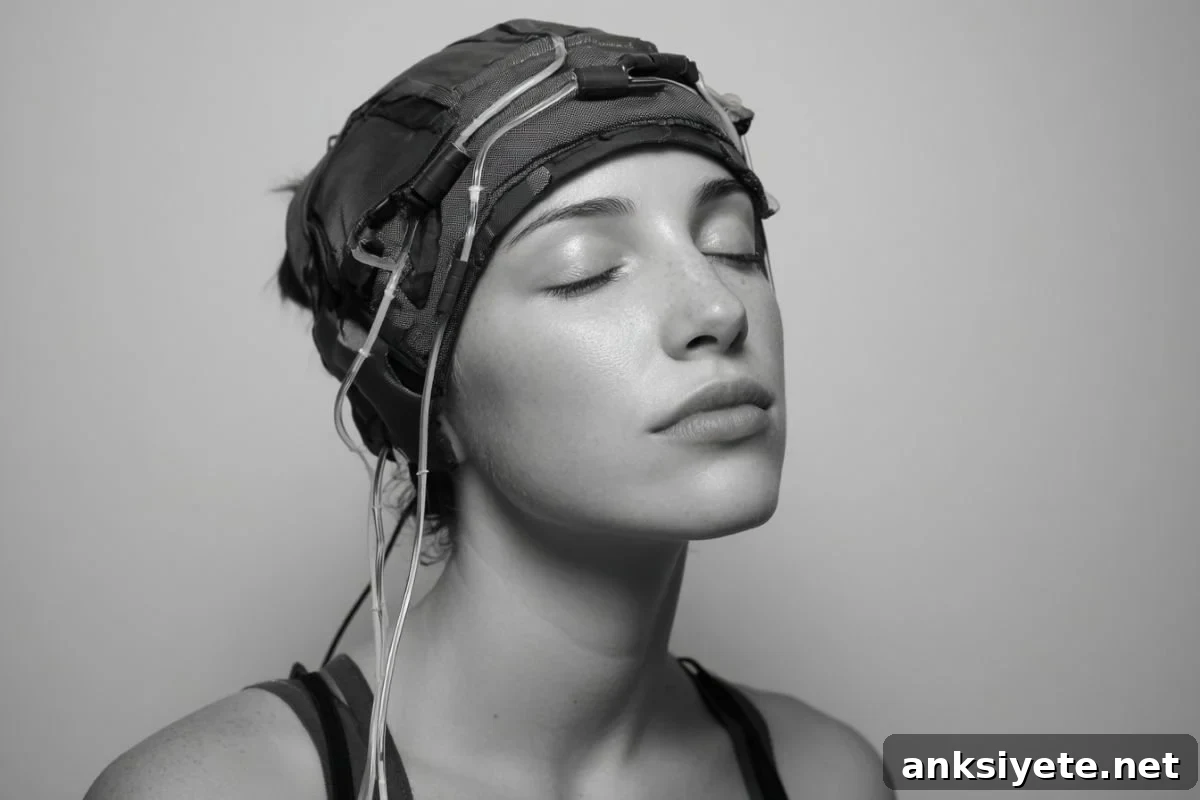
Summary: A randomized controlled trial from Penn State found that localized head cooling can quickly reduce depressive symptoms and produce measurable calming brain activity in healthy adults. The noninvasive intervention used a liquid-circulating cooling cap kept at 33°F for 30 minutes and was evaluated with electroencephalography (EEG) and standard mood questionnaires over a one-week protocol.
Using EEG to track brain activity, the researchers observed an immediate increase in alpha-band activity—a marker associated with relaxed, wakeful calm—after a single cooling session. Across the week-long study, participants who received daily head-cooling sessions reported larger reductions in self-reported depressive symptoms than those who sat quietly in the same environment without the cap. The findings suggest head cooling is a low-risk, acute relaxation tool with potential mental health benefits for the general population.
Key Facts
- Origin of the idea: The study draws on prior Penn State sports medicine work showing regular head cooling helped athletes recover from concussions more quickly and reduced their symptoms.
- Study design: Twenty-four healthy college students (ages 18–26) provided baseline mental-health questionnaires, cognitive testing, and EEG recordings. Half the group wore a fitted liquid-circulating cooling cap held at 33°F for 30 minutes in a dimly lit room; the control group sat in identical conditions without a cap. Sessions repeated daily for one week, with EEG and questionnaires administered before, immediately after the first session, and the day after the final session.
- Immediate EEG change: The cooling group showed a 4% increase in alpha power immediately after the first session, while control participants showed a 0.5% decrease, indicating an acute calming effect on neural activity.
- No lasting rewiring: EEG recordings taken the day after the final session revealed no persistent differences in baseline alpha levels between groups, showing the observed brain-wave shifts were transient rather than permanent.
- Mood outcomes: Both groups reported reduced depressive symptoms over the week, but the head-cooling group experienced a significantly larger decrease, suggesting the intervention added benefit beyond the relaxing setting itself.
- Likely mechanism: Although investigators initially considered a direct physiological effect of cooling on neural electrical activity, the EEG pattern and participant feedback point toward a psychosomatic pathway: the cooling sensation appears pleasurable and relaxing, improving mood and then influencing brain-wave patterns.
- Clinical perspective: Authors stress that head cooling is not a substitute for psychiatric care. Instead, it may serve as an accessible, low-risk, drug-free acute relaxation option—comparable to using cold compresses for headaches and migraines.
Source: Penn State
Wearing a cooling cap for 30 minutes may improve a person’s sense of well-being, according to this Penn State study.
Published in Acta Psychologica, the study reports that head cooling can reduce depressive symptoms and briefly alter brain-wave patterns measured by EEG. The research is exploratory and small in scale, so it does not establish clinical recommendations, but it points to potential mental health benefits for otherwise healthy individuals.
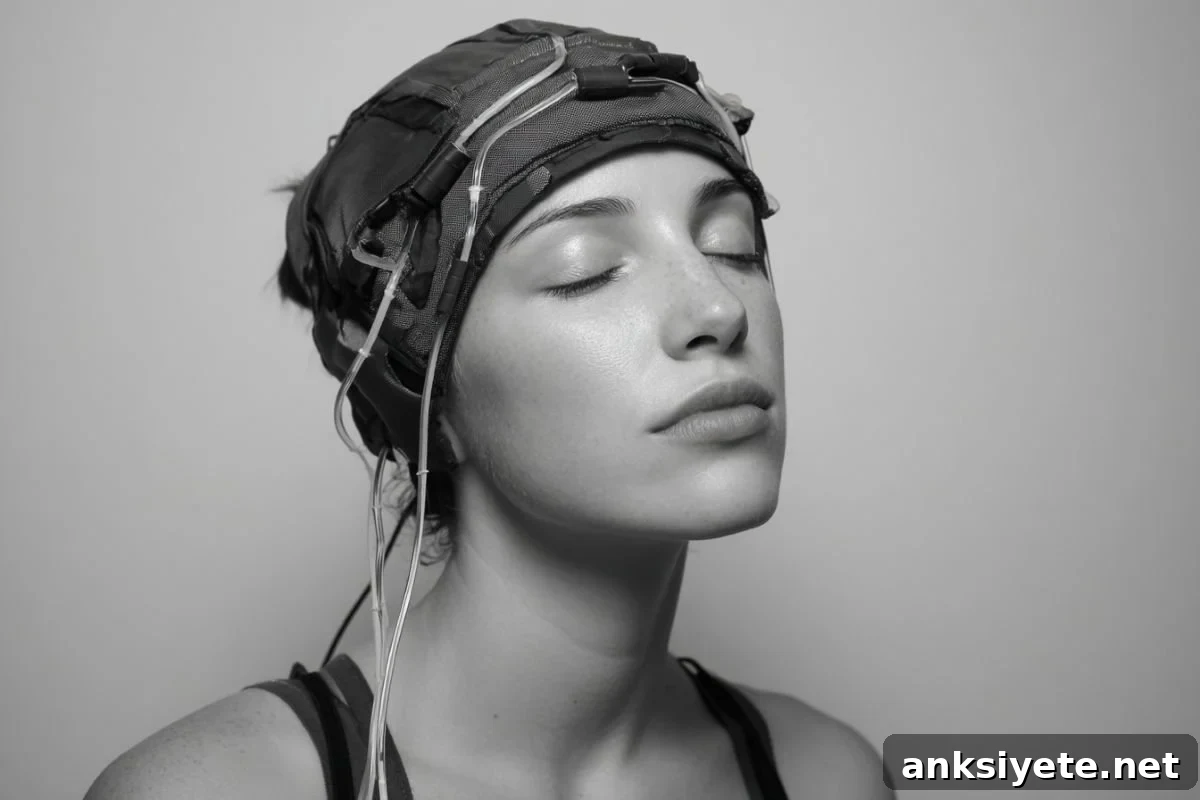
Lead author Semyon Slobounov and colleagues were motivated by earlier findings that head cooling supports recovery after concussion. Co-author Owen Griffith noted: “Mood is closely linked to cognition and overall brain function. Participants found head cooling pleasant, and that enjoyment appears to have improved mood and altered brain activity.”
Participants first completed baseline questionnaires and EEGs. In the first experimental session they sat in a dim room listening to ocean sounds for 30 minutes; half wore the fitted cooling cap that circulated liquid to maintain 33°F near the scalp. Questionnaires and EEG were repeated immediately after that session. Participants then completed daily cooling or quiet-sitting sessions for six more days without testing, and returned for a final assessment the day after the last session. This schedule allowed the team to compare immediate effects and short-term changes over the week.
Co-author Laura Cooney explained that alpha waves are associated with relaxed wakefulness and lower overall cortical activation. The 4% acute increase in alpha power after cooling—contrasted with a small decrease in the control group—supports the interpretation that head cooling produces immediate physiological signs of relaxation. However, the absence of lasting alpha differences the day after the final session indicates the effect on brain-wave baseline is temporary.
Although both groups reported mood improvement from the calming environment, the cooling group had a notably larger reduction in depressive symptom scores across the week. Investigators now favor a psychosomatic explanation: the pleasurable, localized cooling sensation improves mood, which in turn manifests as increased alpha activity on EEG.
Researchers emphasize the intervention’s low risk profile: no drugs, no invasive procedures, and strong participant acceptance. They position head cooling as a possible acute calming adjunct—another tool for people seeking short-term relief from stress or low mood, not a replacement for established treatments for clinical depression.
Key Questions Answered
A: Wearing a 33°F cooling cap for 30 minutes caused an immediate increase in alpha power—about 4% on average—an EEG signature linked to calm, relaxed wakefulness.
Q: Are those brain-wave changes permanent?
A: No. Alpha levels returned to baseline by the day after the final session, indicating the brain-wave shift is temporary, even though mood improvements persisted more in the cooling group over the week.
Q: Does the cold physically rewire neural circuits?
A: The authors conclude the effect is likely psychosomatic: the soothing sensation of cooling improves mood, which then alters brain-wave activity rather than causing direct, lasting electrical rewiring.
Editorial Notes
- This article was edited by a Neuroscience News editor.
- The journal paper was reviewed in full.
- Additional contextual information was added by staff.
About this research on head cooling, EEG, and depression
Author: Aaron Wagner (Penn State)
Source: Penn State
Contact: Aaron Wagner – Penn State
Image credit: Neuroscience News
Original Research: “Selective head cooling intervention improves mental health markers: A multimodal feasibility study” by Zach Napora, Maddie McLaughlin, Owen Griffith, Laura Cooney, Elle McNally, and Semyon M. Slobounov. Acta Psychologica. DOI: 10.1016/j.actpsy.2026.106871 (open access).
Abstract (summary)
Selective head cooling has gained attention for symptom relief after brain injury, but its effects on mental-health markers in people without traumatic brain injury were unclear. This feasibility study implemented a one-week head-cooling intervention and measured cognition, mental-health symptoms, and EEG patterns before, immediately after the first session, and the day after the final session. The head-cooling group showed a significant acute increase in relative alpha EEG power (mean = 4.053%, SD = 3.351) versus controls (mean = −0.053%, SD = 3.351; p = 0.004). Both groups improved on depression measures over the week, but the cooling group had a significantly greater reduction (mean change = −5.167, SD = 6.365) than controls (mean = −0.500, SD = 1.960; p = 0.020). Exploratory analyses suggested interactions between intervention and preexisting anxiety on EEG changes. Overall, selective head cooling shows preliminary promise for short-term reduction of depressive symptoms and transient promotion of relaxation-related brain activity.