
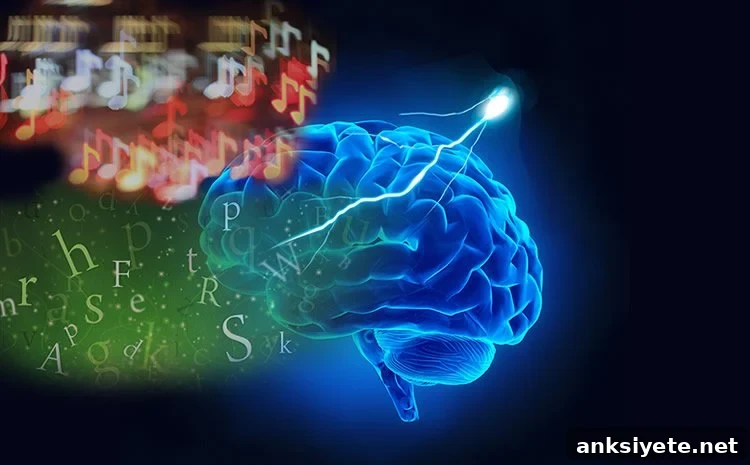
Summary: Researchers investigate the brain networks that process speech and music and find substantial overlap between the two.
Source: Max Planck Institute
Daniela Sammler studies how the brain handles the melodies of speech and music and uncovers many shared neural mechanisms.
A mother croons a lullaby or modulates her voice when speaking to her infant. The baby responds not only to the words but to the melody, rhythm, and emotional tone conveyed through the voice. These melodic features—the rise and fall of pitch, the rhythm of syllables, and the emphasis on certain words—carry meaning and shape social connection from the earliest stages of life.
Daniela Sammler, a neuropsychologist at the Max Planck Institute for Human Cognitive and Brain Sciences in Leipzig, views both musical melody and speech melody as essential social signals. She describes them as a “social glue” and a fundamental, evolutionarily rooted way humans convey emotion and structure information. Both speech and music follow grammars—rules for how units combine—which listeners learn early and that guide expectations and interpretation.
Speech grammar includes not only word order but also prosody: which syllables are stressed, how pitch changes across a sentence, and the cadence that signals questions, statements, or emotions. For example, shifting emphasis in a sentence such as “Mary has given a book to John” changes the pragmatic meaning. Music likewise has tonal and harmonic rules; when a musician breaks these conventions, listeners detect a violation. Neuroimaging studies show that similar brain regions respond to unexpected events in both language and music, suggesting shared processing mechanisms for structural violations.
Music and speech: two uniquely human channels of communication
Sammler argues that it is no accident that humans uniquely developed both speech and music as organized channels of communication. Her research aims to map the neural systems that support these capacities and to determine where they overlap and where they diverge. Her research group approaches this question from two complementary angles: one line of work probes the melody of speech—prosody, word stress, pitch contours, and sentence cadence—while the other focuses on musical melody perception.
To study musicians’ brain activity while they play, Sammler collaborated with the Julius Blüthner piano company to build a piano that can be played inside an MRI scanner. This technical innovation allows scientists to record brain responses while pianists perform, revealing how musical production and rule-based expectations engage motor, auditory, and higher-order cognitive regions. These experiments provide insight into how our expectations about musical structure shape perception and which neural networks support those expectations.
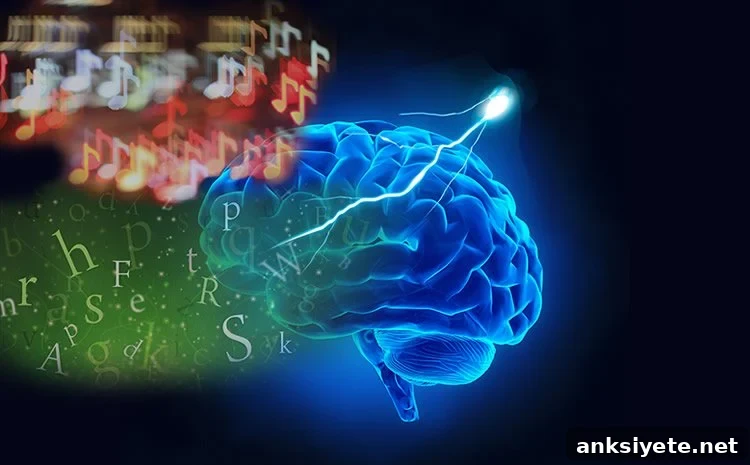
Sammler emphasizes that the brain does not contain wholly separate, isolated modules for speech and music. Instead, both domains recruit overlapping networks that also serve other functions: auditory perception, motor planning (for example, tapping a foot or coordinating hand movements while playing), emotion processing, and memory. Rather than strict segregation, the brain organizes highly interconnected regions that collaborate and specialize in distributed ways. Sammler’s work seeks to clarify how these networks coordinate to represent melodic structure and to support social communication.
Shared universals and cultural differences
Her team explores both cross-cultural universals and learned differences. Which aspects of melodic perception are common across diverse languages and musical traditions, and which are shaped by cultural experience? For instance, do listeners who do not speak a particular language still perceive stress patterns or emotional tones in that language’s prosody? Conversely, are musical expectations learned similarly across cultures? These questions help distinguish innate perceptual tendencies from culturally acquired rules.
Sammler supervises doctoral students and trains undergraduates in this interdisciplinary work, which spans cognitive neuroscience, linguistics, and music psychology. Her research has influenced colleagues across the field: findings from her group have demonstrated that prosody plays a central role in interpersonal communication and that neural substrates for music and speech are more similar than previously thought.
Her scientific agenda remains broad. She continues to investigate how melody and rhythm shape meaning, how production and perception interact, and how individual differences—such as musical training or language background—affect neural processing. By combining innovative experimental tools like the MRI-compatible piano with behavioral and neuroimaging methods, Sammler’s research clarifies the neural foundations of two fundamental human capacities: speech and music.
Source: Mechthild Zimmermann / Barbara Abrell — Max Planck Institute
Image credit: Max Planck Institute
Max Planck Institute. “The Music in Our Speech.” NeuroscienceNews. Published March 2, 2017. Original reporting by Max Planck Institute; adapted summary.