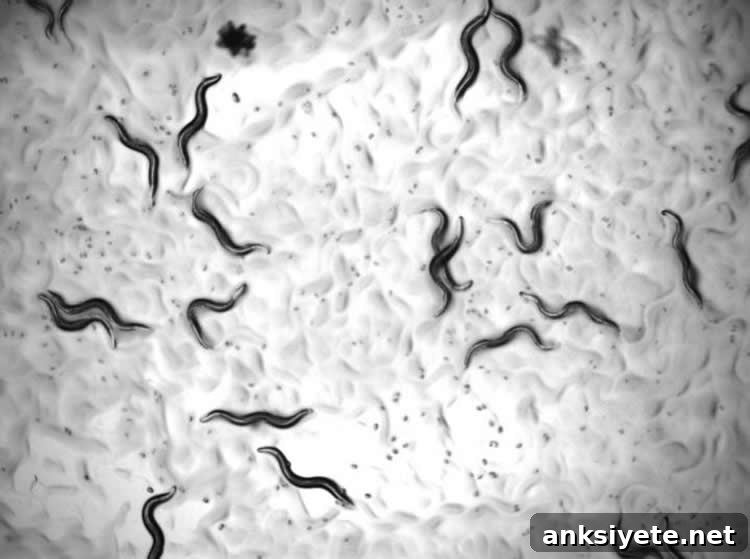
Summary: Researchers have found a combination of existing pharmaceutical drugs that increases healthy lifespan and slows the rate of ageing in the microscopic worm Caenorhabditis elegans, establishing a foundation for exploring similar drug combinations in mammals and, ultimately, humans.
Source: Yale-NUS College.
Drug Combination Extends Healthy Lifespan and Slows Ageing in C. elegans
A research team led by Principal Investigator Dr Jan Gruber at Yale-NUS College has identified combinations of drugs that not only lengthen the healthy lifespan of the microscopic worm Caenorhabditis elegans (C. elegans) but also slow their rate of ageing. Published in the journal Developmental Cell on 8 October 2018, the study establishes proof-of-concept that targeting multiple ageing pathways with pharmacological combinations can produce pronounced lifespan and healthspan benefits in adult animals.
Dr Gruber, an Assistant Professor of Science (Biochemistry) at Yale-NUS and Assistant Professor in the Department of Biochemistry at the Yong Loo Lin School of Medicine (National University of Singapore), led his laboratory in collaboration with researchers from the Singapore Lipidomics Incubator (SLING) at the Life Sciences Institute, NUS. Their goal was to test whether combining drugs that act on different, evolutionarily conserved ageing pathways could extend healthy lifespan beyond what single drugs achieve.
Previous studies had shown that individual compounds such as rapamycin can extend lifespan in a range of species, including worms, flies and mice. Building on that knowledge, Dr Gruber’s team administered two- and three-drug combinations to adult C. elegans. They found that two particular drug pairs extended mean lifespan more than either drug alone, and that adding a third compound to these pairs produced nearly a doubling of mean lifespan—an effect larger than any previously reported adult drug intervention in animals.
Importantly, the drug combinations did not produce observable adverse health effects in the treated worms. Across all ages, treated animals were healthier and spent a greater proportion of their extended lives in good health. This focus on healthspan—the period of life spent free from age-related disease—is critical for potential human applications, since medical and economic benefits depend on maintaining quality of life rather than merely prolonging life.
“If we can find a way to extend healthy lifespan and delay ageing in people, we can counteract the detrimental effects of an ageing population, providing not only medical and economic benefits but also a better quality of life,” Dr Gruber said. He noted that reducing the rate of ageing could substantially lower public health costs, referencing prior economic estimates on the value of slowing age-related decline.
To test whether the observed benefits apply beyond nematodes, the team collaborated with Associate Professor Nicholas Tolwinski and treated Drosophila melanogaster fruit flies with a comparable drug cocktail. The flies also showed significant lifespan extension, suggesting the interactions that drive these drug synergies operate through ancient, conserved biological mechanisms. That evolutionary conservation increases the likelihood that similar approaches could influence ageing pathways in mammals and humans.
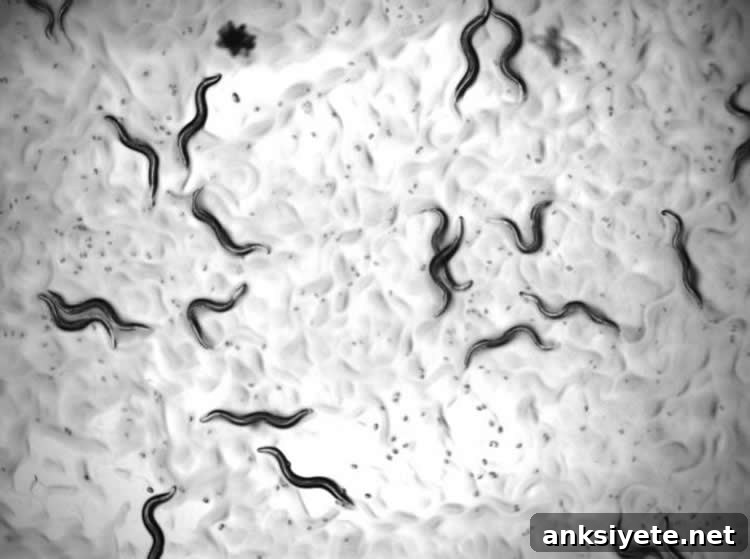
The researchers used transcriptomics and lipidomics to probe the molecular basis of the drug synergies. Their analyses implicated interactions between the TGF-β pathway and insulin-like growth factor (IGF) signalling, and identified sbp-1 (SREBP) involvement upstream of changes in lipid metabolism. These changes correlated with an increase in monounsaturated fatty acids that was required for the healthy lifespan extension observed. The results indicate that targeting distinct, conserved nodes of the ageing gene regulatory network with drug combinations can produce synergistic, beneficial effects on longevity and healthspan.
Looking ahead, the team has outlined three primary follow-up aims: first, to design even more effective drug combinations; second, to define in detail the molecular and biological mechanisms underlying synergistic interactions so that computer models can simulate and rapidly screen thousands of potential combinations; and third, to evaluate safety and translational potential with the ultimate goal of developing pharmacological interventions that safely slow ageing in humans. These steps will help determine whether the promising results in invertebrate models can be extended to mammals and, eventually, clinical use.
About this research article
Source: Kevin Low, Yale-NUS College.
Publisher: Organized by NeuroscienceNews.com.
Image credit: Dr Jan Gruber.
Original research: Abstract for “Drug Synergy Slows Aging and Improves Healthspan through IGF and SREBP Lipid Signaling” by Tesfahun Dessale Admasu et al., Developmental Cell. Published September 27, 2018. doi: 10.1016/j.devcel.2018.09.001.
Abstract (summary)
There is growing interest in pharmacological approaches that directly target the ageing process, especially interventions that are effective when started in adults and that repurpose existing drugs. This study demonstrates that combining drugs that act on multiple, evolutionarily conserved ageing mechanisms can dramatically extend healthy lifespan in C. elegans. Transcriptomics and lipidomics revealed that the drug interactions engage the TGF-β pathway and insulin-like signalling, and that daf-2, daf-7 and sbp-1 interact upstream of shifts in lipid metabolism. Increased monounsaturated fatty acid content was necessary for the observed healthspan benefits. These findings support the strategy of leveraging complementary drug actions across the ageing gene regulatory network to achieve synergistic lifespan and healthspan improvements.
Researchers consider this work a proof-of-principle that pharmacological targeting of multiple ageing pathways is a promising route to slow ageing and significantly extend healthy lifespan in adult animals, warranting further study toward safe, effective interventions for humans.