
Brain Reserve and Cognitive Reserve Independently Protect Against Cognitive Decline in Multiple Sclerosis
Researchers from the United States and Italy have found that both brain reserve and cognitive reserve independently reduce the risk of cognitive decline in people with multiple sclerosis (MS). The study was published in Neuron on June 11, 2013.
Investigators set out to understand why some individuals with MS develop cognitive impairment while others maintain cognitive function despite comparable disease changes visible on imaging. John DeLuca, PhD, Vice President for Research & Training at Kessler Foundation, explained that the team sought factors that help explain preserved cognition in the face of significant MRI-detected disease progression.
The study examined 62 people with MS, including 41 with relapsing-remitting MS and 21 with secondary progressive MS. All participants underwent magnetic resonance imaging (MRI) to quantify markers that reflect brain reserve and overall disease burden. Early-life engagement in mentally stimulating activities—such as reading, puzzles, games and hobbies—was assessed as an indicator of cognitive reserve. Cognitive performance was evaluated using standardized measures that tested information-processing efficiency and memory.
Principal investigator James F. Sumowski, PhD, emphasized the key findings: larger maximal lifetime brain growth, a trait that is largely heritable, and greater early-life mental enrichment each provided independent protection against cognitive decline in MS. In other words, both the biological capacity of the brain (brain reserve) and the habits or experiences that build cognitive reserve protect cognition through different mechanisms. This study extends prior observations by the research team that intellectual enrichment helps preserve cognitive abilities in persons living with MS.
What the Terms Mean: Brain Reserve and Cognitive Reserve
Brain reserve refers to physical and structural characteristics of the brain—such as greater brain size or neuronal resources—that provide a buffer against the clinical expression of brain pathology. Cognitive reserve refers to the benefit derived from life experiences that challenge the brain, including education, occupational complexity and leisure activities that stimulate thinking. Cognitive reserve does not prevent disease-related brain changes but helps maintain function by making neural processing more efficient or by enabling alternative cognitive strategies.
Study Methods and Measures
The research combined neuroimaging with behavioral assessment. MRI-based metrics provided estimates of lifetime brain growth and current disease burden. Early-life cognitive leisure activities were quantified through participant histories to reflect mental stimulation during formative years. Cognitive testing focused on tasks sensitive to MS-related deficits, prioritizing measures of processing speed and memory—domains commonly affected in this population. By analyzing these factors together, the researchers were able to determine the independent contributions of brain reserve and cognitive reserve to cognitive outcomes.
Implications for People with MS
These findings suggest a dual pathway of resilience: inherited structural advantages and modifiable life experiences both contribute to preserved cognitive health in MS. While brain reserve is largely determined by genetics and early development, cognitive reserve is shaped by lifelong engagement in intellectually stimulating activities. The results reinforce the potential value of cognitive enrichment across the lifespan and support interventions that promote mental activity as one way to reduce the functional impact of MS-related brain changes.
The study highlights that preserving cognitive function in MS is multifactorial. Clinical approaches that monitor and attempt to limit disease burden, combined with strategies that encourage mental stimulation and cognitive rehabilitation, may together help maintain quality of life for people living with MS.
Study and author details
James F. Sumowski, PhD, is a research scientist in Neuropsychology & Neuroscience Research, working under the directorship of Nancy Chiaravalloti, PhD. Drs. Sumowski, Victoria M. Leavitt, PhD, and John DeLuca, PhD are faculty in the Department of Physical Medicine and Rehabilitation at UMDNJ–New Jersey Medical School. The international team included collaborators from Milan.
Contact: Carolann Murphy – Kessler Foundation
Source: Kessler Foundation press release
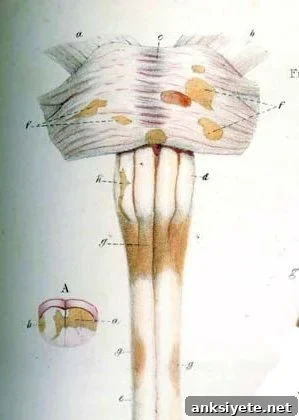
Image Source: Multiple sclerosis lesions image credited to Robert Carswell, circa 1838; public domain.
Original Research: Sumowski J.F., Rocca M.A., Leavitt V.M., Riccitelli G., Comi G., DeLuca J., Filippi M. “Brain reserve and cognitive reserve in multiple sclerosis: What you’ve got and how you use it.” Published online June 11, 2013. Neuron. DOI: 10.1212/WNL.0b013e318296e98b