
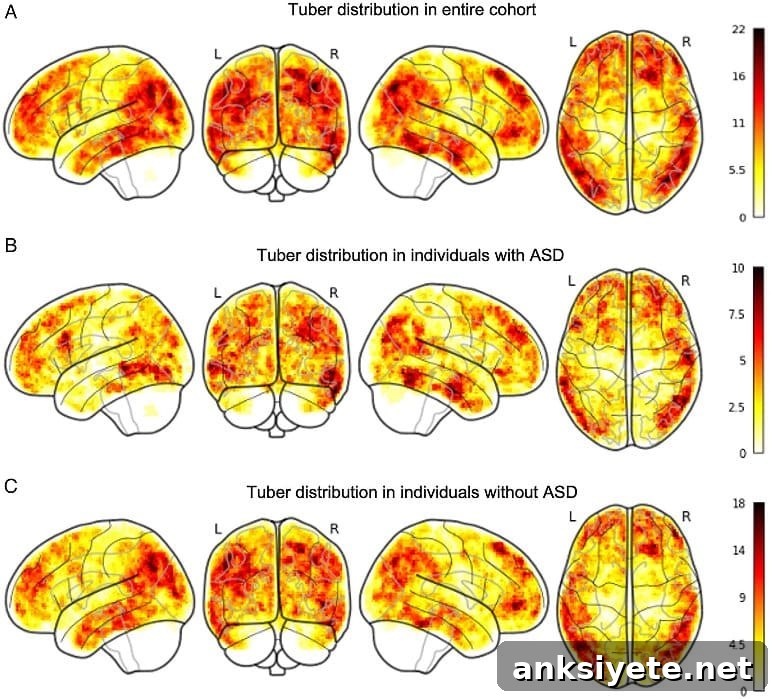
Summary: Researchers have pinpointed brain network hotspots tied to autism, aggression, and a range of social-behavioral difficulties. The study finds that people with autism spectrum disorder (ASD) who perform poorly on face-processing tests tend to have more severe autism symptoms, especially in social domains. The work also suggests that targeted, noninvasive brain stimulation such as transcranial magnetic stimulation (TMS) could offer a promising avenue for future treatment.
Source: Children’s Hospital Boston
What if clinicians could break complex conditions like autism down into core symptoms, map those symptoms to specific brain “hotspots,” and then target those regions directly with therapy? If validated, this approach could shift care for neurological and developmental disorders toward symptom-driven, precision interventions that apply across multiple diagnoses.
That is the goal of Dr. Alexander Li Cohen, a child neurologist who directs the Laboratory of Translational Neuroimaging and works within the Autism Spectrum Center at Boston Children’s. “Our work indicates that distinct aspects of human behavior correspond to discrete brain networks,” he says.
Face blindness: A window into understanding autism
Dr. Cohen began by investigating a common challenge in autism: difficulty recognizing faces, sometimes called face blindness. Individuals with ASD who score lower on face-processing assessments tend to show more pronounced autism symptoms, particularly in social functioning. This link raised the question: can studying face-processing deficits reveal broader mechanisms of autism?
To pursue this idea, Dr. Cohen first analyzed patients who developed face-recognition problems after a stroke. Brain MRI examinations showed many had damage to a region known as the fusiform face area (FFA). Others lacked direct FFA injury but had lesions in regions functionally connected to the FFA, revealed by lesion network mapping.
“A symptom may depend on the integrity of an entire network, not just a single spot,” Dr. Cohen explains.
Tuberous sclerosis, the fusiform face area, and autism
To connect these findings with autism, the team studied children with tuberous sclerosis complex (TSC), a genetic disorder that produces focal brain abnormalities called tubers. Approximately 40% of children with TSC develop autism, making this population useful for studying how lesion location affects ASD risk.
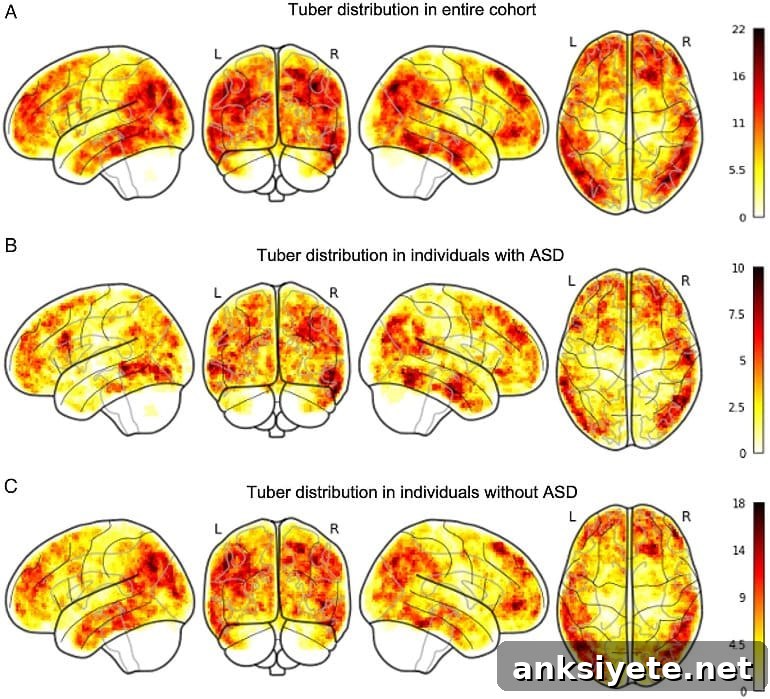
In an analysis of 115 young children with TSC, tubers located at or near the fusiform face area were associated with a significantly higher likelihood of an autism diagnosis: those with tubers in this region had about a 3.7-fold increased risk of ASD. These results were published in Annals of Neurology.
Building on this, Dr. Cohen and colleagues are recruiting adolescents aged 15 to 18 with and without autism to compare brain MRI features. Each participant receives standardized assessments of face-processing ability, social impairment, and overall autism symptom severity to correlate behavioral measures with brain imaging findings.
Brain stimulation for autism?
A key unanswered question is whether face-processing differences contribute to the development of autism symptoms, or whether they arise from autism itself. Dr. Cohen hypothesizes that some individuals with ASD might over-rely on neural pathways that process fine visual details rather than holistic facial features, which could impede social perception.
If face-processing deficits can be improved, might social functioning follow? To explore this, the team is considering noninvasive neuromodulation techniques such as transcranial magnetic stimulation (TMS), which uses a small electromagnetic coil to induce currents in targeted surface brain areas. TMS is already FDA-cleared for treating depression and obsessive-compulsive disorder in adults and is under investigation for some pediatric neurological conditions.
“Now that we’re studying autism directly, we can begin to determine whether modifying these networks changes behavior,” Dr. Cohen says. Noninvasive stimulation focused on implicated hotspots might one day help children develop more typical face-processing strategies and improve social outcomes.
Addressing agitation and aggression, in autism and beyond
Dr. Cohen’s broader aim is to identify neural hotspots and networks that underlie a range of autism-related symptoms, not only face processing. Agitation and aggression are high priorities because they pose substantial burdens on affected children and families. Currently, these behaviors are often managed with antipsychotic medications that can have serious side effects and variable effectiveness.
To find alternative treatment targets, the research team is assembling brain mapping and behavioral data from people at risk for aggression, including individuals with autism, stroke survivors, and those with other brain injuries. The pooled dataset now exceeds 1,200 participants across children and adults.
“We can compare those with the highest levels of aggression to those with the least and ask what brain features differ,” Dr. Cohen explains. Identifying common neural correlates of aggression could reveal new, more precise intervention targets. “If we can intervene early to redirect developing brain circuits, we may reduce severe behaviors and help children follow a healthier developmental path.”
About this autism research news
Author: Nancy Fliesler
Source: Children’s Hospital Boston
Contact: Nancy Fliesler – Children’s Hospital Boston
Image: The image is credited to Annals of Neurology / The Researchers
Original Research: Open access. “Tubers Affecting the Fusiform Face Area Are Associated with Autism Diagnosis” by Alexander Li Cohen et al., Annals of Neurology
Abstract
Tubers Affecting the Fusiform Face Area Are Associated with Autism Diagnosis
Objective
Tuberous sclerosis complex (TSC) produces focal brain tubers and is associated with a higher incidence of autism spectrum disorder (ASD). Mapping the locations of tubers linked to ASD may reveal neuroanatomical substrates underlying autism-related symptoms.
Methods
The study mapped tuber locations in 115 TSC participants (31 with ASD and 84 without) from the Tuberous Sclerosis Complex Autism Center of Excellence Research Network. Researchers evaluated associations between ASD diagnosis and tuber burden across the whole brain, by lobes, and within eight regions of interest implicated in ASD neuroimaging literature, including the fusiform gyrus and other social-cognitive areas. They also performed an unbiased voxelwise lesion symptom mapping analysis and estimated ASD risk linked to identified findings.
Results
No significant ASD-related differences were found in overall tuber burden across the whole brain, individual lobes, or the prespecified regions. However, voxelwise analysis identified that tubers involving the right fusiform face area (FFA) were associated with a 3.7-fold increased risk of ASD.
Interpretation
Although TSC is an uncommon cause of ASD, the strong association between right FFA involvement and ASD diagnosis highlights a potentially causal mechanism for autism in TSC and may inform research into core ASD symptoms more broadly. ANN NEUROL 2023;93:577–590