
Summary: Researchers report that using a green filter can increase reading speed for children with dyslexia.
Source: FAPESP.
Green filters improve reading speed in children with dyslexia, study finds
Reading is often one of the greatest challenges for children with dyslexia. A collaborative study by Brazilian and French researchers found that a green visual filter improved reading speed in nine- and ten-year-old children diagnosed with dyslexia, while the same filter had no measurable effect on age-matched children without dyslexia.
Colored overlays and filters have been used in educational and therapeutic settings since the early 1980s, and have been suggested for children with a range of learning and developmental differences, including dyslexia, autism and attention deficit hyperactivity disorder (ADHD). Early research into colored filters suffered from methodological problems. The recent study applied more rigorous experimental controls and objective eye-tracking measures to evaluate their effect.
Milena Razuk, the study’s first author, emphasized the methodological improvements in this research, which was published in the journal Research in Developmental Disabilities. The experiment was carried out during a research internship at Paris Diderot University (Paris 7), with support from the Sao Paulo Research Foundation (FAPESP). Razuk completed her PhD at Cruzeiro do Sul University in São Paulo.
The research team recruited 36 children at the Robert Debré Hospital in Paris: 18 children diagnosed with dyslexia and 18 children without dyslexia who were matched for age. The investigators selected two filter colors—green and yellow—for practical reasons, noting that testing with all available colors would have been overly long and fatiguing for the young participants.
Procedure and eye-tracking measurements
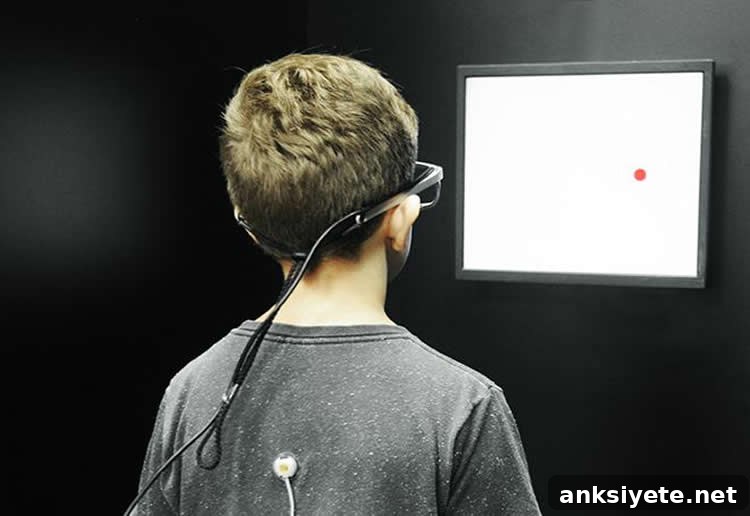
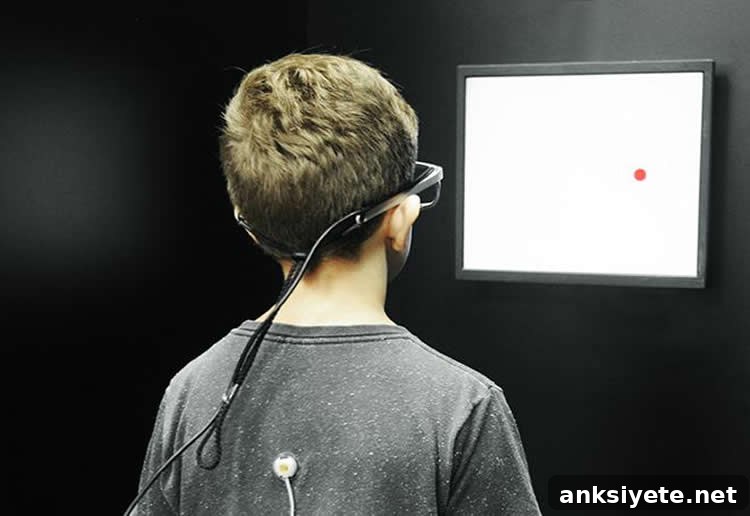
Each child read age-appropriate passages from children’s books that were presented on a computer screen. Texts were shown in three conditions: with no filter, with a yellow filter, and with a green filter. The researchers recorded eye movements using the Mobile EyeBrain Tracker®, a medically certified eye-tracking system that records each eye independently using infrared cameras embedded in goggle-style equipment.
Eye-tracking data provide precise measures of reading behavior, including total reading time and the duration of fixations—how long the eyes remain focused on a word or group of words between saccades (quick eye movements). In dyslexic readers, fixation durations are typically longer, and overall reading speed is slower.
The study found that children with dyslexia read significantly faster when using the green filter. On average, fixation durations for the dyslexic group were about 0.50 seconds with the green filter, compared with approximately 0.60 seconds with the yellow filter or with no filter. By contrast, children without dyslexia showed fixation durations of about 0.40 seconds, and their reading speed did not change meaningfully with any of the filter conditions.
The authors note that the study measured reading speed and eye-movement patterns, not comprehension. They did not assess whether comprehension improved alongside faster reading, and they recommend further research to examine comprehension and longer-term outcomes.
Possible neurological mechanisms
Causes of dyslexia remain incompletely understood. Dyslexia is not due to poor eyesight or low intelligence; diagnostic criteria require normal or above-average IQ alongside persistent reading difficulties. Research has identified a variety of associated deficits, including differences in sensorimotor integration and increased cortical excitability in some individuals with dyslexia. Some researchers have described these differences as a kind of neural “noise” that interferes with efficient processing.
The authors propose that the green filter may alter visual input in a way that reduces this neural noise or cortical hyperexcitability, improving the stability of the visual signal the brain must process during reading. Previous studies, including functional magnetic resonance imaging (fMRI) work, have shown changes in cortical activation when readers use colored filters, and some evidence suggests that filters can reduce visual stress and distortion, thereby enhancing visual processing.
This study’s results align with the hypothesis that color filters can modulate visual cortical activity and reduce distortions that interfere with fluent reading in dyslexia. To test this idea directly, the research group plans to use fMRI to examine brain activity in dyslexic children while they read with and without filters.
Conclusions and next steps
Overall, the study suggests that a green visual filter can improve reading speed and reduce fixation duration in children with dyslexia, while having no measurable effect on non-dyslexic readers. The findings support further investigation into how specific color filters influence visual processing and cortical activity during reading.
Follow-up research planned by the team includes brain imaging studies to determine whether filters alter cortical activation patterns in dyslexic children. Additional studies should also evaluate whether faster reading with filters translates into better comprehension, academic outcomes, or long-term gains in reading fluency.
Funding: The project received support from the Sao Paulo Research Foundation (FAPESP). José Angelo Barela has also acquired an MRI machine with funding from Brazil’s National Council for Scientific & Technological Development (CNPq).
Source: Joao Carlos Silva – FAPESP. Publisher: NeuroscienceNews.com. Image credit: Milena Razuk.
Original research: “Effect of colored filters on reading capabilities in dyslexic children” by Milena Razuk, Faustine Perrin-Fievez, Christophe Loic Gerard, Hugo Peyre, José Angelo Barela, and Maria Pia Bucci, published in Research in Developmental Disabilities. doi: 10.1016/j.ridd.2018.07.006
Abstract
Effect of colored filters on reading capabilities in dyslexic children
Aim: This study examined the effects of colored filters on reading performance and eye-movement control in children with and without dyslexia.
Methods: Eighteen children with dyslexia and 18 age-matched children without dyslexia read texts displayed under three conditions: no filter, a yellow filter, and a green filter. Eye movements were recorded with a Mobile EyeBrain Tracker. Measures included total reading time, fixation duration between saccades, pro-saccade amplitude, and the number of pro- and retro-saccades.
Results: Children with dyslexia read faster and showed shorter fixation times in the green filter condition compared with the other conditions. Children without dyslexia showed no significant change in fixation time across filter conditions.
Conclusions: The green filter appeared to improve reading performance in children with dyslexia, likely by facilitating cortical processing and reducing visual distortions that interfere with fluent reading.