
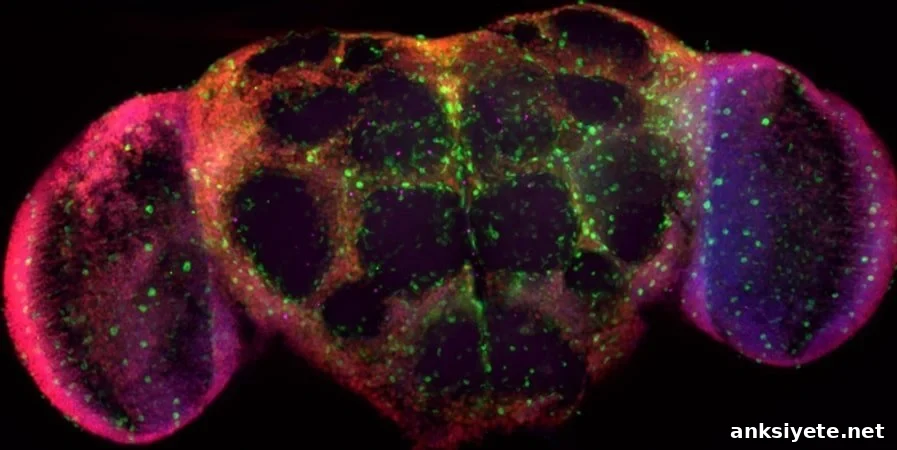
Summary: New research uncovers how neurons and glial cells cooperate to trigger neural stem cell activation and drive regeneration after brain injury.
Source: Champalimaud Center for the Unknown
Loss of neurons after stroke or traumatic brain injury is permanent, and depending on the affected region, this can lead to lasting impairments in motor skills, language, memory, and other cognitive functions.
Despite this permanence, the adult brain retains a limited capacity to generate new neurons through neural stem cells. These stem cells can be partially activated in response to injury, but full activation is rare: many cells begin the regenerative process while only a small subset completes it. Consequently, relatively few new neurons are produced and even fewer survive to repopulate damaged areas. Instead, injured tissue often becomes dominated by glial cells, the support cells that form the “glue” of the nervous system.
A study published June 17 in Developmental Cell from researchers at the Champalimaud Foundation identifies a novel, cooperative mechanism between neurons and glia that helps recruit dormant neural stem cells after injury. The findings point toward potential therapeutic strategies to boost neural regeneration following brain damage.
“We have revealed how neural stem cells sense injury and are recruited for tissue repair,” said Christa Rhiner, the study’s senior author. “These findings may represent an important step toward developing drugs that promote the formation of new neurons after brain injury.”
CELLULAR COOPERATION DRIVES REGENERATION
To dissect the cellular events that trigger regeneration, the team used Drosophila (fruit fly) and mouse models, which share core features of neural stem cell biology and intercellular signaling with humans. This cross-species approach strengthens the likelihood that the mechanisms revealed are relevant to human brain repair.
A doctoral researcher in the lab, Anabel Simões, screened molecules that were present specifically in injured brain regions. Among dozens of candidates she identified a transporter protein called Swim, which facilitates the spread of signaling molecules across tissue. Further experiments established Swim as a crucial factor in mounting a regenerative response after brain injury.
Next, the researchers asked which signaling molecule Swim transports. Their experiments pointed to Wg/Wnt, a well-known activator of neural stem cells across species. The team detected Wg in neurons within the damaged area, indicating that injured neurons themselves produce a wake-up signal for nearby dormant stem cells.
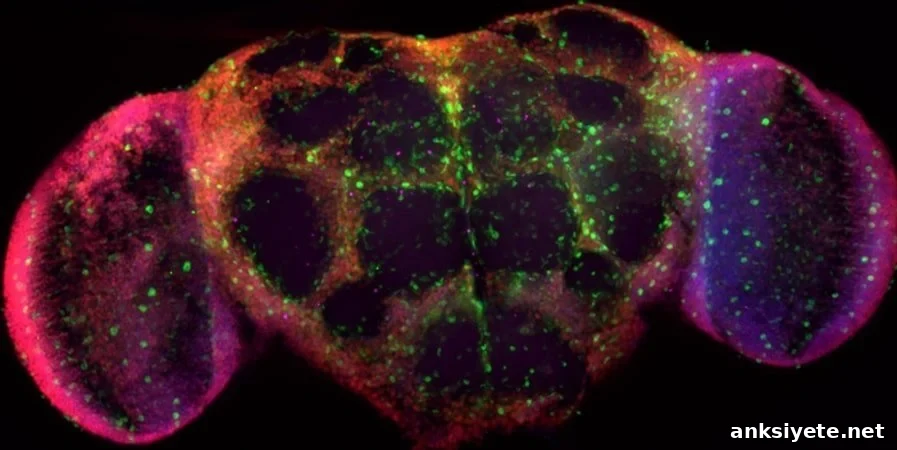
The final piece of the puzzle was identifying the source of Swim. The team discovered that when oxygen levels fall locally after injury, a subset of glial cells becomes activated and produces Swim. This lipocalin-like transporter is secreted into the extracellular space, where it binds and ferries neuron-derived Wg to the nearest neural stem cells, effectively turning them on.
“One striking aspect of this mechanism is its collaborative nature,” said Simões. “Neurons and glia in the affected brain area work together to promote tissue repair.”
IMPLICATIONS FOR BOOSTING NEURAL REGENERATION
By defining the players and the communication route—injured neurons producing Wg, hypoxia-induced glial production of Swim, and stem cell activation—the study provides actionable targets for enhancing endogenous regeneration. Confirming whether a similar HIF1-α/Swim/Wnt module operates in humans will be a critical next step before translation to therapies.
The researchers also highlight open questions that will guide future work: how to improve survival of newly generated neurons in the healing tissue, how to control the spatial range of stem cell recruitment, and whether manipulating these pathways can enhance functional recovery without adverse effects. These questions frame a clear roadmap for moving from basic discovery to therapeutic strategies.
About this neuroscience and TBI research news
Author: Liad Hollender
Source: Champalimaud Center for the Unknown
Contact: Liad Hollender – Champalimaud Center for the Unknown
Image credit: Rhiner Lab, The Champalimaud Foundation
Original Research: Open access. “Damage-responsive neuro-glial clusters coordinate the recruitment of dormant neural stem cells in Drosophila” by Afonso Vaz Pinto et al., Developmental Cell.
Abstract
Damage-responsive neuro-glial clusters coordinate the recruitment of dormant neural stem cells in Drosophila
Recruitment of stem cells is essential for tissue repair, yet mechanisms that coordinate engagement of dispersed stem cells across injured tissue remain poorly understood. In Drosophila, adult brain lesions trigger local recruitment of scattered dormant neural stem cells, suggesting the formation of a transient activation zone.
This study shows that injury initiates a coordinated response within neuro-glial clusters that promotes the spread of a neuron-derived stem cell factor via glial secretion of the lipocalin-like transporter Swim. Swim expression is induced in a HIF1-α–dependent manner in response to local hypoxia. Importantly, the mammalian ortholog of Swim (Lcn7) is also upregulated in glia of the injured mouse hippocampus, suggesting conservation of this module. The results identify neuro-glial clusters as central organizers that connect injury sensing to regenerative outcomes through the HIF1-α/Swim/Wnt pathway.