
Language ability typically resides in the left hemisphere of the brain, but new research suggests early brain anatomy may not be the primary driver of a child’s language growth.
Researchers from Brown University and King’s College London report surprising findings about how brain structure and the environment interact during early language development. Their study, published in the Journal of Neuroscience, examined the relationship between myelin growth, brain asymmetry, and language acquisition in young children.
Myelin, the fatty insulating substance that surrounds nerve fibers, supports fast electrical signaling across brain circuits. Because language functions are commonly associated with left-hemisphere regions, the team expected to observe increasing left-sided myelination as children entered the rapid language-learning stage between ages two and four. Instead, high-level left-right differences in myelin were present from the earliest ages studied and remained relatively stable across early childhood.
“We found that the asymmetry of myelin was present even in the youngest children we scanned, around age one,” said lead author Jonathan O’Muircheartaigh, Sir Henry Wellcome Postdoctoral Fellow at King’s College London. “Rather than changing dramatically during the so-called language explosion, those asymmetries stayed fairly constant.”
Using advanced magnetic resonance imaging techniques at Brown University’s Advanced Baby Imaging Lab, the team mapped myelin development in 108 children between the ages of one and six. Because infants are born with relatively little myelin, the rapid expansion of this tissue during early childhood provides a window into how brain maturation supports emerging cognitive skills.
Although the basic left-sided myelin advantage was already established in infancy and did not increase across the age range, the link between specific myelin asymmetries and language performance changed with age. The researchers compared each child’s brain scans with detailed language assessments and found that different brain regions predicted language ability at different developmental stages.
“Some regions that were not strong predictors of language outcomes in toddlers became more closely related to language skills in older children, around the time they begin formal schooling,” O’Muircheartaigh said. “As children’s language becomes more complex, it appears they recruit different neural systems to support those advances.”
Crucially, the association between myelin asymmetry and language ability was weakest during the intense language-learning window between two and four years old. This suggests that anatomical differences alone do not account for the rapid gains in vocabulary, grammar, and communication that many children make during that period.
“If myelin asymmetry doesn’t strongly predict language during the critical ages of two to four, it raises the possibility that environmental factors—such as the amount and quality of language a child hears, caregiver interaction, and early learning experiences—play a larger role in shaping language development at this stage,” O’Muircheartaigh explained.
The study provides an important baseline for future investigations into atypical development. By characterizing how typical myelin patterns and their relationship to language evolve across early childhood, researchers can better identify deviations that might signal risk for developmental language disorders.
“Conditions such as autism, dyslexia, and ADHD often include specific language and communication challenges,” O’Muircheartaigh noted. “Before we can identify meaningful neural markers of those disorders, we need a clear picture of how brain structure and language normally develop across childhood. This work contributes that essential foundation.”
Sean Deoni, assistant professor of engineering and director of the Advanced Baby Imaging Lab, emphasized the value of interdisciplinary collaboration. “This is the first study to examine the changing relationship between brain structure and language across early childhood. Combining pediatric imaging expertise at Brown with neuropsychology from King’s College London made these findings possible,” he said.
Notes about this neuroanatomy and developmental neuroscience research
Other authors on the paper include Douglas Dean, Holly Dirks, Nicole Waskiewicz, and Katie Lehman from Brown’s Baby Imaging Lab, and Beth Jerskey from Brown’s Alpert Medical School. The research was supported by the National Institutes of Mental Health and the Wellcome Trust.
Contact: Kevin Stacey – Brown University
Source: Brown University press release; Journal of Neuroscience (research publication)
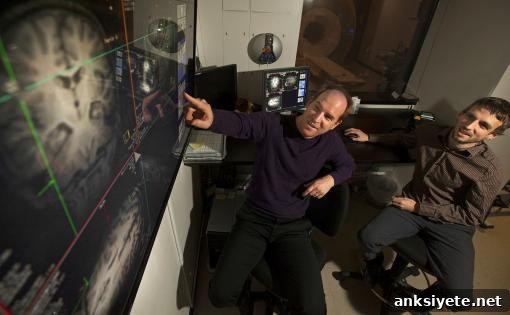
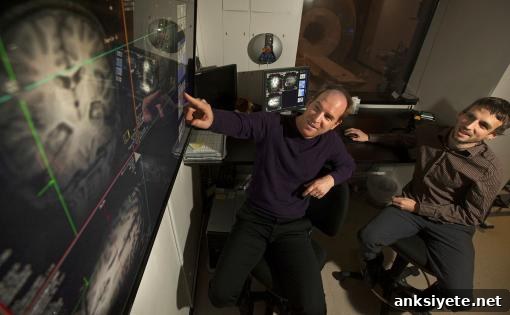
Image source: Photo credit Mike Cohea, Brown University. The image accompanies the study announcement and illustrates the investigators reviewing imaging data.