
Summary: Researchers have identified a distinct epigenetic signature in certain immune cells that can distinguish people living with HIV who have measurable cognitive impairment.
Source: University of Hawaii.
University of Hawaiʻi researchers have found a cell-type specific epigenetic footprint in blood monocytes that correlates with HIV-related cognitive impairment.
Identifying reliable biomarkers for HIV-associated cognitive impairment can improve understanding of the biological processes that damage the brain, support more accurate diagnosis, and guide treatment decisions. A team at the University of Hawaiʻi at Mānoa led by Lishomwa Ndhlovu and Alika Maunakea, together with collaborators including investigators from the University of California San Francisco, report these findings in Scientific Reports (September 2016).
“These results provide an important window into the mechanisms that drive HIV-related brain injury and offer a way to monitor the disease,” said Lishomwa Ndhlovu, associate professor in the Department of Tropical Medicine at the John A. Burns School of Medicine (JABSOM).
Combination antiretroviral therapy has dramatically improved survival for people with HIV. When antiretroviral treatment is started early and taken consistently, it reduces many serious complications. Still, HIV continues to affect the brain: roughly 40 percent of people living with HIV experience some degree of neurocognitive disorder despite antiretroviral therapy, and these impairments can interfere with daily functioning.
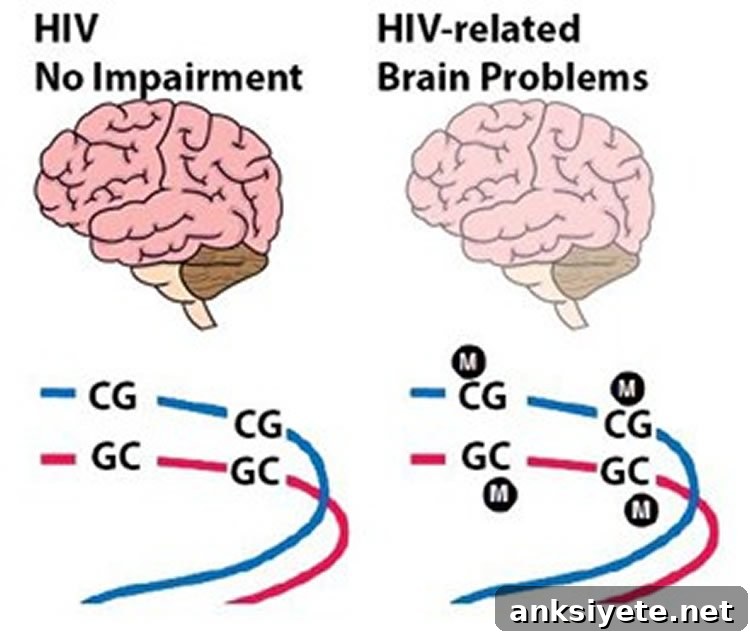
Previous work has suggested that cells of the monocyte/macrophage lineage play a role in neurocognitive decline in HIV. Because HIV infection alters epigenetic regulation in the immune system, the researchers asked whether a distinct pattern of DNA methylation—a major epigenetic modification where methyl groups are added to DNA—might be present in blood immune cells from individuals with HIV-related cognitive impairment, and whether such changes would be specific to particular cell types.
The team profiled DNA methylation and gene expression in purified monocytes from HIV-positive participants with and without cognitive impairment. They discovered more than a thousand differentially methylated sites associated with cognitive impairment that were enriched in gene networks related to the central nervous system and to pathways interacting with HIV. These differences appeared specifically in monocytes rather than across all blood cell types.
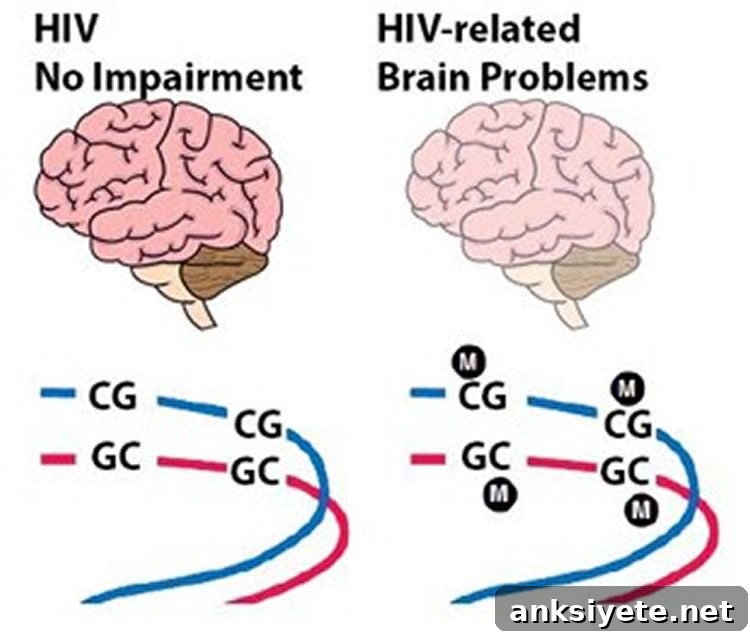
According to co-senior author Alika Maunakea, assistant professor in JABSOM’s Department of Native Hawaiian Health, the researchers found a clear link between DNA methylation at these monocyte markers and neuropsychological performance. “We observed a strong association between methylation levels at specific CpG sites in monocytes and composite neuropsychological test scores,” Maunakea said.
Lead author Michael Corley, a junior researcher in the Department of Native Hawaiian Health, noted that advances in epigenetics and DNA sequencing now allow investigators to profile epigenetic marks in carefully selected clinical samples, enabling discoveries that were previously out of reach.
Currently, there are no approved treatments specifically for HIV-associated cognitive impairment. Ndhlovu emphasized that emerging epigenetic therapies could offer promising avenues for intervention, provided such approaches can be designed to target the relevant immune cell populations selectively.
“We still need to learn much more about how HIV affects the brain,” Ndhlovu added. “Several observations from this study are highly relevant to research in neuroAIDS and may point toward new diagnostic and therapeutic strategies.”
Study source and authors: This study was conducted by scientists at the University of Hawaiʻi at Mānoa, including Lishomwa C. Ndhlovu and Alika K. Maunakea, with collaborators from the University of California San Francisco. Lead author: Michael J. Corley.
Publication: The results were published in Scientific Reports (online September 15, 2016) under the title “Comparative DNA Methylation Profiling Reveals an Immunoepigenetic Signature of HIV-related Cognitive Impairment.”
Main findings (summary): Genome-wide profiling of DNA methylation and gene expression in purified monocytes identified 1,032 loci differentially methylated in individuals with HIV-related cognitive impairment. Most of these loci showed increased methylation in the impaired group, and they were enriched over gene bodies and intergenic regions. Methylation at 12 CpG sites correlated with performance on neuropsychological tests. Several differentially methylated loci also associated with altered expression of genes implicated in central nervous system function and with genes previously linked to HIV viremia.
Implications: These data reveal a cell-type specific immunoepigenetic signature associated with HIV-related cognitive impairment. Such an epigenetic profile could serve as a peripheral biomarker to support clinical assessment, help elucidate pathogenic mechanisms, and suggest novel, cell-targeted therapeutic strategies for cognitive disorders in people living with HIV.
Abstract (rephrased)
Monocytes and macrophages have been implicated in the neuropathogenesis of HIV-related cognitive impairment, yet mechanisms remain incompletely understood. This study compared genome-wide DNA methylation and gene expression in monocytes from HIV-infected individuals with and without cognitive impairment. The analysis identified over a thousand differentially methylated loci associated with cognitive impairment that linked to CNS-related gene networks and HIV-interacting pathways. A majority of these loci showed higher methylation in the cognitively impaired group and were enriched within gene bodies and intergenic regions. Methylation at a subset of CpG sites correlated with neuropsychological test scores and with expression changes in CNS-related genes such as CSRNP1, DISC1, NR4A2, and in THBS1, which has connections to HIV viremia. These findings define an immunoepigenetic DNA methylation signature in monocytes that may aid clinical evaluation, reveal pathogenic mechanisms, and highlight potential therapeutic targets for HIV-associated cognitive impairment.