
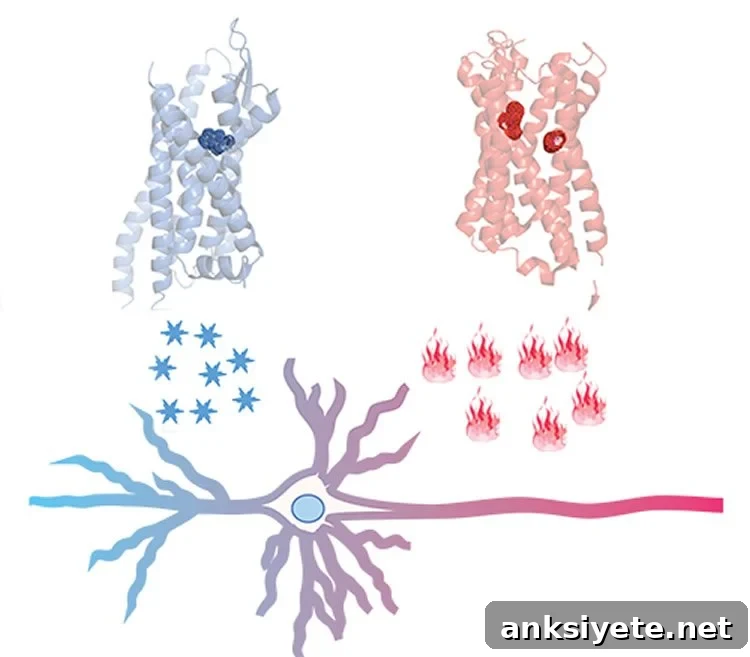
Neuroscientists have refined a chemical-genetic remote-control system for brain circuits and behavior. This advancing technology now allows researchers to switch the same neurons—and the behaviors they govern—on and off sequentially in mice, according to scientists funded by the National Institutes of Health. Achieving bidirectional control is a crucial step for decoding how brain circuits produce complex behaviors. These results are among the first published from the initial wave of NIH grants awarded under the BRAIN Initiative.
“With its new push-pull control, this tool sharpens the cutting edge of research aimed at improving our understanding of brain circuit disorders, such as schizophrenia and addictive behaviors,” said NIH director Francis S. Collins, M.D., Ph.D.
Bryan Roth, M.D., Ph.D., of the University of North Carolina, Chapel Hill, together with Michael Krashes, Ph.D., of NIH’s National Institute of Diabetes and Digestive and Kidney Diseases, and colleagues, introduced the second generation of the DREADD technology—Designer Receptors Exclusively Activated by Designer Drugs—publishing their results on April 30 in the journal Neuron.
DREADD 2.0 builds on a widely adopted chemogenetic approach developed by Roth and collaborators over the past decade. The method provides remote control by inserting a synthetic signaling system that integrates with endogenous cellular machinery. Researchers genetically engineer mice so that specific neural circuits express “designer receptors”—synthetic proteins on the surface of neurons that respond only to a matching, biologically inert synthetic ligand. Like a lock with its unique key, each designer receptor is activated only by its paired synthetic chemical. Depending on the receptor’s design, binding of the ligand can either excite or inhibit neuronal activity, enabling experimental control over targeted circuits and the behaviors those circuits mediate.
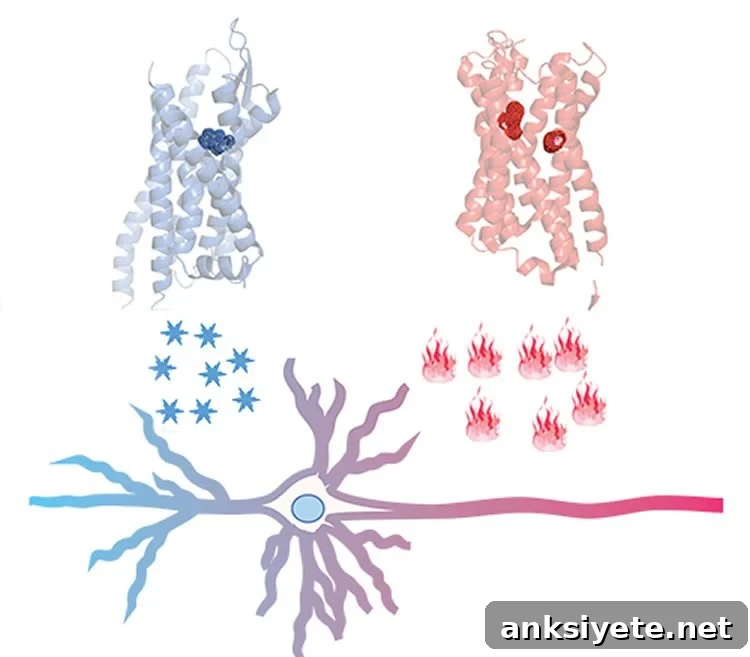
Earlier versions of DREADD typically controlled neural activity in a single direction—either activating or inhibiting a population of cells. DREADD 2.0 introduces a complementary receptor-ligand pair that enables true bidirectional control: one receptor-ligand set increases neuronal activity while the other reduces it. When combined in the same neurons, the two actuators allow researchers to switch those neurons on and off sequentially. This multiplexed chemogenetic control is analogous to having two different locks and keys—one to turn circuits on and another to turn them off—providing more precise experimental manipulation of behavior. In proof-of-concept experiments, the research team used the improved DREADD toolbox to bidirectionally modulate locomotion and feeding behaviors in mice.
DREADD effects last on the order of about an hour, which differs markedly from optogenetic approaches that can modulate neuronal firing on a millisecond timescale. Because chemogenetic control persists longer and can be achieved with minimal invasiveness, DREADD is particularly well suited for experiments that require sustained modulation of neural circuits or where prolonged behavioral observation is necessary.
Funding: This research was supported by grants from the National Institutes of Health, including MH105892, DA017204, DA035764, DK075087, DK075089, AA019454, AA17668, AA020911, AA02228001, AA018335, and AA021312.
Source: Jules Asher – NIH/NIMH
Image Source: The image is credited to Bryan Roth, Ph.D., University of North Carolina.
Original Research: Abstract for “A new DREADD facilitates the multiplexed chemogenetic interrogation of behavior” by Eyal Vardy, J. Elliott Robinson, Chia Li, Reid H.J. Olsen, Jeffrey F. DiBerto, Patrick M. Giguere, Flori M. Sassano, Xi-Ping Huang, Hu Zhu, Daniel J. Urban, Kate L. White, Joseph E. Rittiner, Nicole A. Crowley, Kristen E. Pleil, Christopher M. Mazzone, Philip D. Mosier, Juan Song, Thomas L. Kash, C.J. Malanga, Michael J. Krashes, and Bryan L. Roth in Neuron.
Abstract
A New DREADD Facilitates the Multiplexed Chemogenetic Interrogation of Behavior
Highlights
• Structure-guided design for a κ-opioid receptor–based DREADD (KORD)
• KORD is selectively activated by salvinorin B and not by endogenous opioid ligands
• KORD robustly silenced multiple neuronal subtypes in experimental contexts
• Combining inhibitory KORD with excitatory hM3Dq enabled multiplexed, bidirectional behavioral control
Summary
DREADDs are chemogenetic actuators widely used to remotely control cellular signaling, neuronal activity, and behavior. Using a structure-based strategy, the authors developed a new Gi-coupled DREADD derived from the κ-opioid receptor (KORD) that is activated by the pharmacologically inert ligand salvinorin B (SALB). Viral expression of KORD in different neuronal populations produced reliable suppression of activity and measurable changes in behavior. Co-expression of KORD with a Gq-coupled excitatory DREADD (hM3Dq) within the same neurons enabled sequential and bidirectional modulation of behavior. The availability of DREADDs responsive to distinct ligands broadens experimental opportunities for probing diverse physiological systems using multiplexed chemogenetic tools.
“A new DREADD facilitates the multiplexed chemogenetic interrogation of behavior” reports the development and validation of a complementary inhibitory receptor-ligand pair that, when paired with existing excitatory DREADDs, advances the capacity to dissect circuit function and behavior in vivo.