
Skin Biopsy Reveals Potential Biomarker for Early Parkinson’s Disease: Alpha-Synuclein in Cutaneous Nerves
Researchers have identified a possible, accessible biomarker for Parkinson’s disease located just beneath the skin.
Parkinson’s disease is the second most common neurodegenerative disorder in the United States, affecting more than one million people. Diagnosis today relies largely on clinical history and neurological examination, often initiated by a primary care physician. Because definitive diagnostic tests are lacking, many patients are not recognized until the disease has progressed and characteristic motor symptoms — tremor, rigidity, and slowness of movement — are already present.
Investigators at Beth Israel Deaconess Medical Center (BIDMC) report evidence that increased levels of the protein alpha-synuclein can be detected in the nerves of the skin in patients with Parkinson’s disease. These findings, published in the journal Neurology, suggest that a minimally invasive skin biopsy could provide a repeatable, safe biomarker to help identify Parkinson’s disease at an earlier stage and to monitor disease progression.
Why a Skin Biomarker Matters
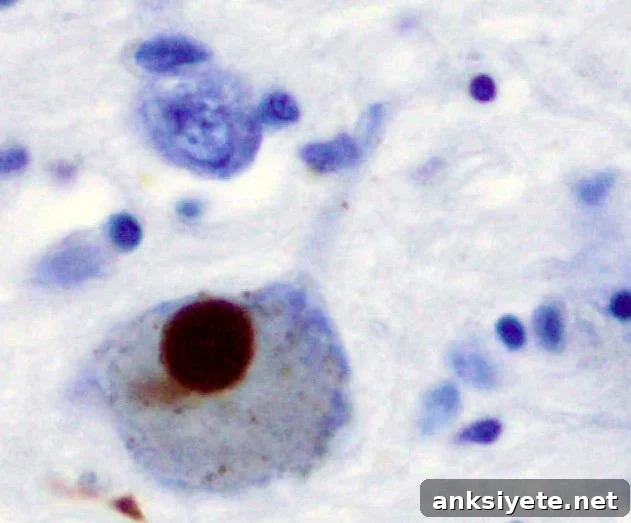
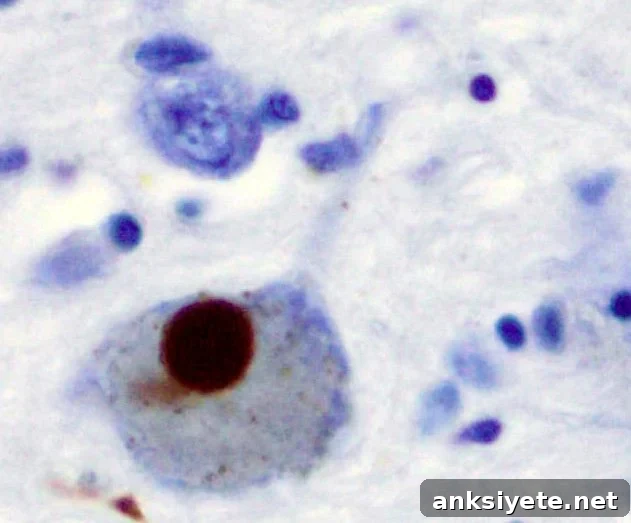
Alpha-synuclein is a protein widely distributed in the nervous system and is the major component of Lewy bodies, the pathological hallmark of Parkinson’s disease. Growing evidence indicates that alpha-synuclein aggregation begins early in the disease process and can appear before clear motor symptoms emerge. Because the skin contains autonomic nerve fibers that control sweating, blood flow, and hair erection, it offers an accessible site to look for pathological changes that mirror those occurring in the brain and autonomic nervous system.
Autonomic symptoms — including changes in bowel function, blood pressure regulation, temperature control, and abnormal sweating — commonly precede the motor signs of Parkinson’s disease. Skin changes such as altered sweating, mottled coloration, or temperature shifts are reported by many patients. These clinical observations motivated the BIDMC team to examine whether alpha-synuclein deposition in cutaneous autonomic nerves could serve as an early, objective marker of Parkinson’s disease.
Study Design and Key Findings
The study enrolled 20 patients diagnosed with Parkinson’s disease and 14 age- and gender-matched control subjects. Participants underwent a standardized neurological examination, autonomic function testing, and skin biopsies taken from three sites on the leg. Investigators measured the presence and amount of alpha-synuclein deposition, along with the density of sensory, sudomotor (sweat-related), and pilomotor (hair erector) nerve fibers in the skin samples.
Results showed a clear increase in alpha-synuclein deposition within the cutaneous nerves that supply sweat glands and pilomotor muscles in patients with Parkinson’s disease compared with controls. Importantly, higher levels of alpha-synuclein in these autonomic nerve fibers were associated with more advanced disease and with worsening autonomic function. These associations support the potential of cutaneous alpha-synuclein as a biomarker reflecting disease severity as well as presence.
Implications and Next Steps
According to senior author Roy Freeman, MD, Director of the Autonomic and Peripheral Nerve Laboratory at BIDMC and Professor of Neurology at Harvard Medical School, a reliable biomarker could help physicians diagnose Parkinson’s disease more accurately and earlier in its course. Detecting alpha-synuclein deposition in the skin could enable earlier intervention, better patient counseling, and improved selection for clinical trials.
The researchers emphasize that additional studies are needed to determine whether skin alpha-synuclein can identify individuals at risk for Parkinson’s disease before clinical symptoms appear, and whether it can distinguish Parkinson’s disease from other neurodegenerative disorders that may also feature abnormal protein deposition. Longitudinal studies and larger cohorts will be necessary to validate diagnostic sensitivity, specificity, and the utility of skin biopsy as a monitoring tool over time.
Study Support and Contributors
Coauthors of the study include Ningshan Wang, PhD, Christopher Gibbons, MD (co-first authors), and Jacob Lafo. The research was supported by the National Institutes of Health grant K23NS020509 and by grants from the Langer Family Foundation and the RJG Foundation.
Contact: Bonnie Prescott – Beth Israel Deaconess Medical Center
Source: Beth Israel Deaconess Medical Center press release
Original Research: Abstract for “α-Synuclein in cutaneous autonomic nerves” by Ningshan Wang, PhD; Christopher H. Gibbons, MD, MMSc; Jacob Lafo, BS; and Roy Freeman, MD, published in Neurology.