
Summary: New research identifies an astrocyte-produced protein that disrupts normal neuronal development across multiple neurodevelopmental disorders, and shows that blocking this protein can reduce disease-related deficits in mice.
Source: Salk Institute
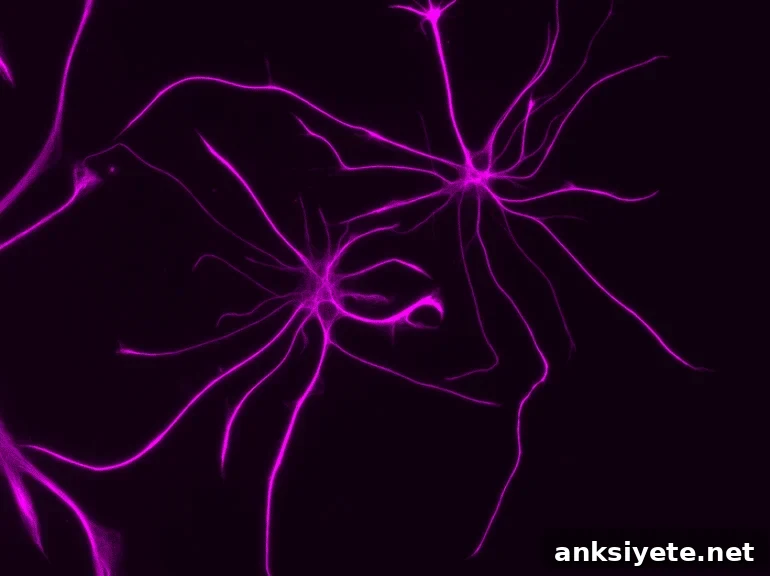
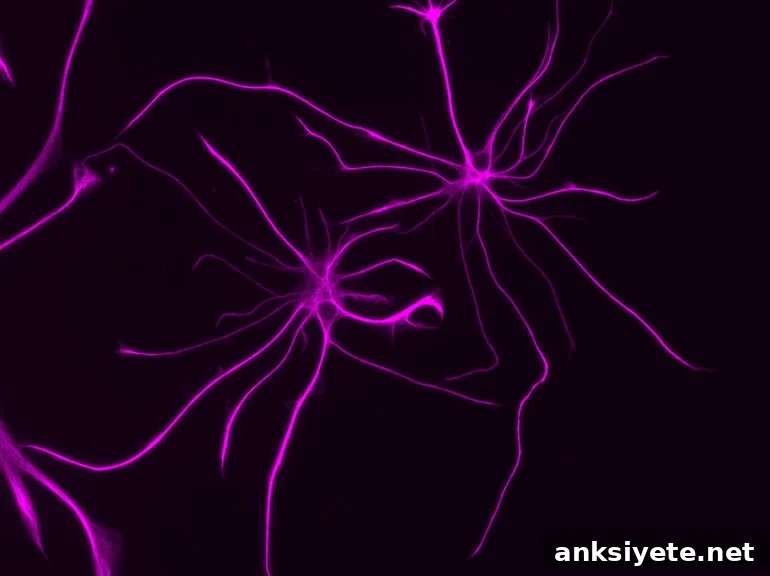
Although neurons are often the focus of studies into brain health and neurological disease, astrocytes—star-shaped glial cells abundant in the brain—play crucial roles in shaping neuronal development and function. New results from the Salk Institute reveal that astrocytes contribute to altered neuronal development in Rett syndrome, fragile X syndrome, and Down syndrome by secreting a protein that interferes with growth-promoting signals.
Researchers led by Associate Professor Nicola Allen isolated astrocytes and neurons from developing mouse brains modeling Rett, fragile X and Down syndromes, as well as from healthy controls. They profiled the proteins secreted by these astrocytes, analyzing 1,235 proteins to determine which were elevated or reduced in disease models compared with healthy astrocytes.
The team found widespread changes: hundreds of proteins were altered in each disorder, and 120 secretion changes were shared across all three models—88 proteins were increased and 32 were decreased. This overlapping pattern suggests common astrocyte-related mechanisms that could underlie diverse neurodevelopmental conditions.
From these shared changes, one protein emerged as a likely mediator of impaired neuronal development: Igfbp2, an insulin-like growth factor binding protein. Insulin-like growth factor (IGF) is known to support neuronal growth and has been shown to reduce symptoms in some animal models of neurodevelopmental disorders. The researchers discovered that, in the disease models, neurons were producing sufficient IGF but excess Igfbp2 from astrocytes was sequestering IGF and preventing it from reaching neurons.
Functional experiments supported this mechanism. Astrocytes from the disease models released excess Igfbp2, which slowed neurite outgrowth and other measures of neuronal maturation. Blocking Igfbp2 in cell cultures improved neuron growth, and administering antibodies that target Igfbp2 in mice modeling Rett syndrome reduced several brain abnormalities associated with the disorder.
“These findings emphasize that non-neuronal cells can drive important aspects of neurodevelopmental disorders,” says Nicola Allen. “Targeting astrocyte-derived factors, such as Igfbp2, offers an alternative approach to therapies that supply IGF systemically, since blocking the inhibitor locally in the brain could restore IGF signaling where it is needed most.”
The study also identified increased bone morphogenetic protein (BMP) signaling as an upstream regulator of the secretion changes, including elevated Igfbp2. Inhibiting BMP signaling in fragile X and Rett astrocytes reversed their negative impact on neurite outgrowth, indicating that modulating upstream pathways may correct harmful astrocyte behavior.
These results provide a valuable resource of astrocyte-secreted proteins altered in neurodevelopmental disorders and point to novel targets for intervention across multiple conditions. The authors note that translating these findings into human therapies will require further research, but the data support a promising new direction that focuses on astrocyte-to-neuron signaling.
Allen’s laboratory plans to pursue follow-up studies on additional proteins identified in the screen and to explore the mechanisms by which Igfbp2 and BMP signaling affect brain development. Other contributors to the work include Alison Caldwell, Laura Sancho, James Deng, Alexandra Bosworth, Audrey Miglietta, Jolene Diedrich and Maxim Shokhirev.
Funding: This research was supported in part by Autism Speaks (Dennis Weatherstone Predoctoral Fellowship), the Chapman Foundation, the National Institute of Child Health and Human Development (F30HD106699), the Chan Zuckerberg Initiative, the Hearst Foundation and the Pew Foundation.
About this neuroscience research news
Author: Salk Communications
Source: Salk Institute
Contact: Salk Communications – Salk Institute
Image: The image is credited to Salk Institute
Original Research: Closed access. Title: “Aberrant astrocyte protein secretion contributes to altered neuronal development in multiple models of neurodevelopmental disorders” by Nicola Allen et al., published in Nature Neuroscience.
Abstract
Aberrant astrocyte protein secretion contributes to altered neuronal development in multiple models of neurodevelopmental disorders
Astrocytes can negatively influence neuronal development in many models of neurodevelopmental disorders (NDs), but the specific secreted factors and whether common mechanisms exist across disorders were unclear. The authors developed a cell culture system to compare astrocyte protein secretion and gene expression in three mouse models of genetic NDs: Rett, fragile X and Down syndromes.
They found that ND astrocytes release increased levels of Igfbp2, a secreted inhibitor of insulin-like growth factor (IGF). Because IGF can rescue neuronal deficits in many NDs, elevated astrocyte-derived Igfbp2 likely contributes to reduced IGF signaling in these models. Blocking Igfbp2 partially restored neuron growth in cultures exposed to Rett astrocytes and antibody blockade in Rett model mice reduced several brain phenotypes.
Increased BMP signaling was identified upstream of the secretion changes, including Igfbp2. Inhibiting BMP signaling in fragile X and Rett astrocytes reversed their inhibitory effects on neurite outgrowth. This work delivers a resource of astrocyte-secreted proteins in healthy and disease states and highlights potential intervention targets that may apply across diverse neurodevelopmental disorders.