
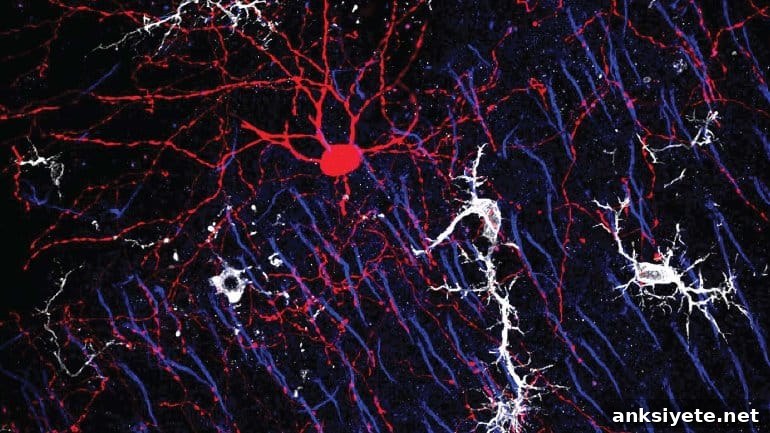
Summary: New research in mice reveals that microglia, the brain’s immune cells, actively support the growth of synapses that are essential for cognitive function.
Source: Cold Spring Harbor Laboratory
Microglia are best known as the brain’s resident immune cells, clearing pathogens and cellular debris much like immune cells elsewhere in the body. During early development they are also recognized for pruning excess synapses to sculpt neural circuits. New findings from Cold Spring Harbor Laboratory show that microglia have a complementary role: under normal developmental conditions, they can promote the formation of specific synapses that are vital for cognitive processing.
Professor Linda Van Aelst and her team at Cold Spring Harbor Laboratory studied how microglia interact with a specialized class of inhibitory neurons called chandelier cells in the mouse brain. Chandelier cells are notable for their distinctive branching axons that target the axonal initial segment (AIS) of pyramidal neurons—the precise region that initiates action potentials. Because each chandelier cell can influence the firing of many neighboring pyramidal neurons through these AIS synapses, chandelier-mediated connections exert powerful control over local excitability and circuit dynamics.
“Most immune cells are associated with removing or consuming unwanted material,” Van Aelst explains. “What we observed instead, at a defined developmental window and under normal physiological conditions, was that microglia did not engulf these synapses. Rather, they wrapped their processes around the structures where chandelier cells form contacts with pyramidal neuron axons, and this interaction supported synapse formation. That was an unexpected and exciting discovery.”
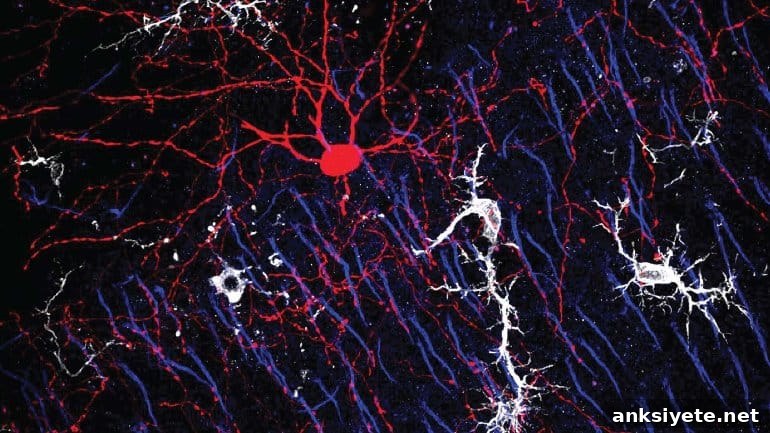
Using a combination of cellular imaging and targeted manipulations, the researchers found that microglial processes form close, embracing contacts around the synapse-forming compartments of chandelier cells and the AIS of pyramidal neurons. These intimate interactions were most prominent during early postnatal development and in young mice, a period when synaptic networks are being established and refined. In contrast, such growth-promoting microglia–chandelier cell interactions were less frequent in adult animals, consistent with a developmental role for this mechanism.
To explore causality, the team disrupted microglial function and observed the consequences for chandelier cell synapses. When microglia were impaired, fewer microglial processes localized to the AIS where chandelier cells make contact, and the number of properly formed AIS synapses decreased. These results indicate that microglia are active contributors to the establishment of these specialized inhibitory connections, rather than merely passive bystanders or solely synapse-pruning agents.
Chandelier cell synapses serve a central function in damping excitatory neuron activity. Proper formation and maintenance of these inhibitory contacts are therefore important for balancing cortical excitation and inhibition. Disruptions to this balance can contribute to neurological and psychiatric conditions; Van Aelst notes that excessive excitation is implicated in disorders such as epilepsy, schizophrenia, and autism. By showing that microglia can support the growth of chandelier-to-AIS synapses, the new work highlights an additional cellular mechanism that contributes to healthy circuit development and cognitive function.
Van Aelst emphasizes that microglia are one of several cell types that shape synaptogenesis, but they appear to be an unexpectedly important player in this context. The discovery raises the possibility that modulating microglial activity during critical developmental windows could influence the formation of key inhibitory circuits. While more research is needed to understand the molecular signals that guide microglia–chandelier cell interactions and to assess therapeutic potential, these findings expand our understanding of how immune cells in the brain support neural circuit assembly.
About this neuroscience research news
Author: Press Office
Source: Cold Spring Harbor Laboratory
Contact: Press Office – Cold Spring Harbor Laboratory
Image: The image is credited to Nicholas Gallo/Van Aelst lab/CSHL, 2022
Original Research: The findings will appear in PNAS