
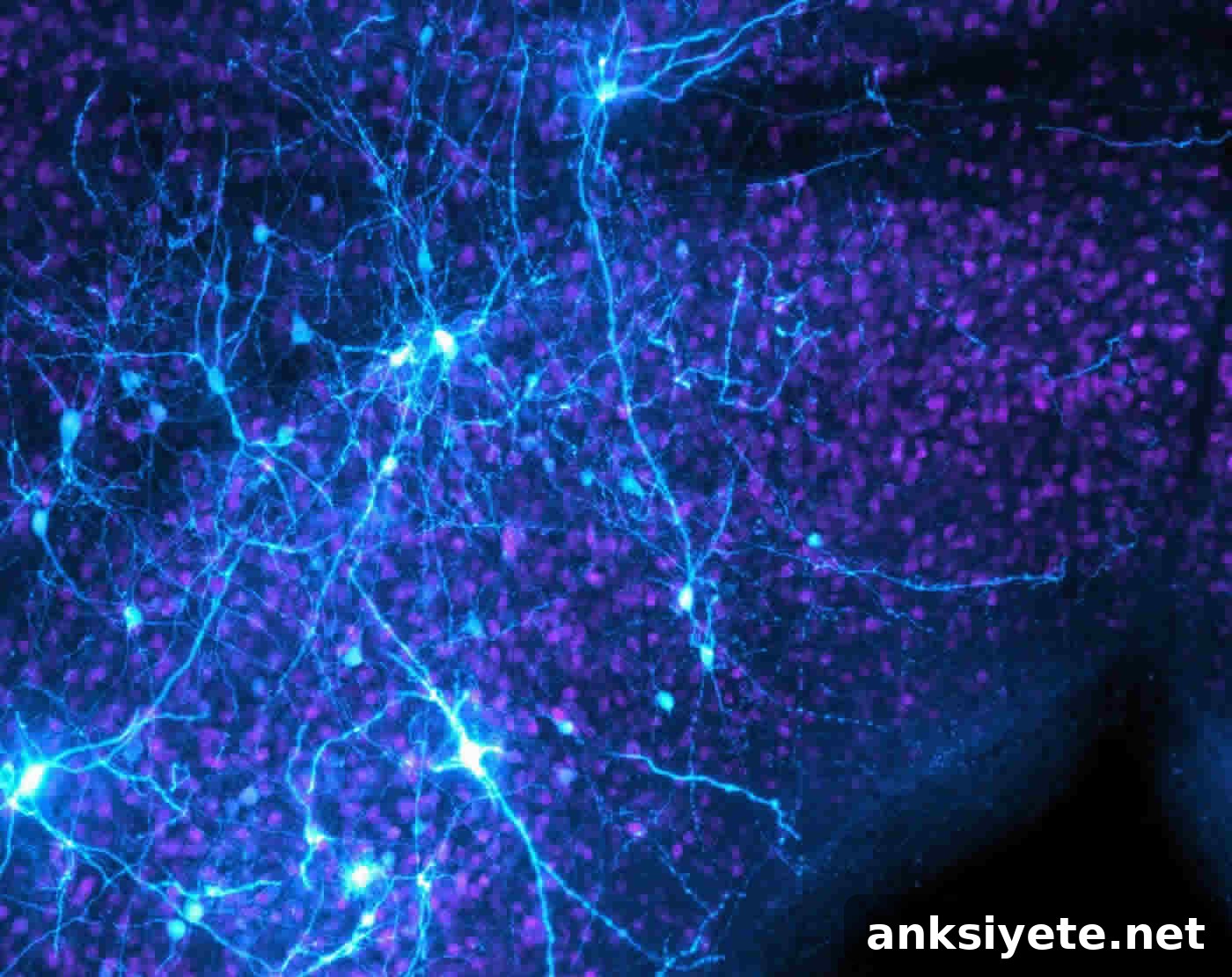
Summary: Researchers have identified a synaptic mechanism that computes escape decisions in the brain.
How does the brain decide what to do in a threatening situation? A new study published in Nature reveals how brain circuits assess threat level and trigger escape behaviour.
Escaping imminent danger is essential for survival, but indiscriminate flight is costly. Escape decisions balance safety against access to valuable resources such as food, shelter and mating opportunities. For humans, pathological fear and anxiety—such as in post-traumatic stress disorder (PTSD)—can produce debilitating avoidance of normal activities. Understanding the neural mechanisms that judge threats and initiate escape can clarify how these processes go awry in anxiety disorders and point toward treatments.
Dr. Tiago Branco, Senior Research Fellow at the Sainsbury Wellcome Centre, said: “We have identified a subcellular mechanism that computes the decision to run away from threats. This detailed level of understanding advances our knowledge of how the brain performs fundamental computations and offers an entry point to investigate conditions that cause excessive defensive behaviour.”
Previous studies had mapped brain regions involved in escape, but it was unclear which circuits actually evaluate threat levels and implement the decision to flee. The research team, led by Dr. Branco, used an ethologically relevant assay in mice: innate responses to overhead looming shadows that mimic a bird of prey. This evolutionary conserved escape behaviour is not learned, allowing the researchers to probe the neural computation that underlies spontaneous flight.
The results show that escape decisions are computed at the synaptic connection between two midbrain structures: the superior colliculus (SC) and the periaqueductal gray (PAG). The SC integrates sensory information and represents the saliency of a threat stimulus, effectively estimating threat level. The PAG represents activity once a threshold is crossed and initiates the motor program for escape. In simple terms, the SC signals how threatening a stimulus is, while the PAG executes escape when that signal exceeds a threshold.
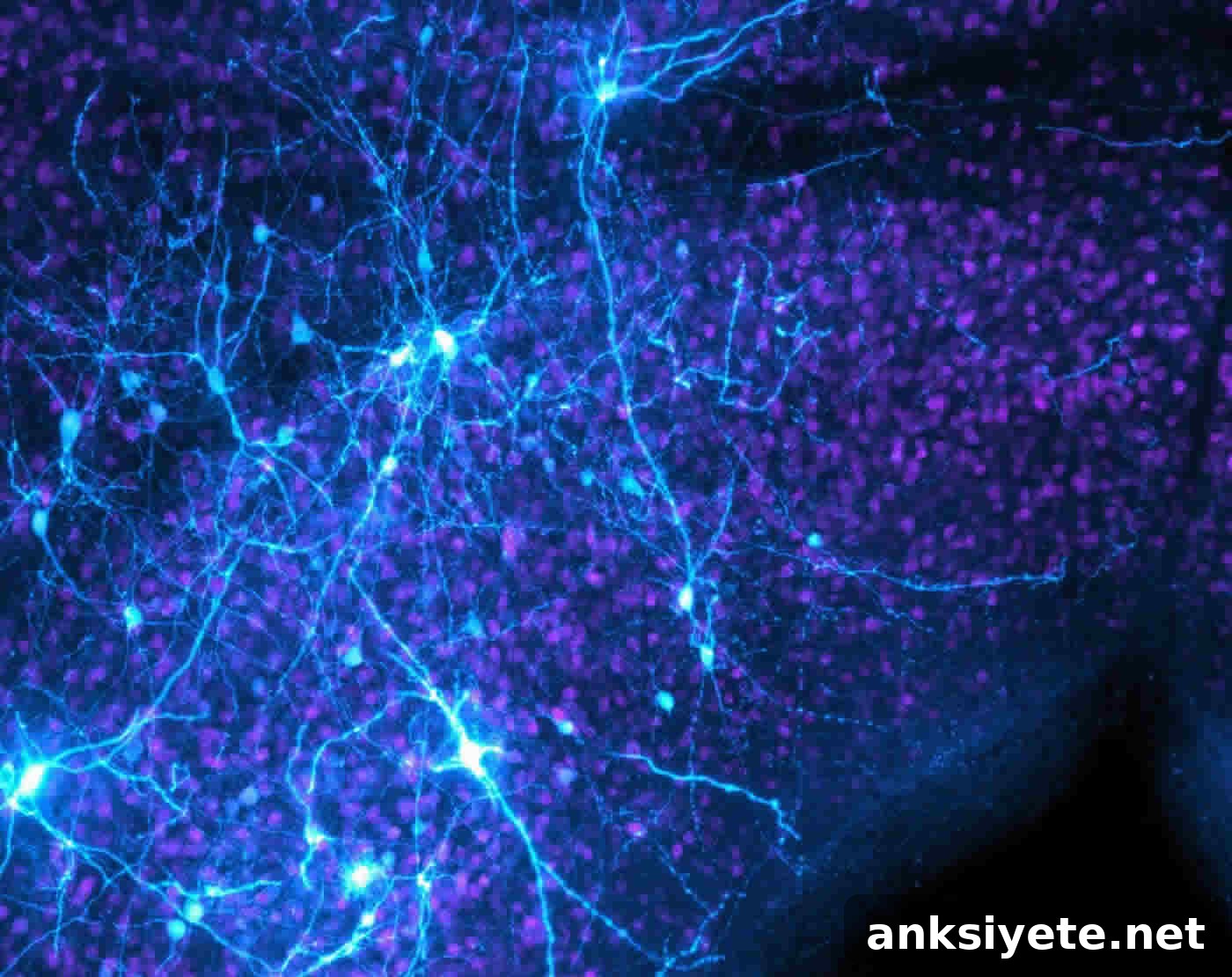
Mechanistically, the SC-to-PAG synapse is naturally weak and unreliable, acting like a gate that prevents escape in response to minor or transient threats. Only when threat signals are strong and sustained does the synaptic drive overcome this weak connection and recruit PAG neurons to trigger escape. Short-term synaptic facilitation and recurrent excitation within the SC amplify persistent or highly salient inputs, helping to push the system past the escape threshold. This arrangement implements a synaptic threshold computation: the decision emerges at the level of the connection between brain regions rather than being purely encoded in the firing of individual neurons.
The investigators combined multiple experimental approaches to support this model. They used quantitative behavioural assays that varied the probability of escape, calcium imaging with head-mounted microscopes to record activity in freely moving mice, and high-density Neuropixels probes for detailed electrophysiology. A chemogenetic manipulation targeted specifically to the SC-PAG synapse demonstrated that disrupting this connection prevented escape, proving its causal role. Finally, the team developed a computational model that reproduces how escape probability and vigour scale with threat saliency and how a threshold computation explains observed behaviour.
These findings show that glutamatergic neurons in the deep layers of the medial superior colliculus represent threat saliency and predict escape, while glutamatergic neurons in the dorsal periaqueductal gray encode the choice to escape and determine escape vigour. The synaptic connection from SC to PAG is monosynaptic and excitatory but unreliable; it provides a biophysical threshold that must be exceeded before escape is initiated.
Future research will address how this synaptic threshold is adjusted by experience and by the current environmental context. “Successfully escaping from threats depends on your internal model of the environment — what to expect and how likely safety is,” Dr. Branco noted. “Now that we have identified a critical circuit element that controls the decision to escape, we can investigate how variables such as the likelihood of reaching safety and the availability of shelters influence that threshold.”
Funding: This research received support from a Wellcome Trust/Royal Society Henry Dale Fellowship, Medical Research Council grants, Wellcome Trust and Gatsby Charitable Foundation fellowships, MRC PhD studentships, Boehringer Ingelheim Fonds PhD support, DFG fellowship, Marie Sklodowska-Curie Individual Fellowship and EMBO Long Term Fellowship.
Source: April Cashin-Garbutt, Sainsbury Wellcome Centre
Publisher: NeuroscienceNews.com
Image credit: Sainsbury Wellcome Centre
Original research: “A synaptic threshold mechanism for computing escape decisions” by Dominic A. Evans, A. Vanessa Stempel, Ruben Vale, Sabine Ruehle, Yaara Lefler & Tiago Branco. Published in Nature (June 20, 2018). DOI: 10.1038/s41586-018-0244-6.
A synaptic threshold mechanism for computing escape decisions
Escaping imminent danger is a conserved instinct that requires classifying sensory stimuli as harmless or threatening. When no threat is present, animals forage; as threat and potential harm increase, they must decide whether to seek safety. This study shows that both the probability and vigour of escape in mice scale with threat saliency and are well described by a model computing the distance between threat level and an escape threshold. Calcium imaging and optogenetics reveal that excitatory neurons in the deep layers of the medial superior colliculus (mSC) represent threat saliency and predict escape, while glutamatergic neurons in the dorsal periaqueductal gray (dPAG) represent the escape choice and control vigour. A feed-forward monosynaptic excitatory mSC→dPAG connection is weak and unreliable yet necessary for escape, providing a synaptic threshold for dPAG activation. High mSC network activity can overcome this threshold via short-term facilitation and recurrent excitation, amplifying and sustaining drive to dPAG. Thus, dPAG glutamatergic neurons implement escape decisions and vigour using a synaptic mechanism that thresholds threat information from the mSC, offering a biophysical model of how the brain computes this critical behaviour.