
Early Maternal Nurturing Predicts Larger Hippocampus in School-Age Children
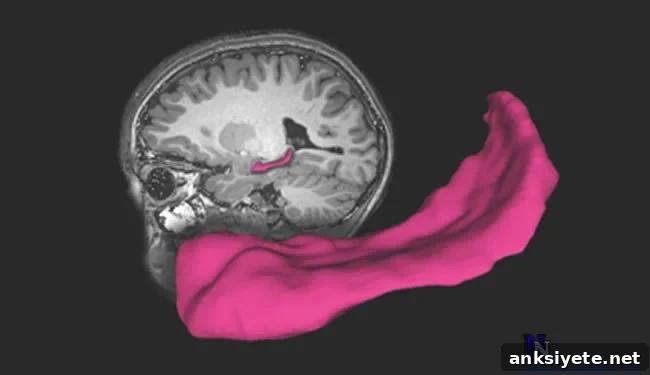
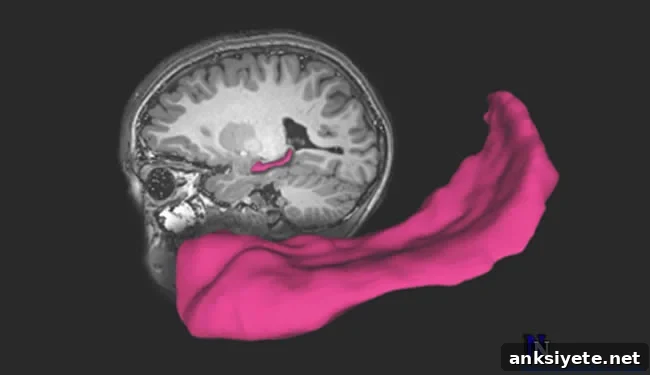
Children who experienced nurturing care from their mothers during early childhood show a larger hippocampus by school age, according to research by child psychiatrists and neuroscientists at Washington University School of Medicine in St. Louis. The hippocampus is a vital brain region involved in learning, memory and the regulation of stress responses.
This study is the first to directly link observable maternal nurturing during early childhood to measurable anatomical differences in children’s brains. The findings were published online in the Proceedings of the National Academy of Sciences Early Edition.
“This research validates what many have long suspected: nurturing parents play a crucial role in shaping adaptive development,” said lead author Joan L. Luby, MD, professor of child psychiatry. “From a public health perspective, these results underscore the value of supporting and teaching nurturing behaviors in caregivers because of their clear, long-term impact.”
The researchers followed a group of children who had previously participated in a preschool study of depression that began roughly a decade earlier. That earlier study included children aged three to six who either showed symptoms of depression, exhibited other psychiatric disorders, or were considered mentally healthy. During the preschool study each child was videotaped interacting with a primary caregiver—most often the mother—while the caregiver completed a task and the child was instructed to wait to open an appealing gift. Independent raters, unaware of the child’s clinical history or the parent’s temperament, evaluated how much the caregiver supported and soothed the child under this mildly stressful condition.
Luby emphasized the objectivity of this approach: caregivers were classified by their observed behavior rather than by self-report. The videotaped task was designed to approximate everyday parenting challenges, and such structured observations are commonly used in developmental research to identify nurturing tendencies in interactions between caregivers and children.
For the present study, researchers obtained brain scans from 92 children who had been assessed during the preschool phase. The imaging revealed that among children who had been mentally healthy in preschool, those who had received more maternal nurturing had hippocampal volumes nearly 10 percent larger than those whose mothers had shown less nurturing during the earlier observations.
“Past research has long shown that an early nurturing environment is associated with positive developmental outcomes, but most of that evidence focused on behavior and school performance,” Luby said. “This study adds a new dimension by demonstrating a concrete anatomical difference in the brain that corresponds with early maternal support.”
The hippocampus plays a central role in the body’s response to stress by interacting with the autonomic nervous system and influencing stress hormone release. It is also essential for learning and memory. Larger hippocampal volume has implications for more effective stress regulation and may correlate with better cognitive performance, including academic achievement.
The researchers also noted smaller hippocampal volumes in children who had experienced depression, consistent with findings in adult studies. What was particularly notable, however, was the strong association between early maternal nurturing and hippocampal size among the children who were not depressed.
Although nearly all evaluated caregivers in the original observational study were biological mothers (about 95 percent), the investigators stressed that the benefits of nurturing are likely not limited to mothers alone. Any primary caregiver—fathers, grandparents, adoptive parents or other guardians—who provides consistent nurturing support may contribute similarly to healthy brain development.
Animal research has shown parallel effects: in rodents, maternal nurturance alters gene expression and receptor systems that influence hippocampal development, and comparable patterns have been reported in primate studies. This human study provides evidence suggesting a comparable association between early nurturing behavior and hippocampal anatomy in children.
From an applied perspective, the authors suggest that programs for families and early educators should emphasize not only task-based skills but also how caregivers interact with and support their children. Teaching parents how to nurture—how to respond sensitively to a child’s needs and to provide emotional support—could be an important component in promoting healthy development and improved school readiness.
Notes about this brain research article
Funding: This research was supported by grants from the National Institute of Mental Health of the National Institutes of Health (NIH).
By Jim Dryden – Associate Director of Broadcast Services at Washington University in St. Louis. Source: Washington University in St. Louis press release.
Image source: Neuroscience image adapted from the university press release with credit to Washington University School of Medicine.
Original research: “Maternal support in early childhood predicts larger hippocampal volumes at school age” by Luby JL, Barch DM, Belden A, Gaffrey MS, Tillman R, Babb C, Nishino T, Suzuki H, Botteron KN. Proceedings of the National Academy of Sciences Early Edition, Jan. 30, 2012.