
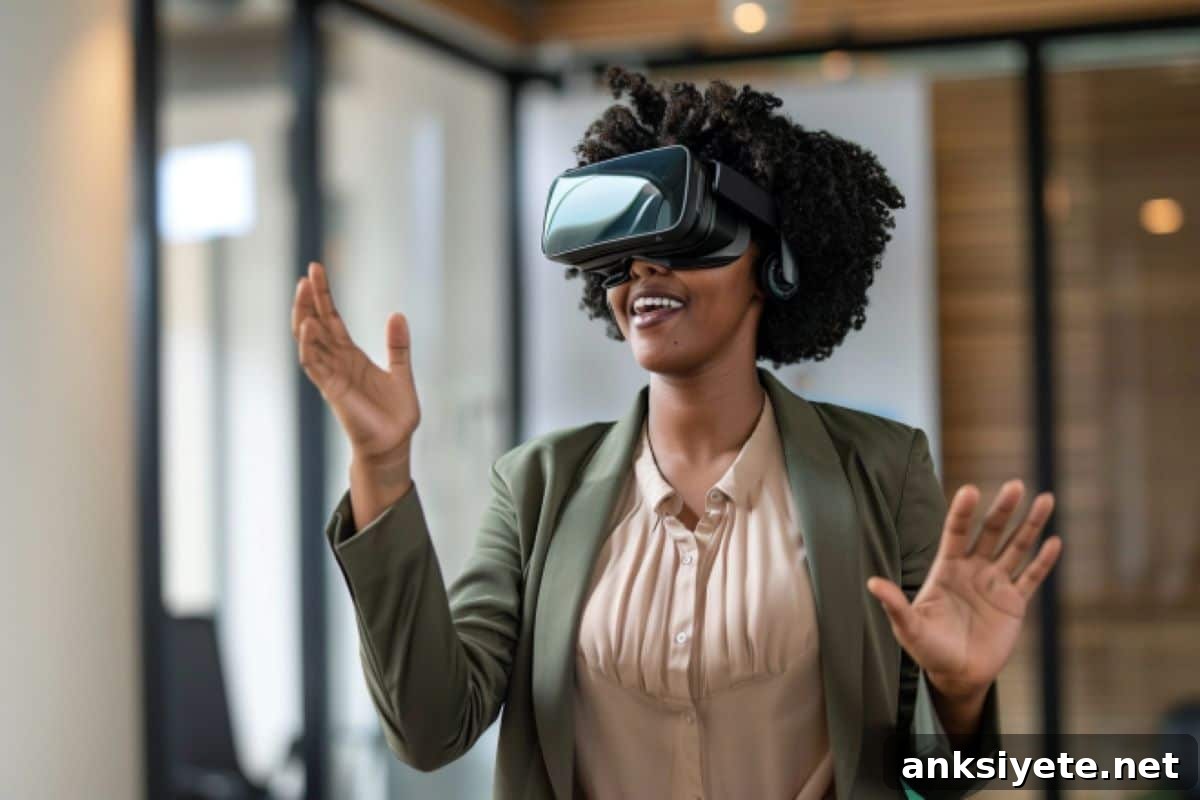
Summary: Researchers at Singapore Management University are developing PresentationPro, a virtual reality (VR) and artificial intelligence (AI) platform designed to improve public speaking skills and reduce public speaking anxiety. PresentationPro recreates realistic presentation environments populated by AI-driven audience avatars that react to both verbal and non-verbal cues, offering presenters immediate, data-driven feedback in a safe, repeatable practice setting.
Key Facts:
- PresentationPro combines AI and VR to generate lifelike audience interactions and realistic presentation scenarios.
- The system monitors speech patterns, body language, gaze, and physiological signals to trigger appropriate audience responses.
- The platform aims to reduce glossophobia (fear of public speaking) and build confidence through repeated, low-risk exposure and tailored feedback.
Source: Singapore Management University
If you dread public speaking, you are not alone. Glossophobia—the intense fear of speaking in public—affects a significant portion of the population. Estimates vary, with studies suggesting anywhere from roughly 20 percent to nearly 40 percent of people experiencing substantial anxiety when required to present to a group. As Mark Twain wryly observed, “There are two types of speakers: Those who get nervous and those who are liars.”
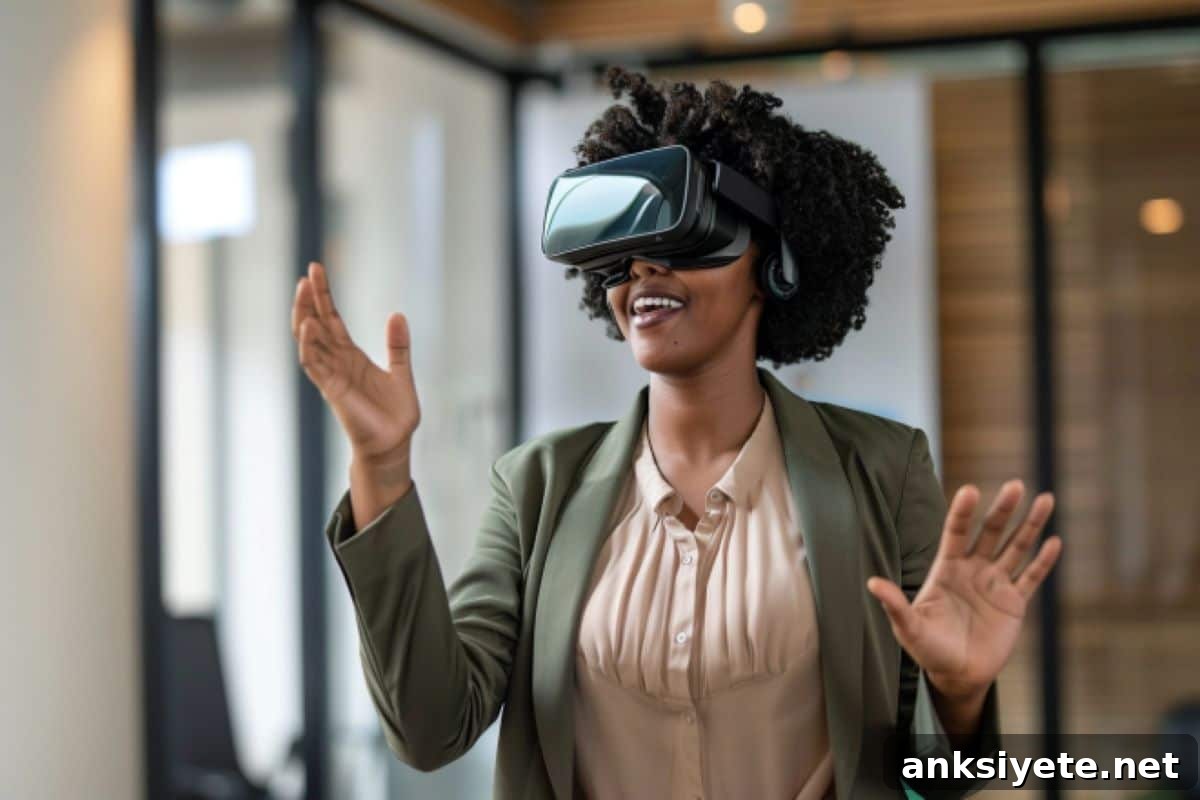
Associate Professor Kyong Jin Shim of Singapore Management University (SMU) leads the PresentationPro research project, funded by an MOE Tertiary Education Research Fund (TRF) grant. While the initial study focuses on improving university students’ presentation skills, the technology and methods under development could be applied to a wide range of learners and professionals seeking to overcome public speaking anxiety.
PresentationPro immerses users in a three-dimensional virtual setting that mirrors real-world classrooms, lecture halls, or seminar rooms. A diverse cast of AI-driven avatars populate the virtual audience and are programmed to display natural behaviours—nodding, making eye contact, shifting expressions, and even interrupting to ask questions—so presenters encounter the dynamics of live interactions without logistical constraints.
AI-driven audience and real-time responsiveness
Creating responsive avatars requires the integration of natural language processing (NLP), speech recognition, sentiment analysis, and behaviour modelling. PresentationPro uses machine learning to analyse a presenter’s spoken words, pacing, vocal hesitations, and non-verbal cues such as gaze direction, head movement, and gestures. Physiological data, like heart rate monitored with wearable devices, can be incorporated to gauge stress and trigger realistic audience reactions. These multimodal inputs let the avatars respond in real time to verbal and non-verbal signals, producing a more authentic practice environment.
The project team worked closely with SMU’s Centre for English Communication (CEC) to translate evidence-based presentation techniques into a digital coaching framework. SMU’s Centre for Teaching Excellence (CTE) contributed expertise on classroom dynamics to ensure avatar behaviours reflect realistic responses commonly seen in seminar and lecture settings. This collaboration helps PresentationPro avoid repetitive patterns by deploying a variety of avatar personas and reactions, increasing unpredictability and realism during practice sessions.
Measuring improvement and behavioural outcomes
PresentationPro aims to produce measurable improvements in public speaking performance. Researchers plan to evaluate outcomes using both subjective assessments—self-reports from participants and instructor feedback—and objective metrics captured during VR sessions, such as eye contact duration, speech fluency, gesture frequency, and physiological indicators. Controlled comparisons between users who receive VR training and those who undergo traditional instruction will determine the platform’s effectiveness in reducing anxiety and boosting presentation competence.
By providing repeated exposure in a controlled, low-risk environment, the system encourages incremental behavioural change: increased comfort with audience interaction, more confident body language, fewer speech disfluencies, and improved overall delivery. Over time, these gains are expected to generalise to real-world presentations.
Interdisciplinary development and future directions
Although the initial team concentrated on educational technology, AI, and instructional design, the project recognises the importance of psychological expertise in addressing anxiety. SMU Assistant Professor of Psychology Andree Hartanto has joined the team to investigate psychological mechanisms that underlie reductions in glossophobia, the long-term impacts of VR training, and how effects may vary across demographic groups.
Professor Shim’s interest in VR for teaching began in 2021 with a prototype to help new lecturers acclimatise to SMU’s seminar-style classrooms. That early work demonstrated how immersive practice, flexible scheduling, and repeatable sessions can accelerate onboarding and skill development. PresentationPro extends that concept to students, offering a scalable, technology-driven approach to communication coaching that complements traditional instruction.
About this AI, VR, and social anxiety research news
Author:Lijie Goh
Source: Singapore Management University
Contact: Lijie Goh – Singapore Management University
Image: The image is credited to Neuroscience News