
Diaminothiazole Kinase Inhibitors Reduce Tau Pathology and Protect Neurons in Alzheimer’s Mouse Models
Building on research published eight years earlier in the Journal Chemistry and Biology, Kenneth S. Kosik, Harriman Professor in Neuroscience and co-director of the Neuroscience Research Institute (NRI) at UC Santa Barbara, and his laboratory have extended those findings to two widely used mouse models of Alzheimer’s disease. Their work identifies a promising molecular target and demonstrates that small-molecule inhibitors can reduce tau pathology and protect neurons.
The study was published online June 4 as the Paper of the Week in the Journal of Biological Chemistry, an honor given to a small percentage of the journal’s annual publications for their significance and impact.
The research focuses on tau, a microtubule-associated protein normally present in neurons. In Alzheimer’s disease and related tauopathies, tau becomes abnormally modified by the attachment of phosphate groups—a process known as hyperphosphorylation. Hyperphosphorylated tau aggregates into paired helical filaments that form neurofibrillary tangles (NFTs), one of the pathological hallmarks of Alzheimer’s disease alongside amyloid-ß plaques.
“What struck me most while working on this project was how many people I met who came forward to share their stories and worries about Alzheimer’s disease,” said Xuemei Zhang, lead co-author and assistant specialist in the Kosik Lab. “There is no doubt that finding effective therapeutics is the essential path to helping this fast-growing population.” Israel Hernandez, a postdoctoral scholar at the NRI and UCSB’s Department of Molecular, Cellular and Developmental Biology, is the paper’s other lead co-author.
Currently available treatments for Alzheimer’s disease offer only symptomatic relief, typically by increasing concentrations of neurotransmitters to support neuronal signaling. There are no approved therapies that directly reverse or halt tau hyperphosphorylation and aggregation. This study explores an alternative strategy: targeting the kinases that add phosphate groups to tau.
The team investigated a small class of molecules called diaminothiazoles, which act as kinase inhibitors. Specifically, they tested several diaminothiazole compounds against two kinases known to phosphorylate tau extensively: CDK5/p25 and GSK3ß. Using two established Alzheimer’s disease mouse models, the researchers evaluated compound potency, toxicity, and effects on tau pathology and neuronal function.
One lead compound, designated LDN-193594, produced striking benefits in these preclinical models. Diaminothiazole treatment effectively inhibited CDK5 and GSK3ß activity at therapeutic doses with minimal observable toxicity. In treated mice, the inhibitors reduced levels of hyperphosphorylated tau and decreased the presence of paired helical filaments in the brain. Importantly, the compounds also showed neuroprotective effects: treatment mitigated neuronal loss associated with elevated CDK5 activity and restored behavioral performance in a fear-conditioning assay that measures learning and memory.
The authors emphasize that these results strengthen the rationale for using small-molecule kinase inhibitors to slow or modify tau-driven pathology. Because both CDK5 and GSK3ß contribute to tau phosphorylation, the investigators suggest that an effective therapeutic approach may require simultaneous targeting of multiple kinases to achieve robust reduction in tau hyperphosphorylation and aggregation.
Madison Cornwell, a Beckman Scholar who worked in the Kosik lab, noted: “As an initial step, we showed that two of these compounds cleared tau tangles in a mouse model. These findings raise the possibility that, with further development and testing, kinase inhibitors could help reduce tau pathology and related symptoms in patients with Alzheimer’s disease.”
Notes about this Alzheimer’s disease research
Contact: Julie Cohen, University of California Santa Barbara
Source: University of California Santa Barbara press release
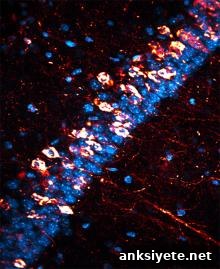
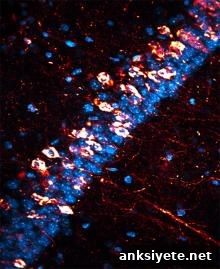
Image credit: Neurofibrillary tangles image credited to Israel Hernandez and adapted from the UCSB press release.
Original research: The study is titled “Diaminothiazoles Modify Tau Phosphorylation and Improve the Tauopathy in Mouse Models” by Xuemei Zhang, Israel Hernandez, Damien Rei, Waltraud Mair, Joydev K. Laha, Madison E. Cornwell, Gregory D. Cuny, Li-Huei Tsai, Judith A. J. Steen, and Kenneth S. Kosik, published in the Journal of Biological Chemistry. The manuscript presents preclinical evidence that diaminothiazole kinase inhibitors reduce tau hyperphosphorylation, lower paired helical filament burden, confer neuroprotection, and improve cognitive-like behavior in mouse models of tauopathy.
This research highlights a potential therapeutic avenue that targets the molecular drivers of tau pathology. While these findings are preclinical and further work is needed to evaluate safety, dosing, and efficacy in humans, they provide a promising foundation for future drug development aimed at slowing or preventing the progression of Alzheimer’s disease and related neurodegenerative disorders driven by pathological tau.