
Brain cell insulation abnormalities caused in part by genes
Schizophrenia is among the most disabling psychiatric disorders. It commonly begins in adolescence or early adulthood and can profoundly disrupt thinking, perception and daily functioning. For decades researchers have sought to understand its causes and to identify targets for prevention and treatment.
Decades of research point to both genetic and environmental contributions to schizophrenia risk. However, recent genetic studies have made it clear that there is no single “schizophrenia gene.” Instead, risk appears to arise from many genes that interact with each other and with life experiences. This complexity requires that researchers examine groups of related genes and the biological pathways they affect.
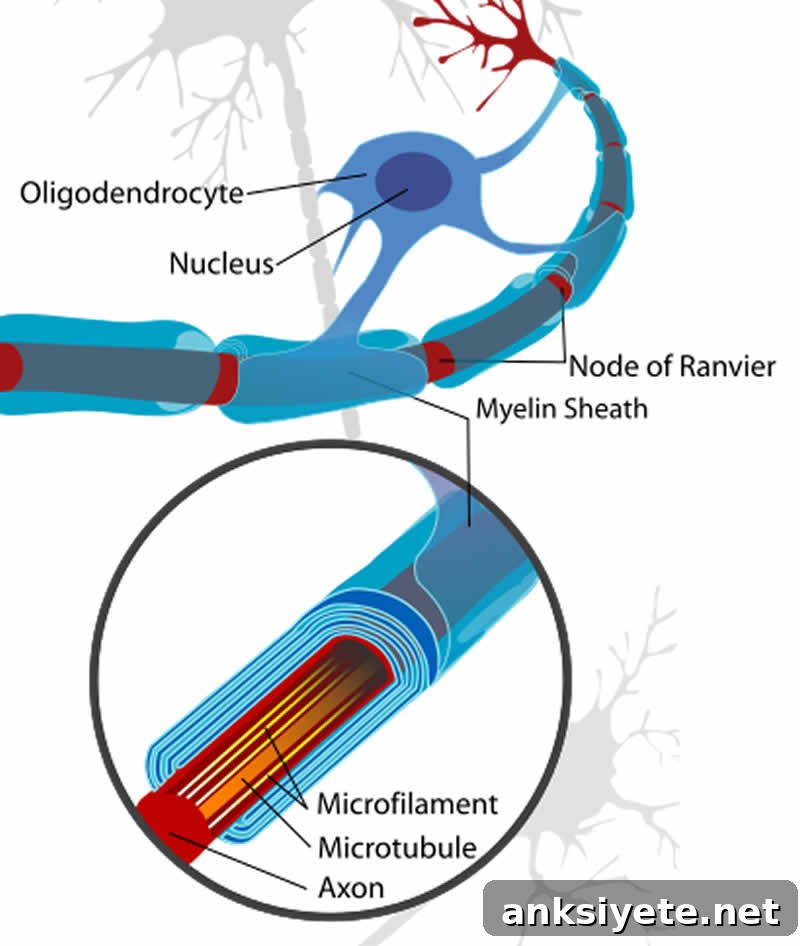
In a study published in PLOS ONE, researchers led by Bruce Cohen of Harvard Medical School and McLean Hospital provide strong evidence implicating a specific group of genes involved in the brain’s cellular insulation. The team focused on genes that regulate the function of oligodendrocytes, the cells responsible for producing myelin—the fatty sheath that insulates nerve fibers and enables fast, reliable electrical signaling.
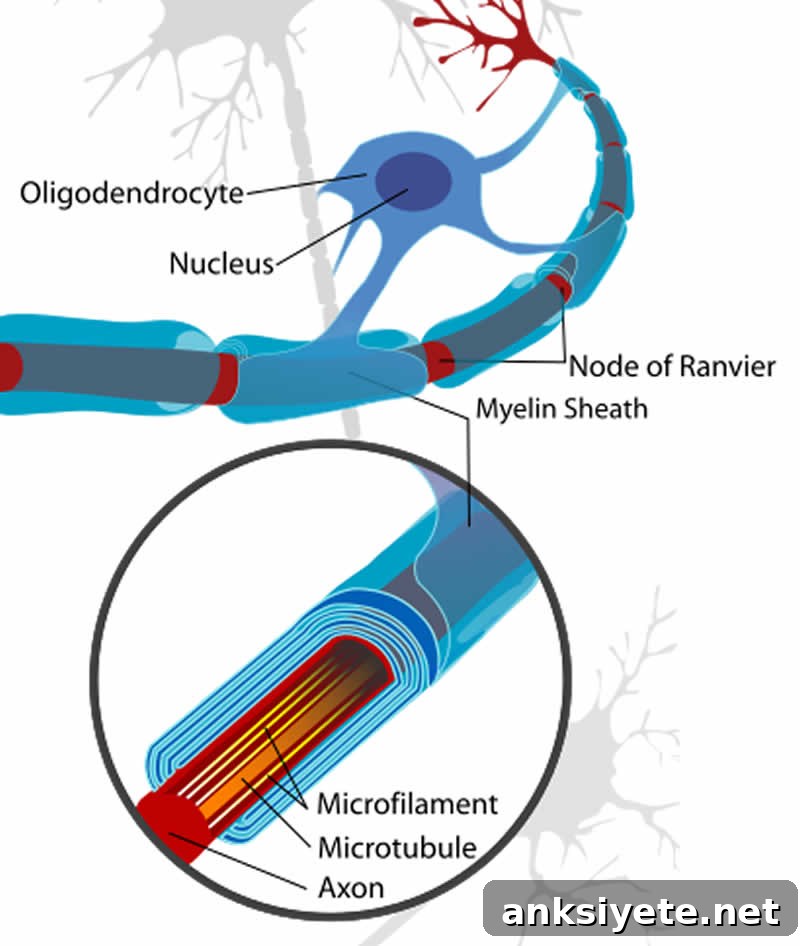
Prior imaging and postmortem studies have repeatedly observed abnormalities in the brain’s white matter—the complex network of myelinated axons that connects different brain regions. Those findings suggested impaired connectivity and disrupted signaling in schizophrenia, but it was difficult to determine how much of that disruption was inherited versus caused by environmental factors such as medication, illness course or exposures across life.
To address this, the research team selected sets of genes based on convergent results from multiple prior studies worldwide. They prioritized genes involved in the development and function of oligodendrocytes and myelin. Using pathway-based analyses and multiple confirmatory approaches, the investigators tested whether these oligodendrocyte-related genes, taken as a group, were associated with schizophrenia.
The study’s results provide compelling evidence that the white-matter and insulation abnormalities seen in schizophrenia are at least partly genetically determined. In their primary analysis and in three independent confirmatory tests, the researchers found a significant association between schizophrenia and gene pathways that govern oligodendrocyte activity and myelin maintenance.
These findings give a plausible biological explanation for impaired neural communication in schizophrenia: when myelin formation or oligodendrocyte function is compromised, nerve fibers cannot transmit signals as precisely or efficiently, potentially leading to disturbances in thought, perception and cognition. Demonstrating that these abnormalities have a genetic component helps distinguish inherited vulnerability from changes that might result solely from environmental influences or the downstream effects of illness.
Importantly, the study also identifies a specific cellular target—oligodendrocytes—that can be examined in greater detail. Understanding precisely how these cells and the genes that support them are altered in schizophrenia will guide further research aimed at preventing or reversing those changes. That could open new avenues for interventions designed to protect or restore myelin integrity and improve neural connectivity.
The current findings are reinforced by independent reports from other research groups using different methods, strengthening confidence that oligodendrocyte and myelin-related pathways play a meaningful role in schizophrenia risk.
According to Bruce Cohen, HMS Robertson-Steele Professor of Psychiatry and director of the Shervert Frazier Research Institute at McLean Hospital, identifying this genetic pathway clarifies one mechanism by which risk for schizophrenia can arise and points toward testable strategies for reducing that risk and the disorder’s burden.
Notes about this research
The study includes contributions from investigators at Harvard Medical School, Harvard School of Public Health, McLean Hospital, Massachusetts General Hospital, The Broad Institute of MIT and Harvard, and Cardiff University School of Medicine. Funding came from the National Institutes of Health, the National Alliance for Research on Schizophrenia and Depression (NARSAD), and institutional research awards at McLean Hospital.
Contact: Jenna Brown, Harvard Medical School
Source: Harvard Medical School press release
Image source: Public-domain neuron diagram credited to Andrew c (used for illustration only).
Original research: “Pathway Analyses Implicate Glial Cells in Schizophrenia” by Laramie E. Duncan et al., PLOS ONE, DOI: 10.1371/journal.pone.0089441.