
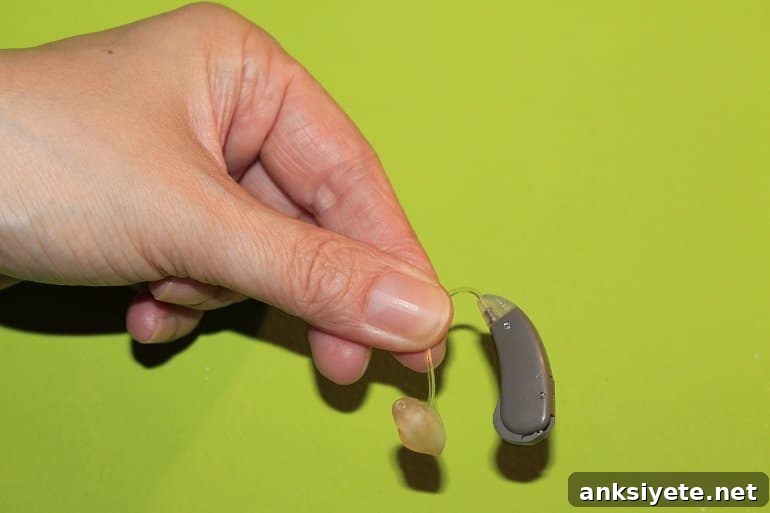
Summary: A large UK cohort study finds that people with hearing loss who do not use hearing aids have a higher risk of developing dementia than those without hearing loss; hearing aid users with hearing loss show no increased dementia risk.
Source: The Lancet
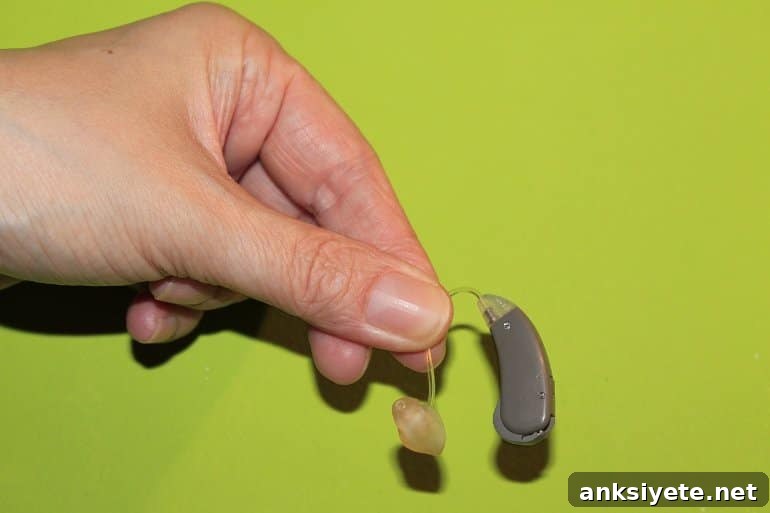
New research published in The Lancet Public Health suggests that untreated hearing loss is associated with a higher risk of dementia, while use of hearing aids is linked to a dementia risk similar to that of people without hearing loss.
Dementia and hearing impairment are common in older adults, and prior work has estimated that hearing loss could contribute to a sizeable portion of dementia cases globally. To better understand whether hearing aid use alters dementia risk, researchers analysed data from 437,704 participants in the UK Biobank. Hearing difficulties and hearing aid use were self-reported at baseline; dementia diagnoses were identified from hospital records and death registries over a median follow-up of approximately 12 years. The average age at recruitment was 56 years.
About three-quarters of participants (325,882 of 437,704) reported no hearing loss, while 111,822 reported some level of hearing impairment. Among those with hearing loss, 11.7% (13,092 of 111,822) reported using hearing aids.
After adjusting for multiple potential confounders, the investigators found that people with hearing loss who did not use hearing aids had a 42% higher risk of developing all-cause dementia compared with participants without hearing loss (hazard ratio 1.42, 95% CI 1.29–1.56). In contrast, people with hearing loss who used hearing aids showed no statistically significant increase in dementia risk (HR 1.04, 95% CI 0.98–1.10). In absolute terms, the adjusted analysis corresponds to an approximate 1.7% risk of dementia among those with untreated hearing loss versus about 1.2% among people without hearing loss or those with hearing loss who used hearing aids.
The study also examined whether psychosocial factors—specifically social isolation, loneliness, and depressive symptoms—helped explain the association between hearing aid use and lower dementia risk. Mediation analysis estimated that improving these factors would account for less than 8% of the protective association, suggesting that the benefit of hearing aids is not solely explained by improvements in social or mood-related pathways.
“The accumulating evidence points to hearing loss as one of the most influential modifiable mid-life risk factors for dementia,” says corresponding author Prof. Dongshan Zhu, Shandong University. “Our results provide strong population-level evidence that hearing aids may be a low-risk, cost-effective intervention to reduce the potential impact of hearing loss on cognitive decline.”
The authors emphasise the need for earlier identification and treatment of hearing impairment. In the UK, nearly 80% of people with hearing loss do not use hearing aids. Hearing loss often begins in the 40s, and cognitive decline preceding a dementia diagnosis can span decades. The researchers call for public-health efforts to raise awareness, lower costs, improve access to hearing care, and support primary care screening and treatment.
The authors note limitations. Hearing loss and hearing aid use were self-reported and therefore vulnerable to misclassification and bias. As an observational study, reverse causation (early neurodegeneration leading to hearing changes) or shared underlying mechanisms could contribute to the association. Unmeasured confounding remains possible—for example, individuals who use hearing aids might also be more likely to engage in other health-promoting behaviours. Additionally, most UK Biobank participants are white, and few were born deaf or primarily use sign language, which may limit the generalisability of findings to other populations.
Independent commentators from University College London noted that, while randomized controlled trials would provide the strongest evidence, they may not be feasible or ethical because withholding effective treatment is problematic. They highlighted that treating hearing loss appears to be a promising and potentially cost-effective strategy to reduce dementia risk and called for wider detection and treatment of hearing impairment.
Funding: This study was supported by the National Natural Science Foundation of China and Shandong Province, the Taishan Scholars Project, the China Medical Board, and the China Postdoctoral Science Foundation.
About this dementia research news
Author: Press Office
Source: The Lancet
Contact: Press Office – The Lancet
Image: The image is in the public domain
Original Research: Open access. “Association between hearing aid use and all-cause and cause-specific dementia: an analysis of the UK Biobank cohort” by Dongshan Zhu et al., Lancet Public Health
Abstract
Association between hearing aid use and all-cause and cause-specific dementia: an analysis of the UK Biobank cohort
Background
Dementia and hearing loss are common among middle-aged and older adults. The study aimed to assess whether hearing aid use is associated with the risk of all-cause and cause-specific dementia and to explore potential mediators and moderators of that association.
Methods
The analysis used UK Biobank data collected from 2006 to 2010 for adults aged 40–69 across 22 centres in England, Scotland, and Wales. Researchers applied Cox proportional hazards models to estimate hazard ratios for dementia outcomes (all-cause dementia, Alzheimer’s disease, vascular dementia, and other non-Alzheimer non-vascular dementias) according to self-reported baseline hearing status and hearing aid use. Dementia diagnoses were ascertained from hospital and death-register records. The team also evaluated mediation by social isolation, loneliness, and mood, and moderation by education, income, smoking, comorbidity, and APOE genotype.
Findings
After excluding participants who did not answer the hearing question (n=25,081) and those with dementia at baseline (n=283), 437,704 people were included. Compared with those without hearing loss, people with untreated hearing loss had an increased risk of all-cause dementia (HR 1.42, 95% CI 1.29–1.56), whereas people with hearing loss who used hearing aids did not have a significantly increased risk (HR 1.04, 95% CI 0.98–1.10). The association held for Alzheimer’s disease, vascular dementia, and other dementia subtypes. The attributable fraction of dementia linked to hearing loss was estimated at 29.6%. Mediation analysis suggested that 1.5% of the association was explained by reduced social isolation, 2.3% by decreased loneliness, and 7.1% by improvements in depressed mood.
Interpretation
Among people with hearing loss, hearing aid use is associated with a dementia risk similar to those without hearing loss. If hearing loss management can prevent a portion of dementia cases, early detection and treatment of hearing impairment should be pursued to help reduce cognitive decline.
Funding
National Natural Science Foundation of China and Shandong Province, Taishan Scholars Project, China Medical Board, and China Postdoctoral Science Foundation.