
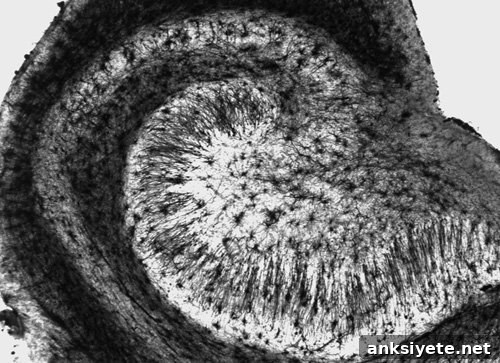
New research from the University of Florida suggests that producing new nerve cells in the hippocampus may help prevent memory loss and support memory improvement as people age or experience neurological challenges.
Scientists find link in humans between nerve cell production and memory
A study led by researchers at the University of Florida reports a direct association in humans between the generation of new nerve cells in the hippocampus and patients’ memory performance. Published online and scheduled for print in the journal Brain, the work offers important insight into cellular processes that appear to underlie age- and disease-related memory decline and points to potential targets for therapeutic development.
The research team examined how stem cells in the hippocampus—a brain region central to learning and memory—divide and mature into different types of neurons. While laboratory and animal studies over the past two decades have shown adult hippocampal neurogenesis (the birth of new neurons) and linked it to memory function, demonstrating a comparable relationship in humans has remained a challenge until now.
“The findings suggest that if we can increase the regeneration of nerve cells in the hippocampus we can alleviate or prevent memory loss in humans,” said Florian Siebzehnrubl, Ph.D., a postdoctoral researcher in neuroscience at the UF College of Medicine and a co-first author of the study. “This process gives us what pharmacologists call a ‘druggable target.’”
In animal models, disrupting hippocampal neurogenesis has been associated with impaired memory, while enhancing the production of new neurons can improve learning and recall. To explore whether a similar mechanism exists in people, the UF researchers worked with collaborators in Germany to study tissue and clinical data from 23 patients with epilepsy, who showed varying degrees of memory impairment.
During the course of clinical care, portions of hippocampal tissue were removed as part of epilepsy surgery. The investigators cultured stem cells from this tissue to observe their capacity to proliferate and differentiate into neurons. Those laboratory findings were then compared with the patients’ memory assessments conducted before surgery.
The team found a clear correlation: tissue from patients with lower memory test scores showed reduced ability to generate new neurons in culture, while samples from patients with normal memory performance demonstrated robust stem cell proliferation and neuronal differentiation. This work therefore provides the first direct evidence in humans linking stem cell neurogenic potential in the hippocampus to measured memory function.
Experts not directly involved in the study noted the importance of the correlation while urging caution about causation. “It is interesting and provocative, but we need to do more work because it’s not clear what comes first—the severe epilepsy or the change in the stem cells,” said Jack Parent, M.D., an associate professor of neurology and co-director of the EEG/Epilepsy Program at the University of Michigan. He added that correlating tissue-based stem cell activity with clinical responses is a significant step forward.
The investigators emphasize that their findings have implications beyond epilepsy but stress the need for larger studies that include more patients, comprehensive cognitive testing, and closer examination of additional brain structures and circuits. A remaining key question is precisely how newly formed neurons integrate into existing networks and contribute to learning and memory processes over time.
“The study gives us insights on how to approach the problem of cognitive aging and age-related memory loss, with the hope of developing therapies that can improve cognitive health in the aging,” said J. Lee Dockery, M.D., a trustee of the McKnight Brain Research Foundation, which partners with the National Institute on Aging to promote research addressing age-related memory decline.
Investigators are also working to identify the signals that trigger hippocampal neurogenesis. Animal studies have suggested a range of molecular and environmental factors that may influence neuron production, but distinguishing primary drivers from secondary or minor contributors remains difficult. Researchers are therefore focusing on mapping the relevant cellular pathways and on discovering safe ways to activate them. Noninvasive brain imaging techniques such as functional MRI (fMRI) and positron emission tomography (PET) are expected to play a role in tracking neurogenesis and related functional changes over time in living patients.
“Probably everyone will experience some degree of age-related memory loss as a result of the normal aging process,” said Dennis A. Steindler, Ph.D., executive director of UF’s McKnight Brain Institute and a senior author of the study. “There is no reason to believe that this is irreversible, and we must find new approaches and therapeutics for allowing everyone to experience productivity and lifelong memory and learning. Facilitating the generation of new functional neurons in our brains throughout life may be one such approach for helping this cause.”
The findings highlight a promising direction for future research into neurodegenerative conditions and cognitive aging. Continued work will seek to determine whether enhancing neurogenesis can be achieved safely in people and whether such interventions can translate into reliable, lasting improvements in memory and cognitive function.
Contact: Czerne M. Reid
Source: University of Florida