
Summary: A new artificial intelligence convolutional neural network achieves 94.6% accuracy for near real‑time intraoperative diagnosis of brain tumors.
Source: NYU Langone Health
A new technique that combines advanced optical imaging with a deep learning algorithm enables accurate, near real‑time intraoperative diagnosis of brain tumors, a study finds.
Published in Nature Medicine, the study compared machine learning–based interpretation of optical images with standard pathologist interpretation of conventional histologic slides. The AI pipeline produced an overall diagnostic accuracy of 94.6%, which was comparable to the 93.9% accuracy achieved by pathologists reading conventional histology.
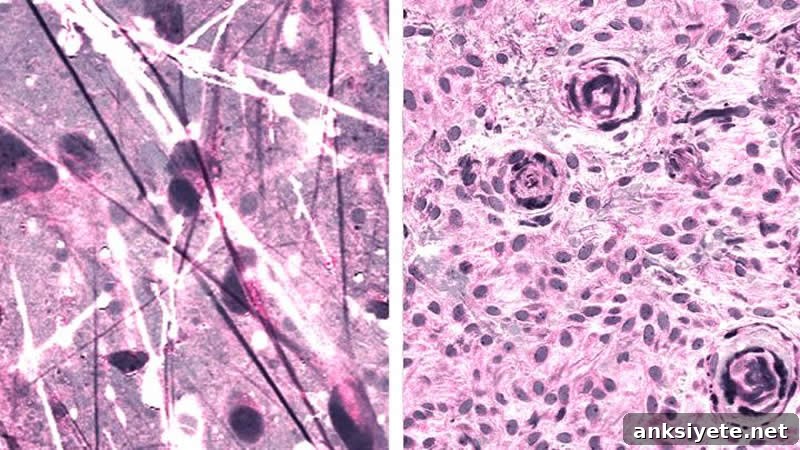
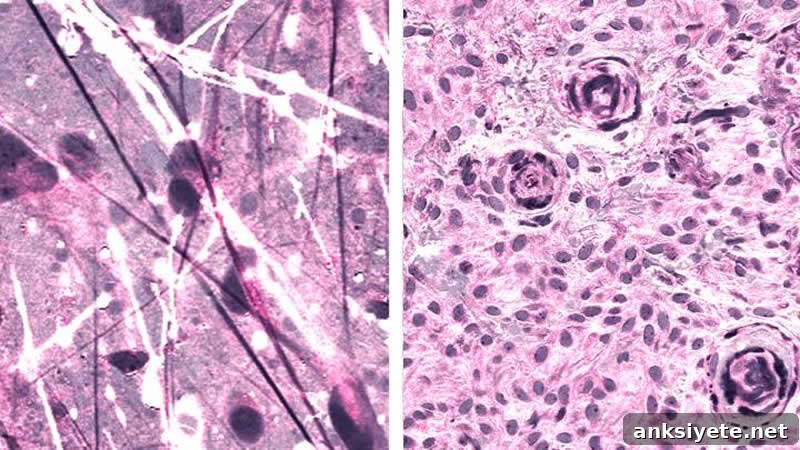
The imaging method, called stimulated Raman histology (SRH), is a label‑free optical technique that captures scattered laser light from fresh tissue. SRH highlights cellular and molecular features not always apparent in standard hematoxylin and eosin (H&E) slides, revealing tumor infiltration and tissue architecture quickly and without staining.
SRH images are processed by a deep convolutional neural network (CNN) that delivers a diagnostic prediction in under two and a half minutes. Surgeons can therefore receive an automated, near real‑time assessment during the operation and use the information to guide resection, helping to detect and remove tumor that might otherwise remain hidden.
“As surgeons, we’re limited to acting on what we can see; this technology allows us to see what would otherwise be invisible, improving speed and accuracy in the operating room and reducing the risk of misdiagnosis,” says Daniel A. Orringer, MD, associate professor of Neurosurgery at NYU Grossman School of Medicine and co‑lead of the study. He helped develop SRH and collaborated on the trial with colleagues at the University of Michigan. “With this imaging technology, cancer surgeries can be safer and more effective.”
How the Study Was Conducted
To develop the AI tool, researchers trained a deep convolutional neural network on more than 2.5 million SRH image samples collected from 415 patients. The network learned to classify tissue into 13 histologic categories representing the most common brain tumor types, including malignant glioma, lymphoma, metastatic tumors, and meningioma.
For clinical validation, a prospective, multicenter trial enrolled 278 patients undergoing brain tumor resection or epilepsy surgery at three university centers. Tissue biopsies taken during surgery were split into paired “sister” specimens and randomly assigned to either the control arm (standard intraoperative pathology) or the experimental arm (SRH with CNN interpretation).
In the control arm, specimens followed the conventional workflow: transport to a pathology laboratory, processing, slide preparation, and pathologist review, a sequence that typically requires 20–30 minutes. In the experimental arm, SRH images were acquired intraoperatively and analyzed by the CNN at the bedside, delivering a diagnostic prediction in roughly 150 seconds.
Errors in the two arms were largely nonoverlapping, indicating the methods made different types of mistakes. The authors note that combining SRH with expert pathologist review could potentially approach near‑complete diagnostic accuracy. SRH plus CNN may be particularly valuable at centers without access to subspecialized neuropathologists, providing expert‑level assessment where it is otherwise unavailable.
“SRH will transform neuropathology by improving intraoperative decision‑making and offering expert‑level assessments in hospitals that lack trained neuropathologists,” adds Matija Snuderl, MD, associate professor in the Department of Pathology at NYU Grossman School of Medicine and co‑author of the study.
NYU Langone’s Brain and Spine Tumor Center began offering SRH clinically after Dr. Orringer joined the faculty in 2019 and introduced the technology. The center uses an intraoperative laser imaging system to integrate SRH with other neurosurgical imaging modalities such as intraoperative MRI and fluorescence‑guided surgery, providing high‑resolution guidance to surgeons during complex tumor resections.
“NYU Langone’s Department of Neurosurgery has long been a leader in bringing advanced treatment options to patients,” says John G. Golfinos, MD, chair of the Department of Neurosurgery. “With Dr. Orringer’s expertise and this new technology, we are better equipped to perform safer surgeries and achieve improved outcomes for complex brain tumor cases.”
The SRH–CNN system is part of broader efforts at NYU Langone to integrate artificial intelligence into clinical practice to enhance cancer diagnostics across multiple tumor types, including lung, breast, and brain cancers.
Source:
NYU Langone Health
Media Contact:
Annie Harris – NYU Langone Health
Image Source:
Image credited to Daniel Orringer, NYU Langone Health.
Original Research (open access):
“Near real‑time intraoperative brain tumor diagnosis using stimulated Raman histology and deep neural networks.” Daniel Orringer et al. Nature Medicine. DOI: 10.1038/s41591-019-0715-9.
Abstract summary:
The study presents a parallel workflow that combines label‑free stimulated Raman histology with deep convolutional neural networks to provide automated, near real‑time intraoperative diagnosis. Trained on more than 2.5 million SRH images, the CNN delivered diagnostic predictions in under 150 seconds—an order of magnitude faster than conventional intraoperative histology workflows—and demonstrated noninferior accuracy compared with pathologist interpretation in a prospective multicenter trial (n = 278). The approach also includes semantic segmentation to localize tumor‑infiltrated regions within images, offering a streamlined complementary pathway for tissue diagnosis independent of a traditional pathology laboratory.