
Summary: A new study implicates the basolateral amygdala in conditioned taste aversion, a finding that may guide future therapies to reduce taste aversions caused by chemotherapy and some eating disorders.
Source: University of Granada.
Researchers from the University of Granada, in collaboration with the Autonomous University of Baja California (UABC), have pinpointed a specific region of the brain that plays a central role in aversion to toxic, spoiled, or poisonous foods. Experiments in laboratory rats show that the basolateral complex of the amygdala regulates the strength of conditioned taste aversion. These results lay the groundwork for further studies on how taste preferences and aversions form, and they suggest potential therapeutic directions for treating taste aversions that frequently occur after chemotherapy or in eating disorders such as anorexia and obesity.
Rejecting foods that the brain associates with gastric distress or poisoning is a well-established form of learning called conditioned taste aversion (CTA). While its influence on eating behavior is widely recognized, the precise brain circuits responsible for each stage of CTA—especially the formation of taste memory and its linkage to gastrointestinal symptoms—have remained unclear.
Previous research pointed to the amygdala’s involvement in taste aversion. The University of Granada team concentrated on this compact structure located in the limbic system, which is vital for emotional processing, learning, and memory. The amygdala contains several nuclei—including central, medial, and basolateral regions—each of which may contribute differently to aversive learning.
Both vertebrate and invertebrate species are able to detect potentially harmful flavors and avoid them, a capability essential to survival. In humans, this mechanism not only protects against poisoning but can also underlie problematic food-related behaviors. The study, published in Experimental Brain Research under the title “Effects of lesions in different nuclei of the amygdala on conditioned taste aversion,” describes controlled experiments designed to identify which amygdaloid nuclei are critical for associating a taste with later gastric discomfort.
The standard CTA model exposes an animal to a novel, non-toxic taste and then induces gastrointestinal upset minutes to hours later using a noxious agent. The interval between taste and sickness can be long, yet animals still form a robust association: they learn to avoid the flavor and tend to experience reduced appetite for that food. This single-trial learning is notable for linking stimuli separated in time, a feature particularly relevant to nausea induced by medical treatments.
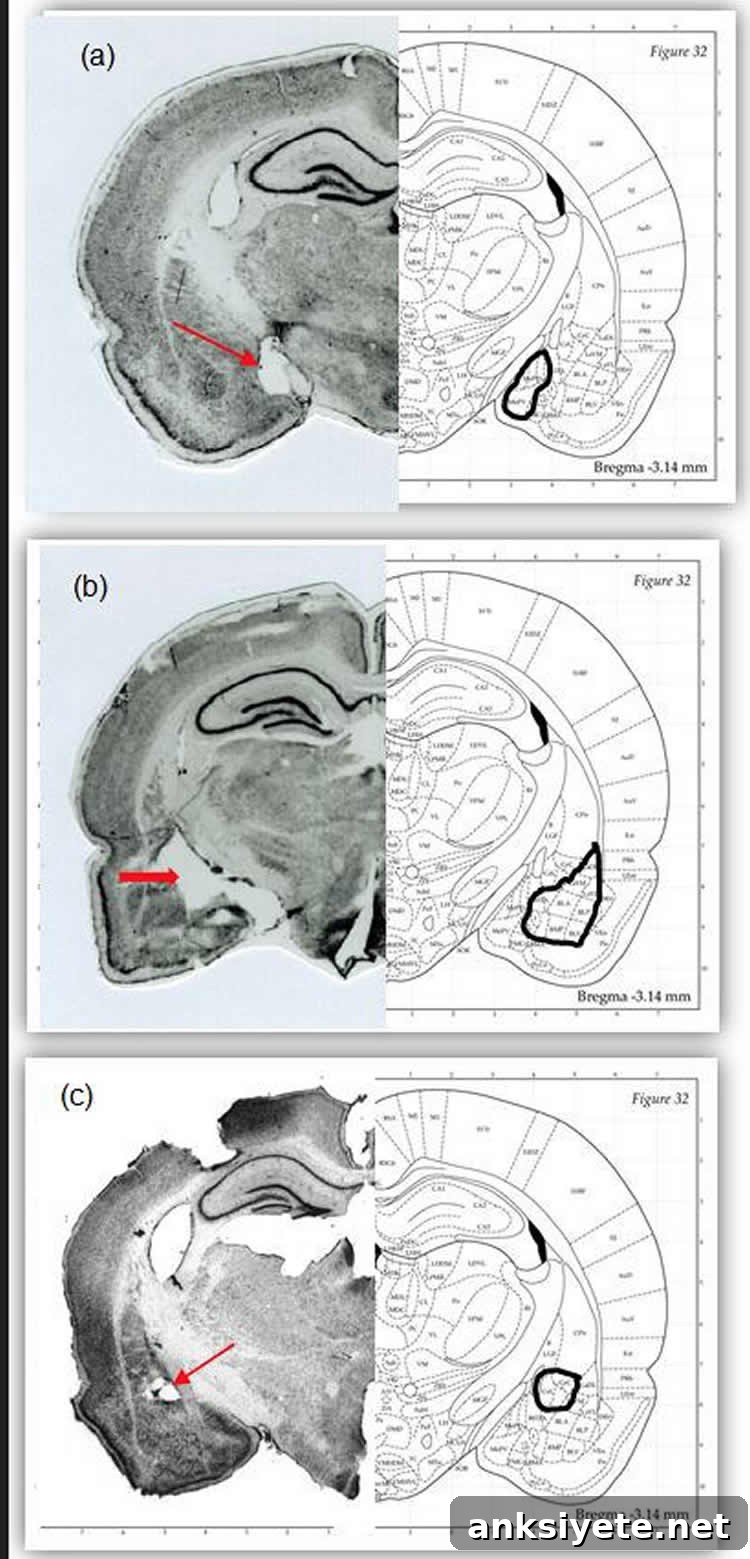
To locate the key amygdaloid region, the researchers produced targeted lesions in the three principal nuclei of the amygdala and compared how each group of rats acquired taste aversion. Their results show that damaging the basolateral complex markedly reduced the magnitude of CTA. In other words, while animals with basolateral lesions still learned to reject the conditioned taste, they consumed larger amounts of the taste compared with animals that had intact amygdalae or lesions in other nuclei.
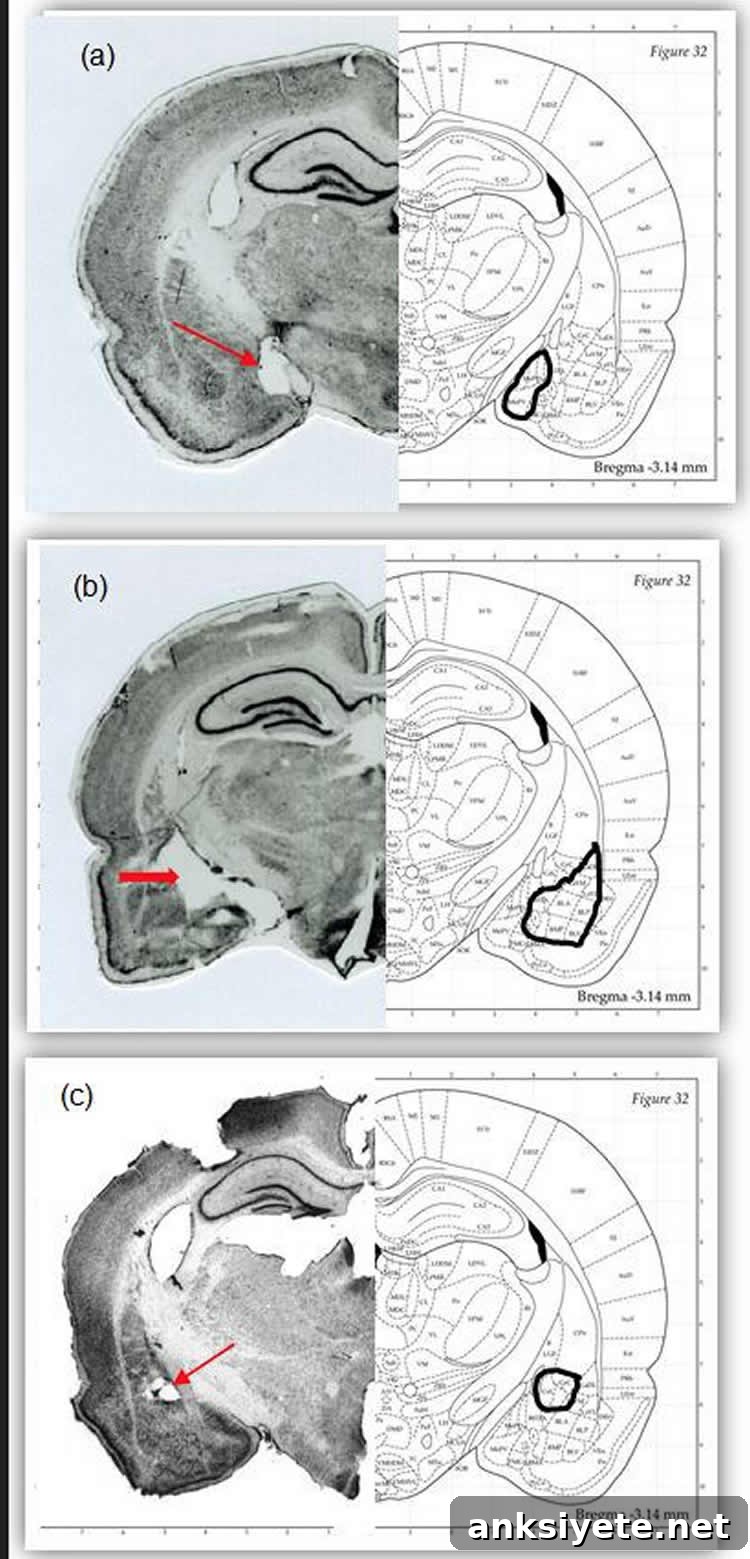
Andrés Molero, a co-author of the paper, summarized the findings: “We confirmed that animals with lesions in the basolateral complex showed reduced taste aversion. Although these rats still learned to associate the taste with sickness, they consumed greater quantities of the conditioned taste than animals without lesions or with lesions in other amygdaloid nuclei.”
Tastes to remember
Taste preferences and aversions can be innate or acquired. When learned, these preferences depend on the consequences of consuming particular foods: positive outcomes (pleasure or satiety) reinforce preference, while negative outcomes (discomfort or sickness) promote avoidance. Humans naturally reject tastes deemed unpleasant or dangerous—for example, flavors reminiscent of cleaning agents are likely to be refused.
When a taste is followed by illness linked to that food—such as poisoning from toxic mushrooms—a conditioned taste aversion can form after a single exposure. Remarkably, the association remains robust even if the sickness occurs several hours later, reflecting the delayed nature of digestion and symptom onset. This temporal flexibility explains why patients undergoing chemotherapy can develop aversions to foods consumed before treatment sessions: nausea caused by drugs becomes associated with recent meals, producing long-lasting avoidance.
The investigators note that CTA may contribute to eating disorders, including anorexia, when repeated associations form between food and discomfort or negative emotions. Understanding the neural basis of such associations may help design interventions that reduce maladaptive aversions and improve nutritional outcomes in clinical settings.
The authors recommend additional research to clarify how different brain regions interact during acquisition, consolidation, and retrieval of taste aversions, and to explore strategies for mitigating harmful learned food avoidance in patients.
Funding: The study received funding from the Spanish Ministry of Economy, Industry and Competitiveness.
Source: University of Granada. Publisher: NeuroscienceNews.com. Image credit: University of Granada / Khakh lab.
Abstract
Effects of lesions in different nuclei of the amygdala on conditioned taste aversion
Conditioned taste aversion (CTA) is an adaptive form of learning that relies on brain mechanisms that are not yet fully understood. Although the amygdala is implicated in CTA, the specific roles of its nuclei are unclear. Some lesion studies have suggested involvement of the basolateral complex—comprising the basolateral and lateral amygdala—while other work has highlighted the central amygdala. This study directly compared the effects of lesions to the central, medial, and basolateral amygdaloid nuclei on CTA acquisition in male Wistar rats. Results show that lesions of the basolateral complex reduce the magnitude of conditioned taste aversion compared with lesions in other nuclei and with intact animals. These findings indicate that the amygdala’s contribution to CTA acquisition depends particularly on the integrity of its basolateral complex.