
Summary: Researchers examine the tiny structural changes in the brain that allow information to be stored during learning.
Source: TUE.
As we learn, something in the brain must change to store new information. Exactly what changes and how those changes allow memories to form remain active areas of research. PhD student Rémy Kusters studied the processes that occur at the smallest scale of neural circuitry—an individual synaptic connection—and used detailed biophysical models and simulations to explore how the shape of those connections regulates their strength. On Wednesday, Oct 5, Kusters received his doctorate with honors (cum laude).
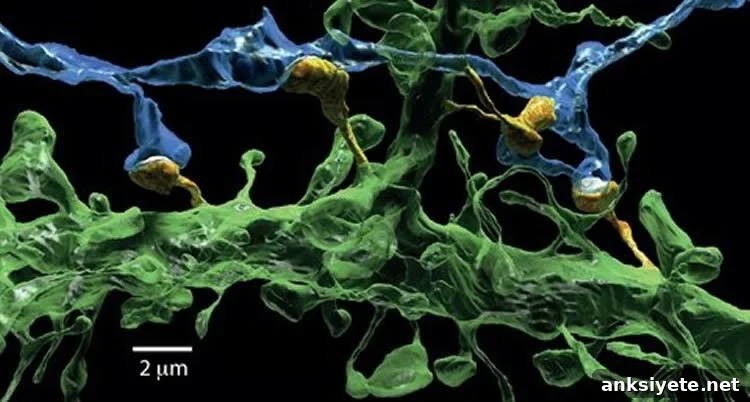
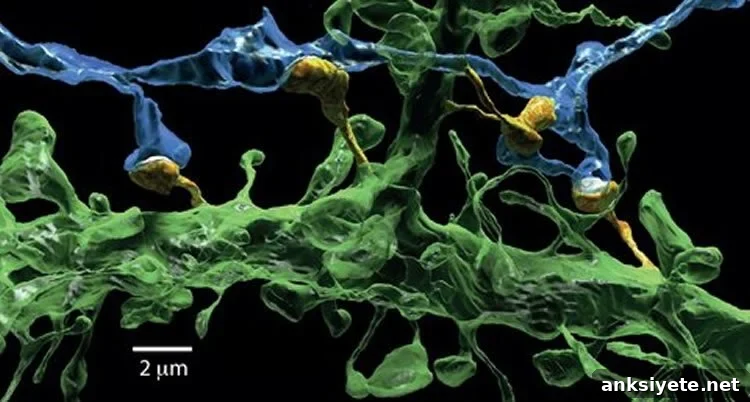
The human brain contains billions of nerve cells (neurons) that communicate through many trillions of connections. On the branches of these neurons are tiny protrusions called dendritic spines: small, often bulbous structures that form the postsynaptic side of a synapse. The synapse is the gap where an electrical signal in the sending neuron is converted into a chemical signal and then back into an electrical signal in the receiving neuron. The efficiency of this signal transmission at each synapse is central to learning and forming memories.
Kusters focused on how the physical shape of dendritic spines influences synaptic strength. Mature spines commonly take on a distinctive “mushroom” form, with a rounded head and a thinner neck. Using computational models that simulate the biophysical processes on and inside these microstructures, he found that spine geometry strongly affects how many receptor proteins are present at the synapse and how long they remain there—two key determinants of synaptic efficacy.
Receptors on the postsynaptic membrane detect neurotransmitters released by the presynaptic neuron. The availability of these receptor proteins determines how strongly the postsynaptic neuron responds. Receptors are delivered to the spine by membrane-bound transport carriers that must pass through the narrow neck to reach the rounded head. If the neck is too constricted, this inward supply can be reduced, limiting the number of receptors delivered and weakening the synaptic connection.
At the same time, receptors are not fixed; they diffuse across the membrane and can leave the spine head. Kusters’ simulations showed that a narrow neck simultaneously restricts this lateral escape of receptors, effectively trapping them within the spine head for longer periods. In that way the neck regulates the balance between supply (receptors arriving through transport) and loss (receptors diffusing away). The resulting equilibrium determines how many receptors are available to transduce signals, and therefore how strong the synaptic connection is.
The findings suggest that the familiar mushroom morphology of many mature spines is not just an incidental feature but an effective structural strategy for tuning synaptic strength. Narrow necks can reduce incoming flux yet preserve receptors already in place; wider necks facilitate exchange but may allow receptors to escape more readily. This form-function relationship gives neurons a local, structural mechanism to adjust connectivity during learning.
Kusters also investigated how spine shape arises during development. Dendritic spines continuously form and retract as neurons probe their environment; only some of these protrusions grow into stable, mushroom-shaped spines that sustain long-term contacts. His biophysical models point to actin, the primary filamentous protein in the cellular cytoskeleton, as a key driver of spine emergence and morphological maturation. Actin dynamics can push the membrane outward to form a protrusion and then reorganize to sculpt a head-and-neck geometry.
While these results clarify one piece of the learning puzzle, Kusters emphasizes that many mechanisms remain to be integrated before we can fully explain memory formation. His work contributes a quantitative description of how nanoscale geometry influences receptor dynamics and synaptic strength—an important bridge between molecular processes and neural function. The research was supervised by Kees Storm (TU/e, Applied Physics) and is part of the FOM programme “Barriers in the brain: the molecular physics of learning and memory,” a collaborative effort among Dutch research institutions.
Last Wednesday Kusters defended his thesis, titled “From shape to function: growth and physical regulation of dendritic spines,” and was awarded the doctorate cum laude, an honor reserved for the top five percent of PhD candidates. He will continue his research as a postdoctoral researcher at the Institut Curie in Paris.
This study combines theoretical biophysics, computational modeling, and knowledge of cellular biology to explain how dendritic spine geometry affects synaptic receptor dynamics and neuronal connectivity. The results emphasize the importance of nanoscale structure in neural signaling and provide a framework for further experimental and theoretical work on the cellular basis of learning and memory.
Source: TUE.
Image source: NeuroscienceNews.com image credited to N. Kasthuri et al./Cell.