
Summary: Researchers report that the brain regulates hunger and appetite by releasing a neuropeptide into the cerebrospinal fluid, which then distributes signals that influence feeding behavior.
Source: USC.
USC study finds the brain uses cerebrospinal fluid both to clear waste and to broadcast a hunger signal that helps control when we eat.
“Most people think neurons communicate only across synapses,” said Emily Noble, a postdoctoral researcher in biological sciences at the USC Dornsife College of Letters, Arts and Sciences. “Our work shows the brain also communicates by releasing signaling molecules into the cerebrospinal fluid.”
Synaptic communication transmits messages from one cell to another. By contrast, cerebrospinal fluid (CSF) allows signals to spread more broadly, reaching many regions simultaneously.
Previous research emphasized synaptic and blood-borne signaling. The new USC study, published in Cell Metabolism, demonstrates that the brain can regulate behaviors by releasing neuropeptides into the CSF. The findings have implications for appetite control and for the development of drugs targeting the melanin-concentrating hormone (MCH) system to address obesity and related conditions.
One fluid, many purposes
Cerebrospinal fluid performs several vital functions. It supports the brain by providing buoyancy, cushions the brain against impact, and clears metabolic waste. As tools in neuroscience have improved, researchers have found that CSF also participates in signaling that affects behaviors like stress responses, energy balance and reproduction.
“Historically CSF was often viewed as a metabolic waste compartment,” said Scott Kanoski, the study’s corresponding author and assistant professor of biological sciences at USC Dornsife. “We show it is also an active route for neural communication.”
Hunger peptides
The study focused on melanin-concentrating hormone (MCH), a neuropeptide produced by neurons in the lateral hypothalamus, a key hunger center located near the base of the brain above the pituitary gland. MCH is known to stimulate appetite and can reduce energy expenditure.
Using a series of experiments in rats, the researchers triggered MCH release and then tracked the peptide within the CSF. They found that increasing MCH levels in CSF stimulated feeding, while reducing MCH availability in CSF produced the opposite effect.
“When we released MCH into the cerebrospinal fluid, the animals began to eat,” Kanoski said. “When we decreased MCH levels in the CSF, the animals ate less.”
Measurements showed that CSF MCH levels rise in advance of nocturnal feeding and in response to chemogenetic activation of MCH-producing neurons, suggesting that release into CSF is regulated by the circadian clock and daily feeding routines.
Physiological significance and open questions
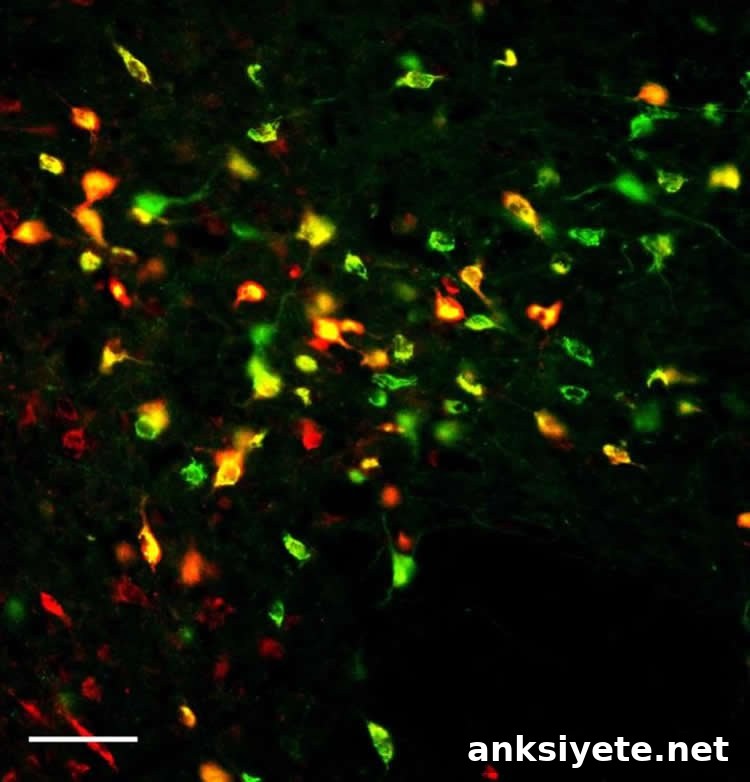
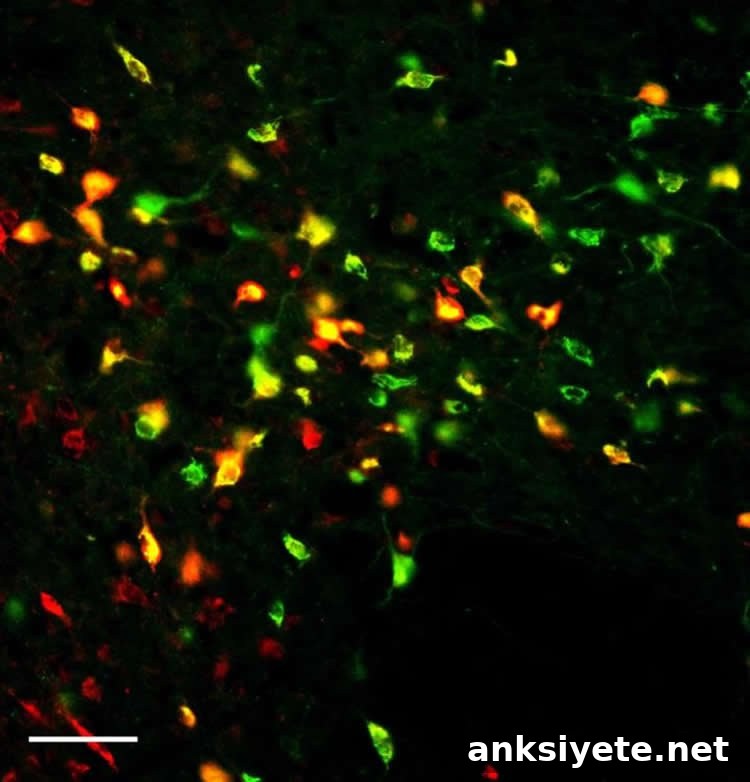
The findings indicate that about one-third of MCH-producing neurons project to the cerebral ventricles, providing anatomical routes for MCH to enter CSF. The researchers used a dual viral vector technique to selectively activate the subset of MCH neurons that contact CSF; activating these CSF-projecting neurons increased food intake. Conversely, immunosequestration—reducing the bioavailable MCH in CSF—reduced feeding, supporting the conclusion that CSF-borne MCH is a physiologically relevant signal for energy balance.
Several questions remain. Do MCH molecules enter CSF in a modified form that protects them from degradation? What precise pathways do they use to reach CSF, and how far do they travel once there? Beyond feeding, what other behaviors might be regulated by CSF-mediated neuropeptide signaling?
Funding and authors
The study received funding from institutional grants supporting Scott Kanoski (DK104897), Suzanne M. Appleyard at Washington State University (DK083452), Ted M. Hsu at USC Dornsife (DK107333) and Emily Noble (DK111158).
Co-authors include Martin Darvas (University of Washington); Vaibhav R. Konanur (University of Illinois); Joel D. Hahn, Alyssa M. Cortella, Clarissa Liu, Monica Song, Andrea Suarez, Caroline C. Szujewski, Danielle Rider and Jamie E. Clarke (USC), along with Suzanne M. Appleyard and others.
Abstract (summary)
Control of Feeding Behavior by Cerebral Ventricular Volume Transmission of Melanin-Concentrating Hormone
Highlights:
- MCH neurons project to the brain ventricular system and contact cerebrospinal fluid.
- Chemogenetic activation of CSF-contacting MCH neurons increases food intake.
- Reducing endogenous MCH in CSF inhibits food intake.
- Humoral CSF neuropeptide transmission may represent a common neural signaling pathway.
Summary:
Traditional pathways for brain-derived molecules to influence behavior include synaptic transmission and neuroendocrine signaling. This study presents evidence for an additional mechanism relevant to feeding control: volume transmission of the neuropeptide MCH via the cerebral ventricles and CSF. Approximately one-third of MCH-producing neurons project to the ventricles. CSF MCH levels rise prior to nocturnal feeding and after chemogenetic activation of MCH neurons. Selective activation of CSF-projecting MCH neurons increases food intake, while depleting MCH from CSF reduces feeding. Together, these findings indicate that neural-to-CSF volume transmission is a physiologically meaningful route for regulating energy balance and may represent a broader mechanism for controlling fundamental behaviors.
Original research: “Control of Feeding Behavior by Cerebral Ventricular Volume Transmission of Melanin-Concentrating Hormone,” Cell Metabolism, published May 31, 2018. doi: 10.1016/j.cmet.2018.05.001