
What if we could identify a inherited cause of Alzheimer’s disease and take steps to lessen its impact? New genetic research from the University of Kentucky brings that possibility closer.
Scientists at the UK Sanders-Brown Center on Aging have reported new findings in Alzheimer’s genetics in a paper published in the Journal of Neuroscience. Their work focuses on a genetic variation near the CD33 gene and how that variation affects CD33 messenger RNA processing in the human brain. The findings link a specific “protective” variant to a form of CD33 that is missing a critical functional domain, and this change correlates with a reduced risk of Alzheimer’s disease.
Alzheimer’s disease risk is influenced by both inherited factors and environmental exposures. Family and twin studies estimate that roughly 70 percent of Alzheimer’s risk is heritable, meaning genetic differences between people account for a large share of susceptibility. In recent years, genome-wide studies have identified multiple DNA variants that each change Alzheimer’s risk by modest amounts. The University of Kentucky team set out to understand how one of those variants exerts its protective effect.
The researchers focused on CD33, a gene implicated in immune regulation in the brain. Their data show that the protective DNA variant strongly correlates with altered assembly of CD33 mRNA in brain tissue. Specifically, the variant is associated with production of a CD33 isoform that lacks an essential functional domain. Because CD33 is thought to interfere with the clearance of amyloid beta—a protein fragment that accumulates in Alzheimer’s disease—the presence of a nonfunctional CD33 form may allow more effective removal of amyloid beta and thereby reduce disease risk.
These molecular findings point to a clear therapeutic implication: inhibiting CD33 function could be a strategy to lower Alzheimer’s risk or slow its progression. Supporting the translational potential, an existing drug developed to target CD33 in acute myeloid leukemia demonstrates that CD33 can be pharmacologically addressed. While this raises the possibility of repurposing or developing CD33-directed treatments for Alzheimer’s prevention or therapy, the authors emphasize that further laboratory and clinical studies are required before any such approach can be tested in people.
Implications and next steps
The study highlights several important themes for Alzheimer’s research and drug development. First, it provides a mechanistic link between a genetic variant identified in population studies and a concrete molecular change in the brain—altered mRNA splicing of CD33 that yields a truncated, less functional protein. Second, it supports the broader concept that genetic discoveries can point directly to biological pathways that are amenable to therapeutic intervention. Finally, because the protective effect appears to result from reduced CD33 activity, the findings offer a rational target for developing treatments aimed at improving amyloid clearance.
However, the transition from genetic and molecular observation to safe, effective therapies involves many steps. Additional preclinical work will be needed to confirm the role of the truncated CD33 form in human brain cells, to test candidate inhibitors in relevant models, and to evaluate safety and potential side effects. Only after thorough validation could clinical trials be designed to test whether modulating CD33 alters Alzheimer’s progression or reduces incidence in at-risk individuals.
Notes about this Alzheimer’s disease research
Authors of the paper titled “CD33 Alzheimer’s Risk-Altering Polymorphism, CD33 Expression, and Exon 2 Splicing” include Manasi Malik (lead author), Steven Estus, James F. Simpson, and Ishiti Parikh from the UK Department of Physiology; Bernard R. Wilfred and Peter Nelson from the UK Department of Pathology; and David W. Fardo from the UK Department of Biostatistics. This collaborative study combines genetic analysis, mRNA profiling, and neuropathological data to connect a risk-altering polymorphism with CD33 expression and splicing patterns in the human brain.
Contact: Allison Elliott-Shannon – University of Kentucky
Source: University of Kentucky press release
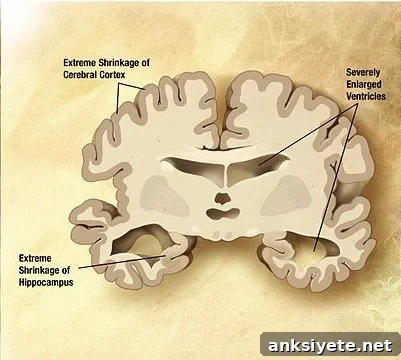
Image Source: The Alzheimer’s brain image is adapted from an NIA/NIH image in the public domain.
Original Research: Abstract for “CD33 Alzheimer’s Risk-Altering Polymorphism, CD33 Expression, and Exon 2 Splicing” by Manasi Malik, James F. Simpson, Ishita Parikh, Bernard R. Wilfred, David W. Fardo, Peter T. Nelson, and Steven Estus in Journal of Neuroscience. Published online August 14, 2013, doi:10.1523/JNEUROSCI.1224-13.2013