

 We all know someone who seems unusually tuned into emotions — they read others well, understand their own feelings, and handle tense situations calmly and effectively.
What explains this capacity? What do they possess that others might lack, and can it be measured?
One common explanation is high emotional intelligence (Mayer & Salovey, 1993).
Emotional intelligence has attracted widespread interest, particularly in workplaces and social settings. Researchers have suggested that people with higher emotional intelligence may perform better in interpersonal roles and succeed for reasons beyond raw cognitive ability (Boyatzis, 1982; Zeidner, Matthews, & Roberts, 2004).
If emotional intelligence matters, how can we assess it reliably?
Because emotional intelligence is an abstract construct rather than a physical trait, it must be measured indirectly through thoughtfully designed tasks and questionnaires that tap into relevant skills and tendencies.
Below we present common approaches used to measure emotional intelligence, recommend several tested instruments and PDFs, and outline practical resources for practitioners who want to assess or develop emotional intelligence in clients, students, or staff.
This Article Contains:
- Measuring Emotional Intelligence
- Reviewing the Emotional Vibration Scale
- A Look at the Emotional Maturity Scale
- Six Empirically Sound Scales
- Two Downloadable PDFs and One Recommendation
- Assessing and Developing Emotional Intelligence with Digital Tools
- Masterclass and Additional Resources
- Take-Home Message
- References
Measuring Emotional Intelligence
Before measuring emotional intelligence, we need a clear definition.
What is emotional intelligence?
Salovey and Mayer (1990) originally described emotional intelligence as “an ability to monitor one’s own and others’ emotions, to discriminate among them, and to use the information to guide one’s thinking and actions.” Since then, definitions have evolved into two broad perspectives:
- Ability model: Emotional intelligence is a form of intelligence — a set of cognitive abilities for perceiving, understanding, and using emotions (Mayer, Salovey, & Caruso, 2000).
- Trait model: Emotional intelligence comprises emotion-related personality traits, self-perceptions, and behaviors (Petrides & Furnham, 2001).
Across models, emotionally intelligent people typically demonstrate awareness of their own emotions, sensitivity to others’ feelings, and the capacity to apply this awareness effectively in social situations.
Common measurement approaches
Researchers use several methods to assess emotional intelligence. Important approaches include:
Facial expression tasks
Participants identify emotions shown in photographs or videos of faces. They rate how much particular emotions (e.g., fear, joy, disgust, surprise) are present, which gauges emotion recognition skills (Sanchez-Gomez & Breso, 2019).

Problem-solving and ability tests
Some measures present emotional problems or scenarios that participants must solve, similar to cognitive IQ tests. These tasks evaluate how people reason about emotions and choose effective responses.
Reading emotions from text
Participants read a short passage describing a situation and then select which emotions best describe the protagonist. For example, given a passage about attending a funeral, respondents choose from paired statements to indicate the author’s feelings (Mayer & Geher, 1996).
Self-report questionnaires
Many instruments ask people to rate their own emotional competencies across several subscales. For example, the Bar-On Emotional Quotient Inventory (EQ-i) measures five broad dimensions—each divided into subscales such as emotional self-awareness, empathy, problem solving, stress tolerance, and optimism. Respondents indicate how well statements describe them on Likert scales. Self-report tools are easy to administer but can be affected by social desirability and self-awareness limitations.
Psychometric basics
When evaluating measures, two psychometric properties are essential:
- Reliability: Does the measure produce consistent results over time and across items?
- Validity: Does the measure actually assess emotional intelligence rather than an unrelated construct?
Reviewing the Emotional Vibration Scale
 One informal tool sometimes cited is the Emotional Vibration Scale. It organizes emotions on a continuum from negative to positive and suggests that people can “move up” the scale by recognizing and shifting their feelings.
For instance, someone anxious about a looming deadline might break their feelings down into worry, doubt, and irritation, then use strategies like mindfulness or gratitude to counteract negative spirals. The Emotional Vibration Scale can help people label and reflect on emotions, but it is not an empirically validated measure of emotional intelligence.
A Look at the Emotional Maturity Scale
Historical perspective
Early efforts to assess emotion-related functioning focused on “emotional maturity.” Willoughby (1932) argued that emotional maturity involves relinquishing attitudes appropriate in childhood but unsuitable for adults. He used peer and self-ratings to explore consistency across observers, acknowledging the challenges of measuring a construct that can shift when people know they are being assessed.
Emotional Maturity Scale
Singh and Bhargava (1991) developed a self-report Emotional Maturity Scale with 48 items across five dimensions: emotional instability, emotional regression, social maladjustment, personality disintegration, and lack of independence. Responses use a five-point scale from Never to Always. Higher scores indicate lower emotional maturity.
Download 3 Free Emotional Intelligence Exercises (PDF)
These practical, science-based exercises will help you or your clients recognize and use emotions more effectively.
Six Empirically Sound Scales
Several validated instruments measure emotional intelligence with acceptable psychometric properties. When selecting a tool, consider reliability, validity, and suitability for your context.
| Scale | Advantages | Disadvantages |
|---|---|---|
| Mayer–Salovey–Caruso Emotional Intelligence Test (MSCEIT; Mayer et al., 2002) | Widely used and extensively researched (1000+ studies) | Administration can be time-consuming and costly |
| Self-Report Emotional Intelligence Test (SREIT; Schutte et al., 1998) | Extensively used and freely available | As a self-report measure, some debate exists about what aspect of EQ it captures |
| Trait Emotional Intelligence Questionnaire (TEIQue; Petrides & Furnham, 2001) | Strong reliability and validity; widely used | Commercially available and can be faked since it is self-report |
| Bar-On Emotional Quotient Inventory (EQ-i; Bar-On, 1997) | Good psychometric properties in many studies | Responses can be influenced by social desirability |
| Situational Test of Emotional Management (STEM; MacCann & Roberts, 2008) | Strong psychometrics | Less widely used; may be best combined with other tools |
| Situational Test of Emotional Understanding (STEU; MacCann & Roberts, 2008) | Solid psychometric support; suitable for workplace contexts | Limited use compared with some major measures; may complement other assessments |
Overall, the freely available SREIT is a solid starting point for researchers and clinicians. For paid instruments, the EQ-i and TEIQue are commonly recommended for professional use (O’Connor et al., 2019).
Two Downloadable PDFs and One Recommendation
The Self-Report Emotional Intelligence Test (SREIT; Schutte et al., 1998) includes 33 items and is available for research and clinical use. Another useful resource is an Emotional Intelligence Framework created by a consortium of researchers that divides competencies into Personal Competence (self-awareness, self-regulation, self-motivation) and Social Competence (social awareness, social skills); a longer self-assessment version contains 94 items rated on a five-point scale.
The National Health System’s Emotional Intelligence Questionnaire (part of leadership resources) assesses five domains—self-awareness, managing emotions, motivating oneself, empathy, and social skill—across 50 items. Its scoring rubric classifies total scores into strengths, areas needing attention, and development priorities.
Assessing and Developing Emotional Intelligence with Digital Tools
Developing emotional intelligence requires repeated practice in everyday situations. Practitioners can support clients by assigning brief exercises, reflection prompts, or short assessments that they complete between sessions.
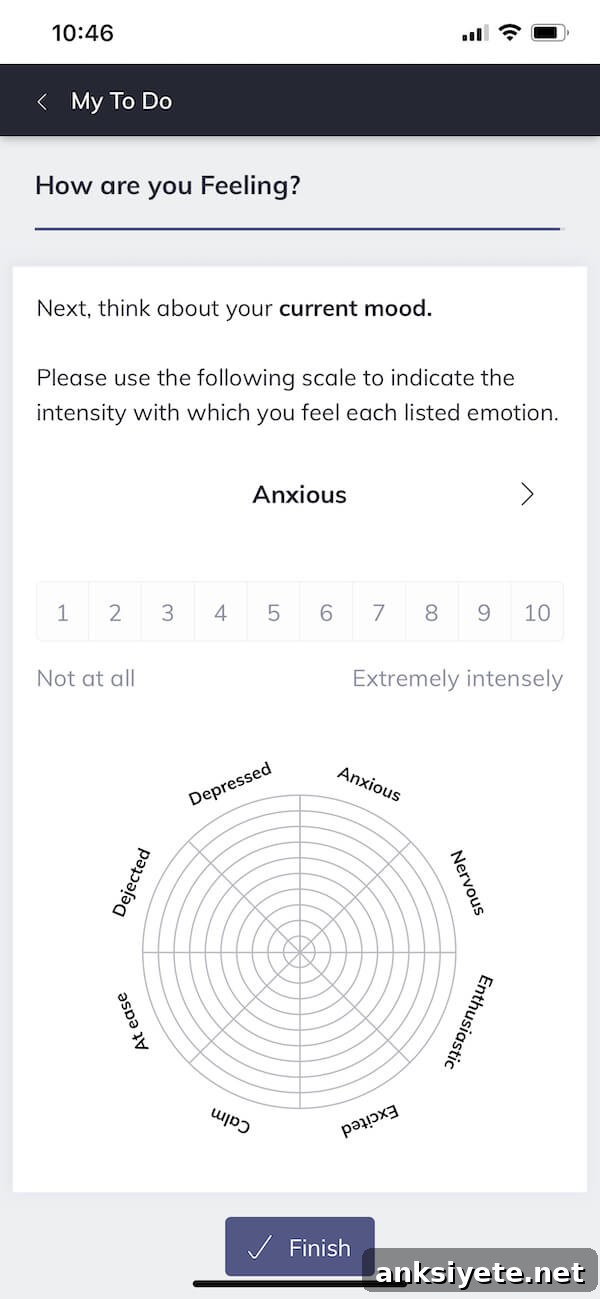
Digital platforms make it easy to deliver and track such activities. Practitioners can create intake questionnaires based on validated tools, send daily emotion-reflection prompts, and monitor progress over time. Whether you use a dedicated app or your own secure platform, combining face-to-face work with structured digital practice is an efficient way to build emotional skills outside the therapy room.
Emotional Intelligence Masterclass and Other Resources
Professionals who wish to deepen their expertise have access to courses and collections of exercises focused on emotional intelligence. These resources often cover topics such as:
- Fundamentals of emotions
- Core emotional intelligence skills
- Developing emotional awareness
- Challenging beliefs about emotions
- Emotional knowledge and expression
Practitioners may also find curated sets of validated exercises helpful when designing interventions for clients, students, or teams.
A Take-Home Message
Measuring emotional intelligence is complex because it is defined in different ways (ability vs. trait), assessed using varied formats (ability tasks, scenario-based tests, self-report questionnaires), and involves psychometric challenges inherent to abstract constructs. Despite these difficulties, a number of empirically supported tools exist, and clinicians and researchers can use them to gauge emotional awareness and guide development work.
Choosing the right measure depends on your goals: free self-report tools offer accessibility, ability-based tests provide performance-oriented assessment, and situational tests work well in professional contexts. Combining methods and integrating practical exercises into everyday life will give the best chance of improving emotional intelligence in meaningful, sustainable ways.
References
- Bar-On, R. (1997). Bar-On Emotional Quotient Inventory: Technical manual. Multi-Health Systems.
- Boyatzis, R. (1982). The competent manager. Wiley & Sons.
- MacCann, C., & Roberts, R. D. (2008). New paradigms for assessing emotional intelligence: Theory and data. Emotion, 8, 540–551.
- Mayer, J. D., & Geher, G. (1996). Emotional intelligence and the identification of emotion. Intelligence, 22(2), 89–113.
- Mayer, J. D., & Salovey, P. (1993). The intelligence of emotional intelligence. Intelligence, 17, 433–442.
- Mayer, J. D., Salovey, P., & Caruso, D. R. (2000). Models of emotional intelligence. In R. J. Sternberg (Ed.), Handbook of intelligence (pp. 392–420). Cambridge University Press.
- Mayer, J. D., Salovey, P., & Caruso, D. R. (2002). Mayer–Salovey–Caruso Emotional Intelligence Test (MSCEIT) user’s manual. MHS Publishers.
- O’Connor, P. J., Hill, A., Kaya, M., & Martin, B. (2019). The measurement of emotional intelligence: A critical review of the literature and recommendations for researchers and practitioners. Frontiers in Psychology, 10.
- Petrides, K. V., & Furnham, A. (2001). Trait emotional intelligence: Psychometric investigation with reference to established trait taxonomies. European Journal of Personality, 15, 425–448.
- Salovey, P., & Mayer, J. D. (1990). Emotional intelligence. Imagination, Cognition, and Personality, 9, 185–211.
- Sanchez-Gomez, M., & Breso, E. (2019). The Mobile Emotional Intelligence Test (MEIT): An ability test to assess emotional intelligence at work. Sustainability, 11(3), 827.
- Schutte, N. S., Malouff, J. M., Hall, L. E., Haggerty, D. J., Cooper, J. T., Golden, C. J., & Dornheim, L. (1998). Development and validation of a measure of emotional intelligence. Personality and Individual Differences, 25, 167–177.
- Singh, Y., & Bhargava, M. (1991). Emotional Maturity Scale (EMS). Applied and Community Psychology, 2.
- Willoughby, R. R. (1932). A scale of emotional maturity. The Journal of Social Psychology, 3(1), 3–36.
- Zeidner, M., Matthews, G., & Roberts, R. D. (2004). Emotional intelligence in the workplace: A critical review. Applied Psychology, 53(3), 371–399.