
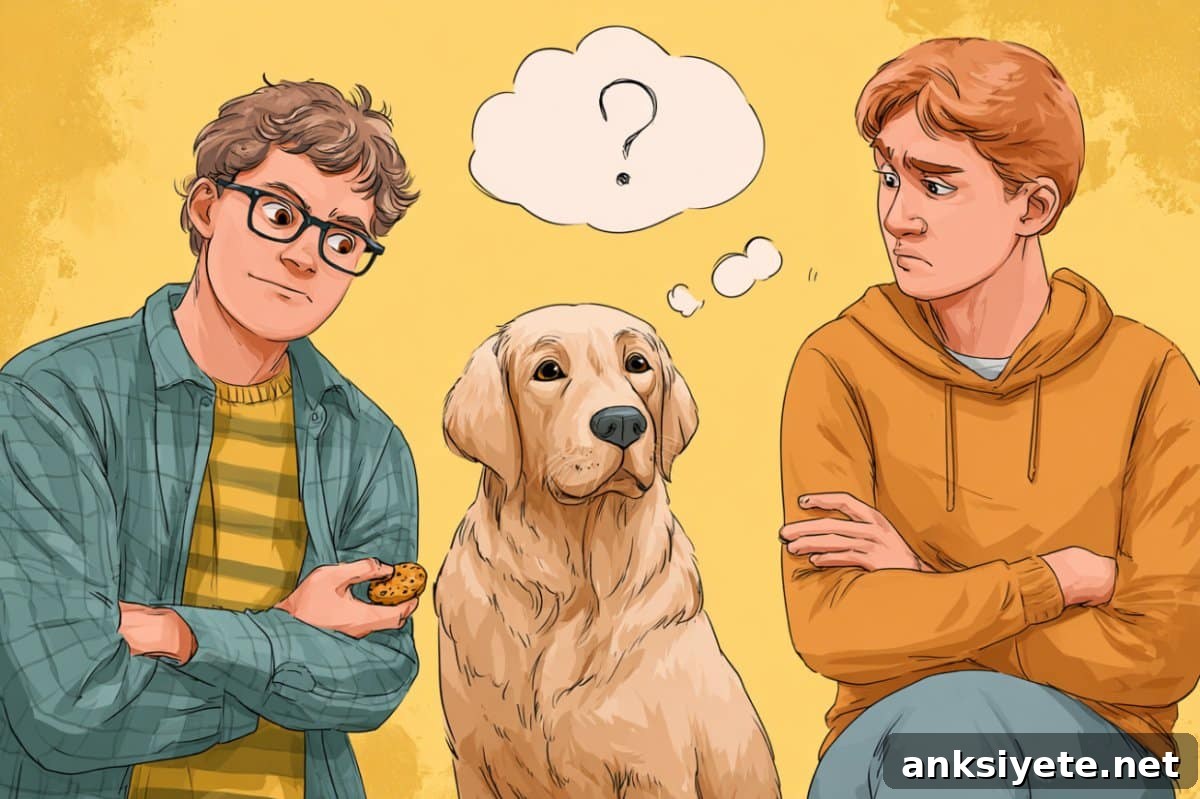
Summary: Many dog owners and enthusiasts believe dogs can tell who is trustworthy, but new evidence suggests the picture is more complicated. Researchers tested 40 pet dogs to see whether they form reputations of people by watching how those people treated another dog. The study found no clear preference for a generous person over a selfish one, even after the dogs had direct interaction with the humans. These results point to gaps in our understanding of how dogs perceive and evaluate human behavior and indicate that broader, more diverse research is needed.
Although dogs are closely bonded with humans and are often assumed to read our social cues and intentions, the mechanisms behind their social evaluations remain unclear. Some social species, like chimpanzees, clearly form reputations of individuals either through direct interaction or by observing third-party interactions (a process known as eavesdropping). Dogs have been the focus of many studies because of their long history alongside people, but findings have been inconsistent.
Key Facts:
- No Clear Preference: In this study, pet dogs did not preferentially approach or show more affiliative behavior toward the person who fed another dog compared with the person who withheld food.
- Indirect and Direct Experience: Dogs failed to show evidence of reputation formation both after observing a third-party interaction (eavesdropping) and after direct interaction with the humans.
- Methodological Considerations: The authors note that experimental design and choice tests may influence results, so negative findings do not necessarily prove an absence of capacity.
Earlier work at the Wolf Science Center in Austria reported that pack-living dogs and wolves did not form reputations of individual humans after either direct experience or eavesdropping. Researchers suggested that limited prior contact with humans could explain those null results, and consequently sought to test animals with more extensive human experience.
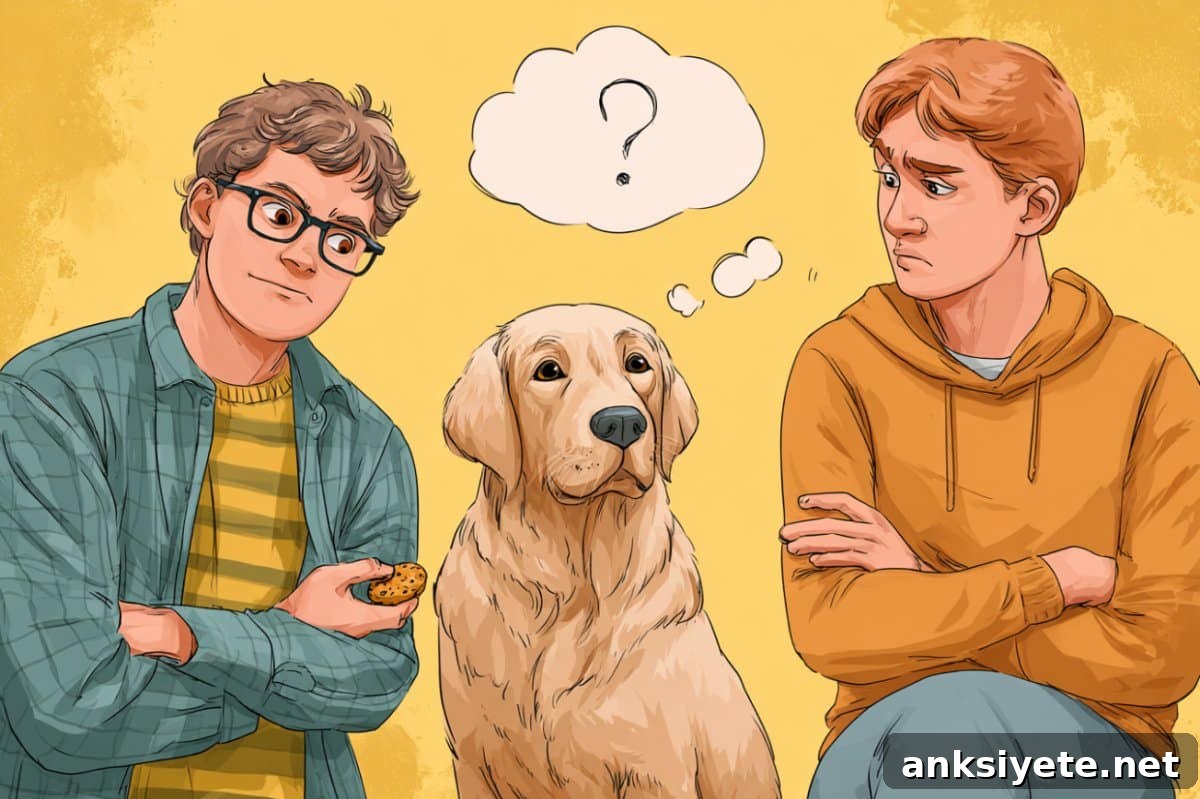
The new experiment involved 40 pet dogs of different ages to investigate whether reputation formation changes across development. In the eavesdropping phase, each subject watched a demonstrator dog interact with two unfamiliar people: one person consistently offered food (classified as “generous”) while the other withheld food (classified as “selfish”). Following this observation, dogs were given the opportunity to interact directly with the same two people.
Researchers measured multiple behavioral indicators: the person the dog approached first, time spent in proximity to each person, and affiliative behaviors such as jumping up or seeking contact. Across age groups—young, adult, and senior—dogs did not show a statistically significant preference for the generous person. Their choices and social behaviors did not exceed what would be expected by chance after either indirect observation or direct experience.
“Reputation formation may be more complex than previously assumed, even in a species that closely cooperates with humans,” says corresponding author Hoi-Lam Jim, now on the faculty at Kyoto University. The researchers emphasize that methodological limitations, including reliance on a two-choice test format, might have influenced outcomes. In other words, the absence of detectable reputation formation in this study does not conclusively prove dogs lack the capacity to evaluate people socially.
To better understand what affects dogs’ social cognition, the authors recommend systematic comparisons across varied dog populations and life experiences. Future research should include free-ranging dogs, working animals such as service and police dogs, and other groups with diverse exposure to humans. Broader sampling and alternative experimental designs could clarify whether, how, and when dogs form reputations of individual humans.
At present, the notion that dogs reliably judge human character remains unproven. While pet dogs often appear to choose people who are kind or familiar, controlled experiments have yet to demonstrate consistent reputation formation under the conditions tested.
About this animal psychology research news
Author: Whitney Hubbell
Source: Kyoto University
Contact: Whitney Hubbell – Kyoto University
Image: Image credit: Neuroscience News
Original Research: Open access. Title: “Do dogs form reputations of humans? No effect of age after indirect and direct experience in a food-giving situation” by Hoi-Lam Jim et al. Published with support from the Japan Society for the Promotion of Science.
Abstract
Do dogs form reputations of humans? No effect of age after indirect and direct experience in a food-giving situation
Animals can form reputations of individuals either through direct interactions or by observing interactions with a third party, a process often called eavesdropping. Given dogs’ cooperative relationship with humans, researchers have long been interested in whether domestic dogs (Canis lupus familiaris) can socially evaluate people. However, results across studies have been mixed.
To examine developmentally driven changes, this study tested whether dogs of different ages (young, adult, senior) form reputations of humans after witnessing interactions with a conspecific or after direct experience. Forty pet dogs participated. In the eavesdropping condition, subjects watched two humans interact with a demonstrator dog: one human provided food, while the other withheld it. In the direct-experience condition, subjects met and interacted with the same two people themselves.
Researchers recorded each dog’s first choice and measured time spent showing affiliative behaviors toward each human. Results indicated no significant preference for the generous partner over the selfish partner across age groups. Behavior did not differ from chance following either indirect or direct experience, and therefore the study found no support for reputation formation under the tested conditions. The findings highlight the methodological complexities inherent in studying social evaluation in dogs.