
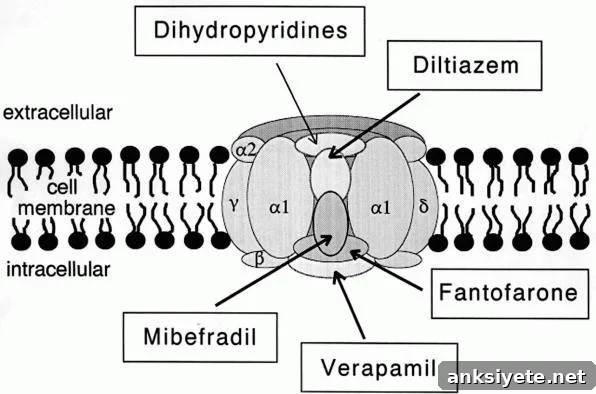
Researchers have identified a signaling pathway by which the brain controls a protein that regulates L-type calcium channels—channels that are essential for forming long-term memories and have been linked to bipolar disorder and schizophrenia.
The finding comes from a team led by Alexei Morozov, an assistant professor at the Virginia Tech Carilion Research Institute. Their work reveals how the protein Rap1 keeps L-type calcium channels in check, allowing them to activate only when appropriate during processes such as long-term memory formation.
Neurons communicate at thousands of tiny junctions called synapses. Synapses can change their strength and structure as we learn and form memories. Electrical signals traveling along axons trigger the opening of voltage-gated calcium channels at synapses, allowing calcium ions into the nerve ending. That calcium influx then triggers the release of neurotransmitters, the chemical messengers that carry signals from one cell to the next.
Decades of research have shown that blocking L-type calcium channels interferes with the formation of long-term memories. Although scientists knew these channels were activated during learning, the mechanisms that limit or time their activation remained unclear. The new study identifies Rap1 as a key suppressor that prevents L-type channels from being constantly active and abundant at synapses.
To test Rap1’s role, Morozov and colleagues removed (knocked out) the gene that produces Rap1 in their experimental model. They combined live imaging techniques that track neurotransmitter release in real time with high-resolution electron microscopy to visualize the number and location of L-type channels at synapses. Without Rap1, the researchers found, L-type channels became more active and more numerous at synapses, producing an elevated and persistent release of neurotransmitters. Those results indicate that Rap1 restrains L-type calcium channel activity, permitting channel opening only under the appropriate physiological conditions—such as those required for stable, long-term synaptic changes.
“People with genetic mutations affecting L-type calcium channels have higher rates of bipolar disorder and schizophrenia,” Morozov said. “This suggests there might be a relationship between how L-type calcium channels are activated and these psychiatric disorders. Understanding how these ion channels are regulated is a first step toward determining how their normal function or malfunction affects mental health.”
The discovery has implications for both basic neuroscience and psychiatric research. By clarifying a molecular mechanism that controls calcium entry and neurotransmitter release, the work offers a clearer picture of how synaptic signaling is timed during memory formation. Because previous genetic studies have associated L-type channel variants with psychiatric conditions such as bipolar disorder and schizophrenia, mapping the Rap1-dependent pathway may help researchers explore whether disruptions in this signaling cascade contribute to those disorders. That, in turn, could inform future strategies for targeted therapies that restore proper channel regulation.
Study details and credits
The study, titled “Rap1 Signaling Prevents L-Type Calcium Channel-Dependent Neurotransmitter Release,” was published in The Journal of Neuroscience. Authors include Jaichandar Subramanian (now a research fellow at the Picower Institute for Learning and Memory, Massachusetts Institute of Technology), Louis Dye (staff scientist at the Microscopy and Imaging Core, National Institute of Child Health and Human Development), and Alexei Morozov (also an assistant professor in Virginia Tech’s School of Biomedical Engineering and Sciences).
Written by Ken Kingery
Contact: Paula Byron – Virginia Tech Carilion School of Medicine and Research Institute
Source: Virginia Tech Carilion School of Medicine and Research Institute press release
Image Source: The L-type calcium channel image is credited to Vet vijayraj and is in the public domain.
Original Research: Abstract for “Rap1 Signaling Prevents L-Type Calcium Channel-Dependent Neurotransmitter Release” by Jaichandar Subramanian, Louis Dye, and Alexei Morozov in The Journal of Neuroscience. Published online April 24, 2013. DOI: 10.1523/JNEUROSCI.5963-11.2013