
Summary: Microscopic differences in brain white matter can influence how individuals respond to non-invasive electrical brain stimulation, suggesting a path toward more personalized treatment for neurological conditions.
Source: Imperial College London
Tiny microscopic changes in white matter may determine who benefits from non-invasive brain stimulation.
Non-invasive electrical brain stimulation, which delivers a weak electrical current to the scalp to modulate brain activity, is under investigation as a therapy for conditions such as stroke recovery, traumatic brain injury (TBI), dementia and depression. Clinical results to date have been inconsistent, with some people showing clear benefits and others showing little or no change.
Researchers at Imperial College London have investigated one likely reason for these mixed outcomes: the fine structure of white matter—the bundles of nerve fibers that connect different brain regions. Their new study suggests that the microstructural integrity and connectivity of targeted white matter tracts influence how well a person responds to stimulation, raising the possibility of tailoring treatment to individuals most likely to benefit.
The team examined how white matter condition affected behavioural and brain responses to transcranial direct current stimulation (tDCS). Participants included 24 healthy volunteers and 35 people recovering from moderate or severe TBI. While undergoing functional MRI, participants performed a cognitive test of response inhibition (the Stop Signal Task) and received either anodal, cathodal or sham stimulation over the right inferior frontal gyrus/anterior insula—a node of the brain’s salience network previously implicated in executive control. The procedure was double-blind: participants could not reliably tell whether they received active stimulation or sham.
Among healthy volunteers, anodal stimulation improved performance on the inhibition task compared with sham. In participants with TBI, responses were more varied. By combining diffusion MRI measures of axonal injury with the behavioural and fMRI data, the researchers found a clear pattern: people with stronger, more intact white matter connections in the stimulated network showed greater behavioural improvement after stimulation. Conversely, participants whose white matter tracts had sustained more traumatic axonal damage showed reduced benefit.
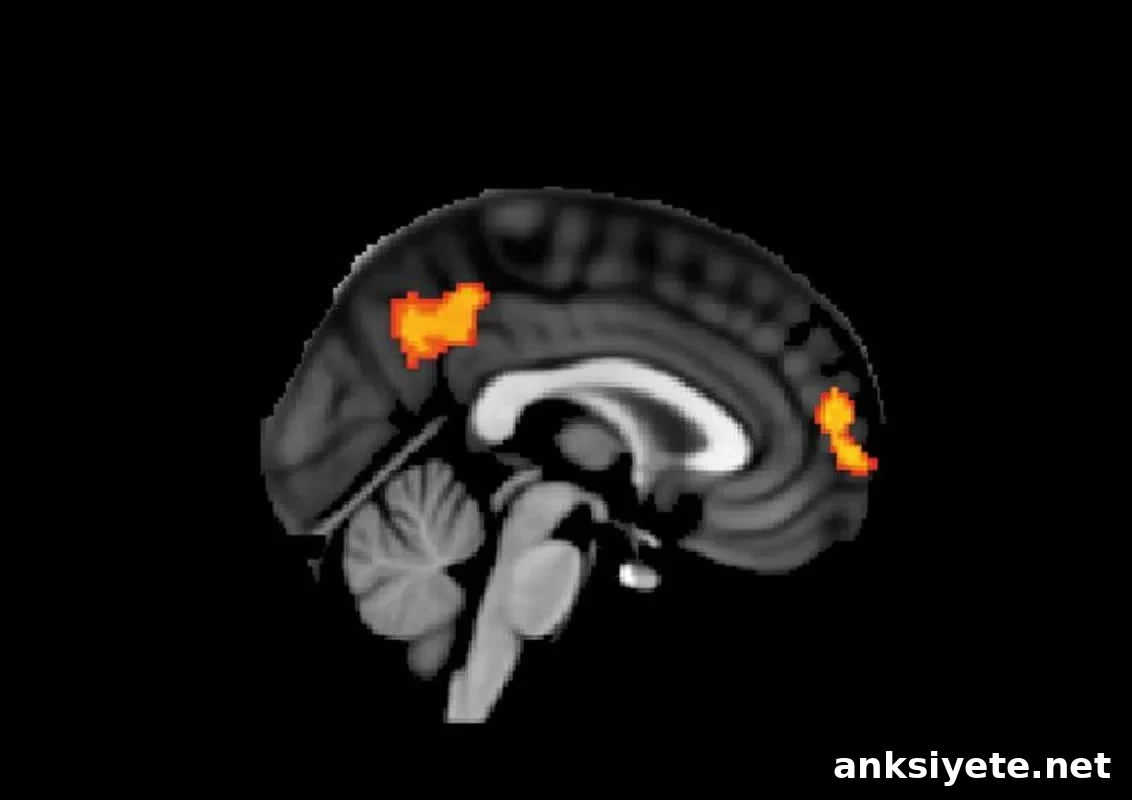
The study also showed that stimulation could partially normalize abnormal patterns of brain activity observed after TBI. In particular, anodal stimulation reduced atypical default mode network activation in patients with poor response inhibition, indicating that tDCS can alter communication between large-scale networks that support cognitive control.
“We found that people with stronger white matter connections in their brain had better improvement with stimulation,” Dr Lucia Li, lead author and clinical lecturer in neurology at Imperial College London, said. “This may explain why some previous studies report benefit while others do not, and it points toward a personalized approach to brain stimulation.”
Dr Li and colleagues stress that the findings do not yet prove clinical utility across all behaviours or brain regions. The study focused on one cognitive domain (response inhibition) and stimulated a single brain node, so it remains to be determined whether the same principle applies to other cognitive functions or stimulation targets. The researchers plan larger studies with more participants and to test stimulation in other clinical groups and brain regions to identify additional factors that predict response.
The results have practical implications for future clinical use of non-invasive brain stimulation. Rather than applying identical stimulation protocols to all patients, clinicians may need to assess the structural integrity of the targeted networks—using diffusion MRI or similar measures—to select patients and optimize stimulation parameters. Such a precision approach could increase the proportion of patients who gain meaningful benefit and avoid unnecessary treatment for those unlikely to respond.
Limitations
The authors note several limitations: the behavioural testing was restricted to one task, only one cortical target was stimulated, and sample sizes remain modest. These constraints mean more research is necessary to confirm generalizability across cognitive domains, stimulation targets and larger, more diverse patient groups.
Next steps
Future work will expand participant numbers, test multiple cognitive tasks and stimulation sites, and evaluate whether similar relationships between white matter integrity and stimulation response exist in other conditions characterized by abnormal brain activity, such as dementia. The goal is to develop selection criteria and individualized stimulation protocols that maximize clinical benefit.
Funding: Supported by the Wellcome Trust and the National Institute for Health Research. Patients were primarily recruited from St Mary’s Hospital (Imperial College Healthcare NHS Trust) and scanned at the Imperial College Clinical Imaging Facility.
Source: Imperial College London
Media contacts: Ryan O’Hare – Imperial College London
Image credit: Lucia Li et al.
Original research: Open access. Title: “Traumatic axonal injury influences the cognitive effect of non-invasive brain stimulation” by Lucia Li et al. Published in Brain. DOI: 10.1093/brain/awz252
Abstract (summary)
Non-invasive brain stimulation shows promise but produces variable behavioural effects. This study tested whether traumatic axonal injury within a stimulated network alters response to transcranial direct current stimulation. Using simultaneous stimulation and MRI, the investigators applied anodal, cathodal and sham stimulation to 24 healthy controls and 35 moderate/severe TBI patients while participants performed a response inhibition task. Diffusion MRI characterized axonal injury within the salience network. Anodal stimulation improved inhibition in controls but not uniformly in the patient group. The degree of axonal injury in the salience network predicted behavioural response: greater tract damage was associated with reduced benefit. Anodal stimulation also modulated network activity, partly normalizing default mode activation in patients with impaired inhibition. These findings indicate that white matter structure within targeted networks influences the behavioural effects of non-invasive stimulation and support a personalized approach to patient selection and stimulation parameter choice.