
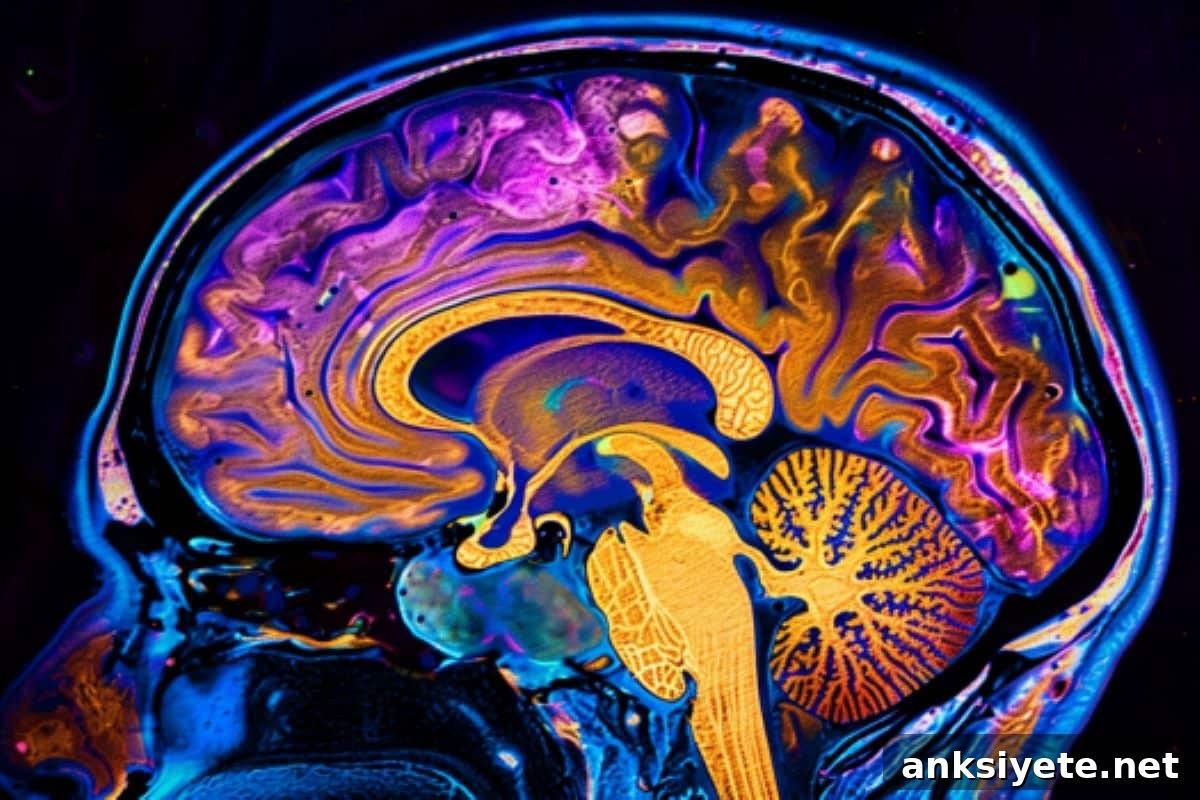
Summary: A new computational model clarifies how ketamine, an anesthetic and rapid-acting antidepressant, changes brain activity. By simulating ketamine’s interactions with NMDA receptors in cortical circuits, the model links molecular blocking to altered neuronal firing patterns and the oscillatory brain states associated with dissociation, sedation, and potential therapeutic benefits for depression.
Key Facts:
- Ketamine acts as an NMDA receptor antagonist in the cerebral cortex, altering excitatory signaling.
- The model reproduces characteristic EEG rhythms and neuronal spiking measured in humans and animals under ketamine.
- Results point to increased gamma-band activity as a candidate mechanism underlying ketamine’s antidepressant effects.
Source: MIT
Ketamine is a World Health Organization essential medicine used at different doses for sedation, pain relief, anesthesia, and as a treatment for some cases of treatment-resistant depression.
Although researchers have identified ketamine’s molecular targets and observed its effects on whole-brain activity, the precise link between subcellular actions and network-level dynamics has remained unclear.
A collaborative team from four Boston-area institutions developed a biophysical computational model that incorporates physiological details often omitted in previous work, offering new insight into how NMDA-receptor antagonism produces the rhythms and firing patterns seen under ketamine.
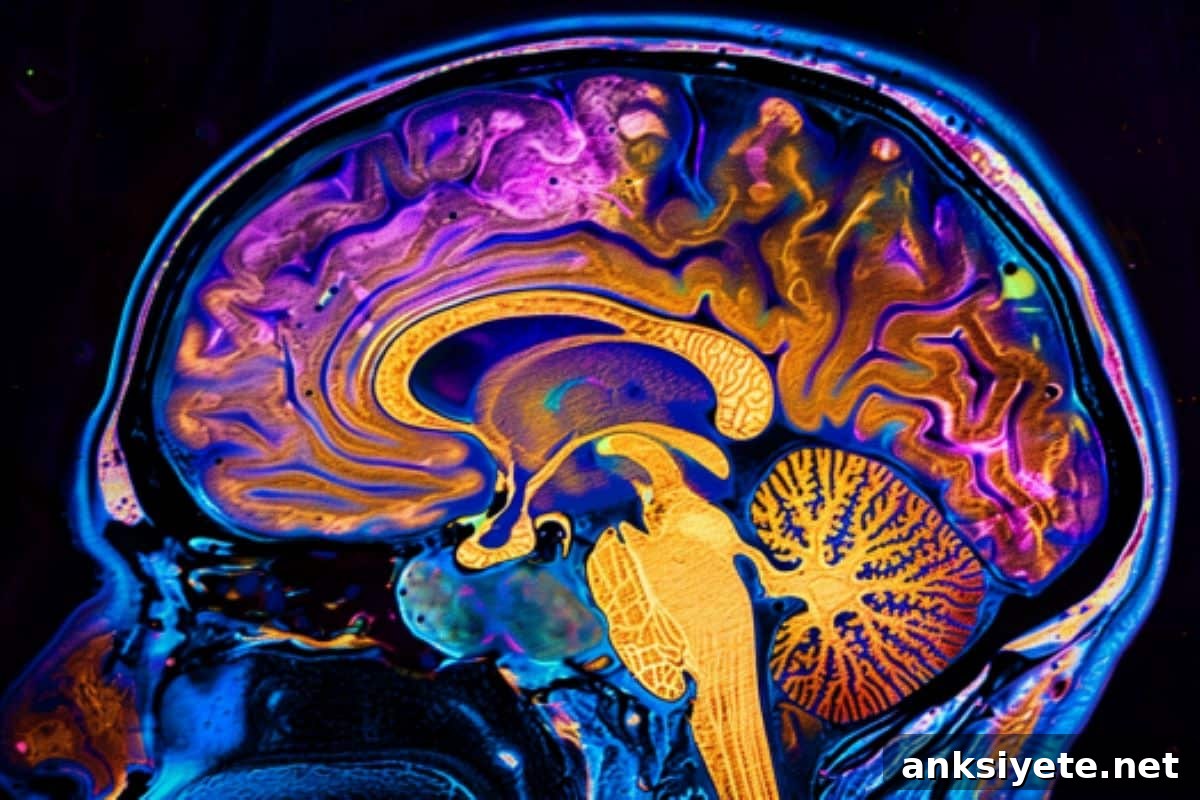
“This modeling work has helped decipher likely mechanisms through which ketamine produces altered arousal states as well as its therapeutic benefits for treating depression,” said Emery N. Brown, Edward Hood Taplin Professor of Computational Neuroscience and Medical Engineering at The Picower Institute for Learning and Memory at MIT, an anesthesiologist at Massachusetts General Hospital, and a professor at Harvard Medical School.
The authors—affiliated with MIT, Boston University, Massachusetts General Hospital, and Harvard—note that the model’s predictions, published May 20 in Proceedings of the National Academy of Sciences, could help clinicians better tailor ketamine use.
“When clinicians understand the mechanisms operating when they give a drug, they can potentially enhance its benefits and reduce side effects,” said lead author Elie Adam, a research scientist at MIT who will soon join the Harvard Medical School faculty.
Blocking the door
The main advance in this study is a detailed representation of what happens when ketamine blocks NMDA receptors in the cortex, the brain region responsible for sensory processing and higher cognition. NMDA receptors regulate a slowly closing channel that permits ions to flow in and out of neurons, shaping membrane voltage and spike generation.
Under normal conditions, NMDA channels can be transiently blocked by magnesium and then unblock when membrane voltage rises, allowing a sensitive interplay among voltage, spiking, and channel blocking. Ketamine is a potent blocker of these channels, altering those kinetics and reducing the small tonic currents that help some neurons reach spike threshold.
By explicitly modeling the blocking and unblocking dynamics, the team showed that NMDA receptor kinetics have a larger influence on circuit behavior than often appreciated. “Physiological details that are usually ignored can sometimes be central to understanding cognitive phenomena,” noted co-corresponding author Nancy Kopell, professor of mathematics at Boston University.
Their simulated cortical network included one excitatory neuron class and two inhibitory interneuron classes—distinguishing tonic inhibitory cells, which stably suppress network activity, from phasic interneurons, which respond briefly and strongly to excitatory input.
The model replicated neural signatures recorded experimentally: at low ketamine doses, gamma-band (30–40 Hz) power increases; at higher doses that induce unconsciousness, gamma bursts are periodically interrupted by slow delta activity, producing alternations of active and down states that can fragment cortical communication and disrupt consciousness.
Key findings and mechanisms
Simulations revealed several mechanisms that together produce these dynamics. First, ketamine’s impairment of NMDA-receptor kinetics removes a small, non-spiking current critical for neurons near threshold. In the model, tonic inhibitory interneurons sit at that level of excitation and therefore lose that sustaining current first, becoming suppressed. This disinhibition releases other neurons to fire more vigorously, creating an excited network state.
Second, the model shows how bursts of excitation synchronize into gamma oscillations: phasic inhibitory interneurons are strongly driven by glutamate from excitatory cells and, when they fire, deliver a widespread GABA-mediated inhibitory pulse that briefly silences excitatory neurons. Because this inhibition reaches the excitatory population simultaneously and has a limited duration, it synchronizes their recovery and produces coordinated gamma rhythms.
“The finding that an individual synaptic receptor (NMDA) can produce gamma oscillations and influence network-level rhythms was unexpected,” said co-corresponding author Michelle McCarthy, research assistant professor of mathematics at Boston University. Detailed modeling of NMDA kinetics revealed a gamma time scale not usually associated with the receptor.
At higher ketamine doses, the impaired NMDA kinetics cannot sustain continuous gamma activity. Excitatory neurons become suppressed under repeated GABAergic volleys from phasic interneurons, producing prolonged down states dominated by slow-delta oscillations. When phasic inhibition subsides, excitatory cells recover and the cycle repeats, matching EEG patterns seen in humans and animal models.
Possible antidepressant connection
The model also generates a plausible link to ketamine’s rapid antidepressant effects. It predicts that enhanced gamma activity could entrain neurons that express vasoactive intestinal peptide (VIP), a peptide implicated in neuroprotective and anti-inflammatory processes. Entrainment of VIP-expressing cells might increase peptide release and produce longer-lasting downstream effects, offering a route by which brief NMDA antagonism yields extended therapeutic benefit. The authors stress this idea is speculative and requires targeted experimental validation.
“Understanding how NMDA receptor subcellular dynamics can generate gamma oscillations provided the basis for a new theory about ketamine’s antidepressant action,” Kopell said.
Additional co-authors include Marek Kowalski, Oluwaseun Akeju, and Earl K. Miller.
Funding: The JPB Foundation, The Picower Institute for Learning and Memory, The Simons Center for The Social Brain, the National Institutes of Health, George J. Elbaum (MIT ’59, SM ’63, PhD ’67), Mimi Jensen, Diane B. Greene (MIT, SM ’78), Mendel Rosenblum, Bill Swanson, and annual donors to the Anesthesia Initiative Fund supported the research.
About this ketamine and neuroscience research news
Author: David Orenstein
Source: MIT
Contact: David Orenstein – MIT
Image: The image is credited to Neuroscience News
Original Research: Closed access. “Ketamine can produce oscillatory dynamics by engaging mechanisms dependent on the kinetics of NMDA receptors” by Emery N. Brown et al. PNAS
Abstract
Ketamine can produce oscillatory dynamics by engaging mechanisms dependent on the kinetics of NMDA receptors
Ketamine is an NMDA-receptor antagonist that produces sedation, analgesia, and dissociation at low doses and profound unconsciousness with antinociception at high doses. Both low and high doses can generate gamma oscillations (>25 Hz) in the EEG; at high doses these gamma oscillations are interrupted by slow-delta activity (0.1–4 Hz).
Although ketamine’s molecular targets and its oscillatory signatures have been described, how subcellular actions produce network-level rhythms remained unclear. Using a biophysical cortical-circuit model, the study demonstrates how NMDA-receptor antagonism can reproduce EEG and local-field-potential dynamics observed in humans and nonhuman primates.
The model identifies how impaired NMDA-receptor kinetics produce circuit disinhibition and how interactions between NMDA-mediated excitation and GABA-mediated inhibition create gamma oscillations at low and moderate doses and slow-delta oscillations at higher doses. These findings reveal general mechanisms for generating oscillatory brain dynamics and provide new insight into ketamine’s actions as both an anesthetic and a rapid-acting therapy for treatment-resistant depression.