
 Authenticity is not the easy option; it calls for openness and honesty with ourselves and with others.
Living authentically doesn’t mean a life without pain or sadness—these experiences coexist with joy and love (Joseph, 2019).
Being true to ourselves fosters a life of meaning and purpose, even amid hardship, and allows us to live more fully.
The books listed below provide insights into what authentic living looks like and offer practical guidance on realigning priorities toward what matters most.
This Article Contains:
- 5 Books to Understand Authenticity
- 5 Books on Being Your Authentic Self
- Applying Authenticity in Leadership
- 4 Practical Approaches to Authenticity
- Helpful Resources
- A Take-Home Message
- References
5 Books to Understand Authenticity
Authenticity begins with knowing our true self and core values, staying connected with them, and acting in accordance with them (Huta, 2015).
Authentic living means self-awareness, clarity about what it means to be real, and the courage to shape environments where we can thrive.
It’s not about chasing brief pleasures but investing time and energy to align our inner life with how we act and present ourselves to the world.
Each of the books below offers thoughtful perspectives on living intentionally, understanding motivations and worth, and taking responsibility for our choices.
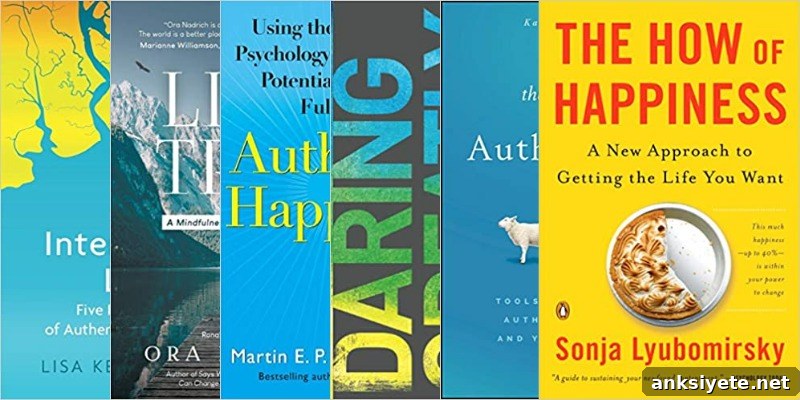
1. Authentic: How to Be Yourself and Why It Matters – Stephen Joseph
Stephen Joseph explores the psychology of authenticity, encouraging readers to let go of defensive patterns formed in childhood and to learn how to feel valued, understood, and accepted.
He provides practical exercises that help change how we relate to ourselves and others, supporting a deeper sense of acceptance and self-worth. These changes can reshape daily life and long-term goals.
2. Authentic Happiness: Using the New Positive Psychology to Realize Your Potential for Lasting Fulfillment – Martin Seligman
Martin Seligman, a key figure in positive psychology, argues that lasting happiness comes from identifying and using personal strengths rather than focusing on weaknesses.
The book offers practical tests, exercises, and tools to help readers identify virtues and apply them to live more intentionally and meaningfully.
3. The Art of Authenticity: Tools to Become an Authentic Leader and Your Best Self – Karissa Thacker
Karissa Thacker applies management psychology to leadership, showing how better self-knowledge enables more authentic decision-making and behavior.
The book includes practical tools to replace automatic, harmful reactions with more intentional responses, promoting ethical leadership and sustainable success.
4. Live True: A Mindfulness Guide to Authenticity – Ora Nadrich
Ora Nadrich connects mindfulness and authenticity, offering a chapter-based guide to discover who you are and who you are not.
Thirty meditations and practical exercises encourage recognition of core values and support ongoing authentic living.
5. An Intentional Life: Five Foundations of Authenticity and Purpose – Lisa Kentgen
Lisa Kentgen offers tools to uncover your essential self and build authenticity in daily life and relationships. Her methods are grounded in practical guidance aimed at lasting transformation.
5 Books on Being Your Authentic Self
The following books focus on personal transformation and practical steps to becoming more authentic in how you live, love, and lead.
1. Daring Greatly: How the Courage to Be Vulnerable Transforms the Way We Live, Love, Parent, and Lead – Brené Brown
Brené Brown defines vulnerability and shows how it is central to authentic, wholehearted living. She offers tools and strategies for becoming more visible, courageous, and connected.
Brown explains how vulnerability opens the door to creativity, love, empathy, and deeper meaning.
2. Man’s Search for Meaning – Viktor E. Frankl
Viktor Frankl’s classic reflects on finding meaning in extreme suffering. His observations show how a sense of meaning and responsibility enabled people to retain dignity and authenticity despite horrific conditions.
3. The Gifts of Imperfection: 10th Anniversary Edition – Brené Brown
Brown’s guidebook lays out ten practices to cultivate authenticity, self-compassion, resilience, and gratitude. It encourages readers to accept their stories and choose worthiness as an act of courage.
4. The Body Keeps the Score: Brain, Mind, and Body in the Healing of Trauma – Bessel van der Kolk
Bessel van der Kolk examines how trauma affects body and mind and presents restorative approaches—such as yoga, biofeedback, and meditation—that use neuroplasticity to support recovery and authentic re-engagement with life.
5. Flow: The Classic Work on How to Achieve Happiness – Mihaly Csikszentmihalyi
Csikszentmihalyi’s classic explores the state of flow—deep engagement and optimal experience—and how purposeful action can foster authentic, fulfilling moments in work and life.
Applying Authenticity in Leadership
Authenticity is especially important in leadership. The books below offer approaches to lead with integrity, purpose, and self-knowledge.
1. Authentic Leadership: Rediscovering the Secrets to Creating Lasting Value – Bill George
Bill George emphasizes character-based leadership grounded in values and self-discipline. He offers reflective questions and guidance to help leaders develop purpose-driven practices that build trust and lasting value.
2. Authentic Leadership (HBR Emotional Intelligence Series) – Harvard Business Review
This collection explores emotional intelligence in leadership and the risks of conforming to unreflective standards. It provides practical advice for handling difficult situations while maintaining emotional wellbeing.
3. The Discover Your True North Fieldbook: A Personal Guide to Finding Your Authentic Leadership – Nick Craig, Bill George, and Scott Snook
This fieldbook supports leaders in clarifying purpose, maintaining direction, and discovering the motivations that drive authentic leadership through guided reflections and exercises.
4. Strengths Based Leadership: Great Leaders, Teams, and Why People Follow – Tom Rath and Barry Conchie
Knowing your strengths and values is central to authentic leadership. Rath and Conchie draw on Gallup research to show how leaders can harness strengths to support teams and build followership.
4 Practical Approaches to Authenticity
Sometimes approachable, practical reads can clarify authenticity and offer everyday strategies for being more true to yourself.
1. The Book You Wish Your Parents Had Read: (and Your Children Will Be Glad That You Did) – Philippa Perry
Philippa Perry offers nonjudgmental guidance on parenting with authenticity—recognizing our own biases, accepting inevitable mistakes, and breaking unhelpful cycles to foster healthier parent–child relationships.
2. Positive Psychology in Practice: Promoting Human Flourishing in Work, Health, Education, and Everyday Life – Stephen Joseph
This comprehensive volume presents positive psychology theory and applications across real-world contexts, offering evidence-based strategies that support authentic and flourishing lives.
3. The How of Happiness: A New Approach to Getting the Life You Want – Sonja Lyubomirsky
Lyubomirsky presents research-backed practices for increasing happiness. Authenticity plays a key role in aligning inner values with outward life choices, a recurring theme in these exercises.
4. How to Be Yourself: Quiet Your Inner Critic and Rise Above Social Anxiety – Ellen Hendriksen
Ellen Hendriksen offers practical tools to manage social anxiety and quiet the inner critic so you can show up more genuinely in social situations.
Helpful Resources
Cultivating authenticity relies on self-awareness and clear knowledge of your values, strengths, and goals. The following tools can help deepen that understanding:
- R Stands for Reality
Five questions to ensure goals are realistic and aligned with your values. - Imago Workup
A worksheet to explore important qualities in romantic relationships and encourage authentic connection. - Understanding Self-Confidence
Reflect on a moment of confidence to extract practical insights for authentic behavior. - Who Am I?
Expressive journaling prompts to increase self-awareness and clarify your core identity. - Self-Awareness Worksheet for Adults
A structured tool to notice strengths, traits, skills, and areas for growth.
A Take-Home Message
Authenticity is less a final destination and more an ongoing process. It requires learning about ourselves and our context while focusing on what we value most.
True belonging grows when we present our imperfect, authentic selves to others and accept who we are (Brown, 2015).
Authenticity enhances communication, leadership, and parenting—but it is not always easy. A purposeful, authentic life may include pain and the need to face life’s limits (Joseph, 2019).
Rather than waiting for extreme events to spur change, you can intentionally cultivate awareness and authenticity through reflection, practice, and reading.
There is a large body of research and practical guidance to support this journey; these books and resources are a strong starting point for anyone working toward a more authentic life.
- Brown, B. (2015). Daring greatly: How the courage to be vulnerable transforms the way we live, love, parent, and lead. Avery.
- Brown, B. (2020). The gifts of imperfection (10th Anniversary ed.). Random House.
- Craig, N., George, B., & Snook, S. (2015). The Discover Your True North fieldbook: A personal guide to finding your authentic leadership. Wiley.
- Csikszentmihalyi, M. (2002). Flow: The classic work on how to achieve happiness. Ebury Press.
- Frankl, V. (2014). Man’s search for meaning (Rev. ed.). Beacon Press.
- George, B. (2004). Authentic leadership: Rediscovering the secrets to creating lasting value. Jossey-Bass.
- Harvard Business Review. (2017). Authentic leadership (HBR emotional intelligence series). Harvard Business Review Press.
- Hendriksen, E. (2018). How to be yourself: Quiet your inner critic and rise above social anxiety. St. Martin’s Press.
- Huta, V. (2015). Eudaimonia and hedonia: Their complementary functions in life. In S. Joseph (Ed.), Positive psychology in practice (2nd ed.). Wiley.
- Joseph, S. (Ed.) (2015). Positive psychology in practice: Promoting human flourishing in work, health, education and everyday life (2nd ed.). Wiley.
- Joseph, S. (2019). Authentic: How to be yourself and why it matters. Little, Brown Book Group.
- Kentgen, L. (2018). An intentional life: Five foundations of authenticity and purpose. Stryder Press.
- Lyubomirsky, S. (2008). The how of happiness: A new approach to getting the life you want. Penguin Books.
- Nadrich, O. (2019). Live true: A mindfulness guide to authenticity. IFTT Press.
- Perry, P. (2020). The book you wish your parents had read. Penguin Life.
- Rath, T., & Conchie, B. (2008). Strengths based leadership: Great leaders, teams, and why people follow. Gallup Press.
- Seligman, M. E. P. (2004). Authentic happiness: Using the new positive psychology to realize your potential for lasting fulfillment. Atria Books.
- Thacker, K. (2016). The art of authenticity: Tools to become an authentic leader and your best self. Wiley.
- Van der Kolk, B. (2014). The body keeps the score: Brain, mind, and body in the healing of trauma. Viking.