
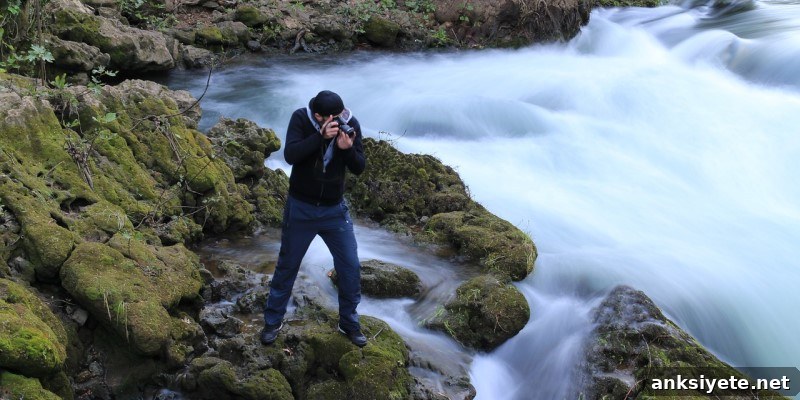
 Click. One, two, three, four… Click.
The waterfall’s motion was held in a single long-exposure shot, its flow captured across several seconds on one frame.
Photography presents a satisfying way to practice mindfulness—whether you use an analog SLR with film, a digital camera, or a smartphone.
Art has long been used to anchor people in the present. Today, nearly everyone carries a camera in their pocket, offering an accessible path to connect with the moment and to develop a mindful relationship with both the world and the act of seeing.
Instead of focusing on technical camera skills, this article explores how photography can be used deliberately as a mindfulness practice.
This Article Contains:
- What Is Mindful Photography?
- A Look at the Research and Benefits
- How to Start a Mindful Photography Practice
- 11 Mindful Photography Tips & Ideas
- Tools and Exercises for Mindfulness
- A Take-Home Message
- References
What Is Mindful Photography?
Mindfulness and art complement each other: art can open access to inner experience, and mindfulness deepens our attention to what we create and observe.
In her book Essential Art Therapy Exercises, Leah Guzman describes art as a way to “create a safe place for clients to experience and creatively express their emotions, and cultivate new opportunities for navigating life.” In that spirit, photography can make internal states visible—thoughts, emotions, hopes, and needs—so we can reflect on them with fresh perspective.
Photography used to require technical know-how, careful setup, and patience. The rise of camera phones has democratized image making, placing the capacity to record a moment within easy reach. Modern devices now offer powerful features and advanced controls, but mindful photography is not about gear or perfect composition. It’s about being present, noticing, and expressing how you perceive the world.
As Alexandria Searls writes in 21 Days of Mindful Photography, the practice invites “new perceptions” and helps you connect with your personal vision. The goal is not to produce museum-worthy art but to slow down, be immersed in the moment, and enjoy the process. Mindful photography freezes a narrative in one image and reveals how we see things—often reshaping our mood and outlook in the process.
Small changes in perception can transform our day. A single upsetting message can trigger hours of negative thinking, while a stranger’s smile or a child’s laugh can lighten our mood. Mindfulness helps interrupt that downward spiral by creating distance from reactive thought and restoring a sense of wonder. Photography can be a practical way to cultivate that fresh, curious attention.
A Look at the Research and Benefits
 Mindfulness is described by researchers as a flexible state of mind marked by openness to novelty, sensitivity to context, and active engagement with the present moment.
Practicing mindful photography can increase openness and appreciation for everyday life, and research supports these effects. For example, students who photographed meaningful subjects and reflected on them reported increased happiness. Further work showed that taking photos mindfully—rather than merely documenting facts—boosted appreciation and motivation.
Other research has explored mindful photography with caregivers at the end of life and with survivors of political violence; participants reported increased reflection, a greater sense of control, and improved emotional regulation. In short, mindful photography can provide a way to make meaning during difficult times, support emotional processing, and cultivate a fuller awareness of both loss and joy.
How to Start a Mindful Photography Practice
Mindfulness practices are simple but require consistent effort to become habits. Begin with intention and small rituals that support the new practice.
- Commit to making mindful photography a priority for a set period each week.
- Aim for several short sessions per week—five days is a useful target—but start small if needed.
- Create a ritual: keep your camera or phone, a small notebook, and a pen together so you’re ready to start quickly.
- Plan before you begin: Where will you go? Will you be alone or with someone? How will you ensure your safety?
- Schedule at least 20 uninterrupted minutes when possible. If that feels too long at first, begin with five minutes and build from there.
- Release expectations. Mindfulness can’t be forced; persistence makes it easier. Accept that some photos will disappoint—these images are subjective records of a moment.
- Try a month of short assignments—focus each session on color, texture, emotion, time, or a single theme found in a book or magazine.
11 Mindful Photography Tips & Ideas
 Transitioning from automatic snapshotting to engaged, present photography requires slowing down. The following approaches encourage a mindful, calm attitude toward seeing and photographing.
Reduce the noise
If it’s safe to do so, silence your notifications or switch to airplane mode to avoid interruptions. Postpone thoughts about sharing images on social media; the desire for external validation can distract from the immediate experience.
Refresh the scene
When photographing a familiar place, ask: Can I see this as if for the first time? Can I notice details I’ve never seen? Try new angles or viewpoints. Later, review your images to identify features you missed in the moment.
Limit the number of shots
Digital cameras enable endless pictures, but imposing limits can increase attention. On vacation, for instance, try restricting yourself to a small daily quota—three frames, perhaps—to encourage care and presence with each shot.
Accept what you capture
When reviewing images, focus on the experience they represent rather than technical flaws. Imperfections—unexpected shadows or reflections—can be as moving as a perfect sunrise.
Try travelling without a camera
Occasionally leave the camera behind. Doing so trains you to savor scenes for their own sake and can deepen your appreciation when you do return to photographing.
Capture the “is-ness”
Before you press the shutter, ask: Why am I taking this photo? What story should it tell? Seek to capture the subject’s essential presence—its “isness”—rather than a culturally prescribed idea of beauty.
Work with weather and light
Rather than chasing perfect conditions, engage with whatever light and weather you find. Notice how gray skies, rain, or wind affect your senses—sounds, temperature, movement—and let those impressions guide your images.
Capture your day
Try a daylong exercise: take a photo soon after waking and note the time, then take an image roughly once an hour when possible. At day’s end, review the sequence and reflect: Do the photos tell the story of your day? What’s missing?
Oracle walk
Ask a question—What is my strength? What should I do next?—then answer using only images and scenes encountered on a walk. Interpret objects metaphorically to gain fresh perspectives.
Four elements exercise
Photograph representations of earth, fire, water, and air. A puddle can stand for water, sunlight for fire, stones for earth, and moving branches for air. Notice which elements attract you and the colors and textures associated with each.
Stay put
Sit in one place for a period—on a bench, by a river, or outside a café—and photograph changes: passing traffic, shifting light, or subtle weather variations. Later, lay out the images and reflect on how your feelings and observations evolved.
Tools and Exercises for Mindfulness
Mindfulness supports mental and physical wellbeing, and guided exercises can help structure practice. Examples of accessible meditations and visual exercises that complement mindful photography include:
- The Wheel of Awareness: a guided attention exercise that directs awareness outward and then inward to deepen a sense of connection and presence.
- Leaves on a Stream: an imagery-based practice adapted from Acceptance and Commitment Therapy that helps create psychological distance from passing thoughts.
- Eye of the Hurricane: a guided practice that helps discover a quiet center of calm amid external turbulence.
These and similar exercises pair well with mindful photography assignments to help clients or students reduce stress, increase presence, and create meaningful reflection.
A Take-Home Message
A camera can be a powerful tool for reconnecting with the present when used deliberately. The practice is not about perfection; it’s about noticing what is. When you slow down, reduce the number of shots, and attend to the scene with curiosity and acceptance, photography becomes a method for practicing mindfulness.
Freezing moments gives you material to reflect on later—emotions, memories, and newly visible details that deepen your relationship with the present. Use mindful photography techniques with yourself or with clients to cut through daily noise and to strengthen awareness and appreciation for everyday life.
References
- Gottlieb, J. (2014). The art of mindful photography. National Geographic.
- Guzman, L. (2020). Essential Art Therapy Exercises: Effective Techniques to Manage Anxiety, Depression, and PTSD. Rockridge Press.
- Kalmanowitz, D. L., & Ho, R. T. H. (2017). Art therapy and mindfulness with survivors of political violence: A qualitative study. Psychological Trauma: Theory, Research, Practice, and Policy, 9(Suppl 1), 107–113.
- Kurtz, J. L., & Lyubomirsky, S. (2013). Happiness promotion: Using mindful photography to increase positive emotion and appreciation. In J. J. Froh & A. C. Parks (Eds.), Activities for Teaching Positive Psychology: A Guide for Instructors (pp. 133–136). American Psychological Association.
- Kurtz, J. (2015). Seeing through new eyes: An experimental investigation of the benefits of photography. Journal of Basic & Applied Sciences, 11, 354–358.
- Hale, R. (2020). Want to take better photos? Here’s how to practice at home. National Geographic.
- Lopez, S. J., Edwards, L. M., & Marques, S. C. (2020). The Oxford Handbook of Positive Psychology. Oxford University Press.
- Meister Eckhart. (2021). Discussion of “isness” and presence.
- Searls, A. (2019). 21 Days of Mindful Photography: A Course in New Perceptions.
- Shapiro, S. L. (2020). Rewire Your Mind: Discover the Science + Practice of Mindfulness. Aster.
- Thomas, S. (2016). Mindful photography and its implications in end-of-life caregiving: An art-based phenomenology (Doctoral dissertation).
- Williams, M., & Penman, D. (2016). Mindfulness: A Practical Guide to Finding Peace in a Frantic World. Joosr.