
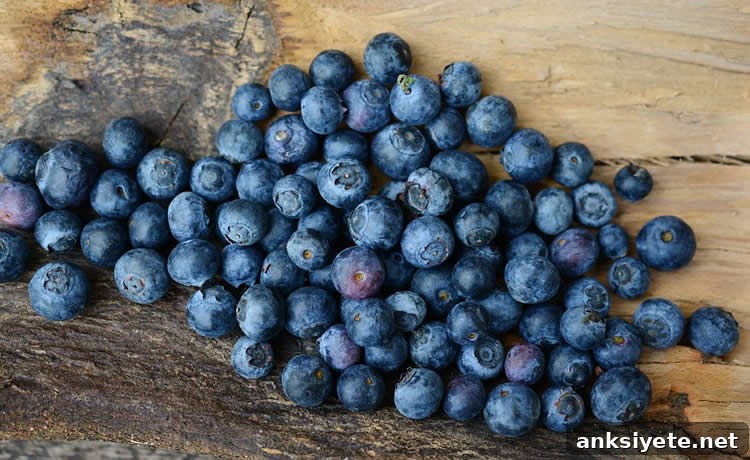
Summary: A new study reports that blueberry vinegar may help restore memory in mice with induced amnesia. While additional research is required, the fermented preparation shows promise for preserving cognitive function in conditions such as dementia and age-related cognitive decline.
Blueberry Vinegar Restores Memory in Mice with Induced Amnesia, Study Suggests
Dementia affects millions worldwide, progressively diminishing a person’s ability to think, remember and carry out daily activities. Researchers investigating new, safer approaches to protect and restore cognition report that blueberry vinegar — a fermented extract rich in bioactive compounds — improved memory-related behaviors in mice with experimentally induced amnesia.
Study overview
Researchers, reporting in the Journal of Agricultural and Food Chemistry, explored whether fermented blueberry vinegar could influence key brain chemicals and behavior in an animal model of memory impairment. Blueberries are known to contain a variety of antioxidants and polyphenols, and fermentation can change the chemical profile of plant-based foods, often increasing the availability and biological activity of certain compounds. The study tested the hypothesis that blueberry vinegar might reduce processes that degrade memory-related signaling molecules and support factors that preserve neuronal health.
Biological rationale: acetylcholine and BDNF
Memory and learning rely on numerous neurotransmitters and growth factors. One important neurotransmitter implicated in Alzheimer’s disease and other dementias is acetylcholine; reductions in acetylcholine levels and impaired receptor activity have been linked to cognitive decline. Treatments that slow the breakdown of acetylcholine can temporarily improve symptoms, but some existing drugs have limited duration of action and may cause adverse effects, including liver toxicity in some cases.
Another crucial component for cognitive resilience is brain-derived neurotrophic factor (BDNF), a protein involved in maintaining and creating healthy neurons and synapses. Higher levels of BDNF are generally associated with improved neuronal health and plasticity, which support learning and memory. The study examined whether blueberry vinegar affected both the enzymatic breakdown of acetylcholine and the expression of BDNF in the brain.
Methods and main findings
In the experimental setup, mice with chemically induced amnesia received blueberry vinegar as a dietary treatment. The investigators measured molecular markers in the brain and assessed behavior using standard memory tests. Behavioral measures included maze tasks and an avoidance test in which mice learn to avoid a chamber associated with a mild aversive stimulus. These tests provide widely used assessments of short-term learning and memory in rodents.
The treated mice showed biochemical changes consistent with enhanced cholinergic signaling: blueberry vinegar reduced acetylcholine breakdown in the brain. The treatment also elevated levels of brain-derived neurotrophic factor. Corresponding with these molecular effects, the mice given blueberry vinegar performed better in maze tests and in the avoidance task, indicating improved short-term memory compared with untreated controls.
Implications and limitations
These findings suggest that blueberry vinegar may contain compounds that protect or restore cognitive function, at least in this animal model. The combination of reduced acetylcholine degradation and increased BDNF provides a plausible mechanism for the observed behavioral improvements. Fermentation, which can transform and enhance the bioactivity of natural products, may play an important role in producing the active constituents responsible for these effects.
However, the authors emphasize that these are early-stage preclinical results. Animal models are useful for understanding biological mechanisms and identifying promising candidates, but they do not guarantee the same results in humans. Additional studies are necessary to identify which specific components of blueberry vinegar are responsible for the benefits, to determine safe and effective dosing, and to evaluate long-term safety and efficacy, including potential impacts on the liver and other organs. Clinical trials in humans would be required before blueberry vinegar could be recommended as a treatment for dementia or age-related cognitive decline.
Funding, publication and source
Funding: The research team acknowledges support from Konkuk University.
Publication: The study is reported in the Journal of Agricultural and Food Chemistry.
Source: American Chemical Society (ACS) coverage of the research.
Note: These results are preliminary and derived from animal research. They highlight a potential avenue for future investigation but do not constitute medical advice or an endorsement of blueberry vinegar as a treatment for cognitive disorders in humans.