
Summary: A study reports positive results using a personalized precision medicine approach to treat cognitive decline and memory loss associated with Alzheimer’s disease.
Source: IOS Press
Cognitive decline is a growing concern for aging populations worldwide. Alzheimer’s disease currently affects an estimated 5.4 million Americans and roughly 30 million people globally. Without effective prevention and treatment strategies, projections suggest the number of people living with Alzheimer’s could reach 160 million worldwide by 2050, including about 13 million Americans, with serious implications for healthcare systems. Recent analyses even place Alzheimer’s disease among the leading causes of death in the United States, behind cardiovascular disease and cancer. Although researchers have sought effective therapies for more than a century, the disease has proven difficult to treat. Emerging evidence, however, indicates that Alzheimer’s is a complex, systemic condition rather than one driven solely by beta-amyloid plaques and tau tangles. The study summarized here shows that a personalized, precision-medicine approach can stabilize or improve memory in people with varying stages of cognitive decline.
Attempts to halt Alzheimer’s progression have generally had limited success. This new study adopted a broader, individualized strategy that targets each participant’s distinct risk factors. “The findings, published in the Journal of Alzheimer’s Disease Reports, are encouraging and indicate that a more extensive clinical study is warranted,” said Brian Kennedy, PhD, Director of The Centre for Healthy Aging at the National University Health System in Singapore and Chief Scientific Officer of Affirmativ Health.
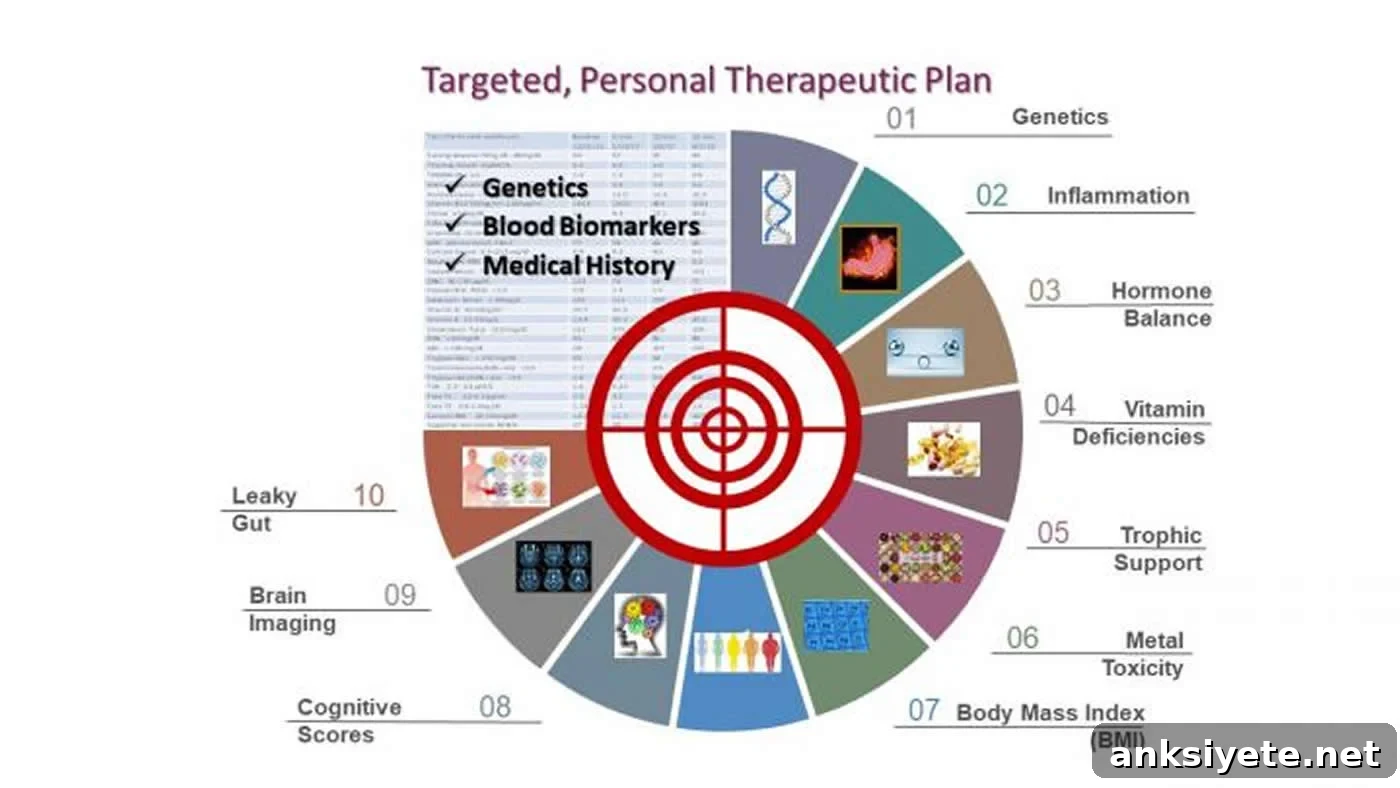
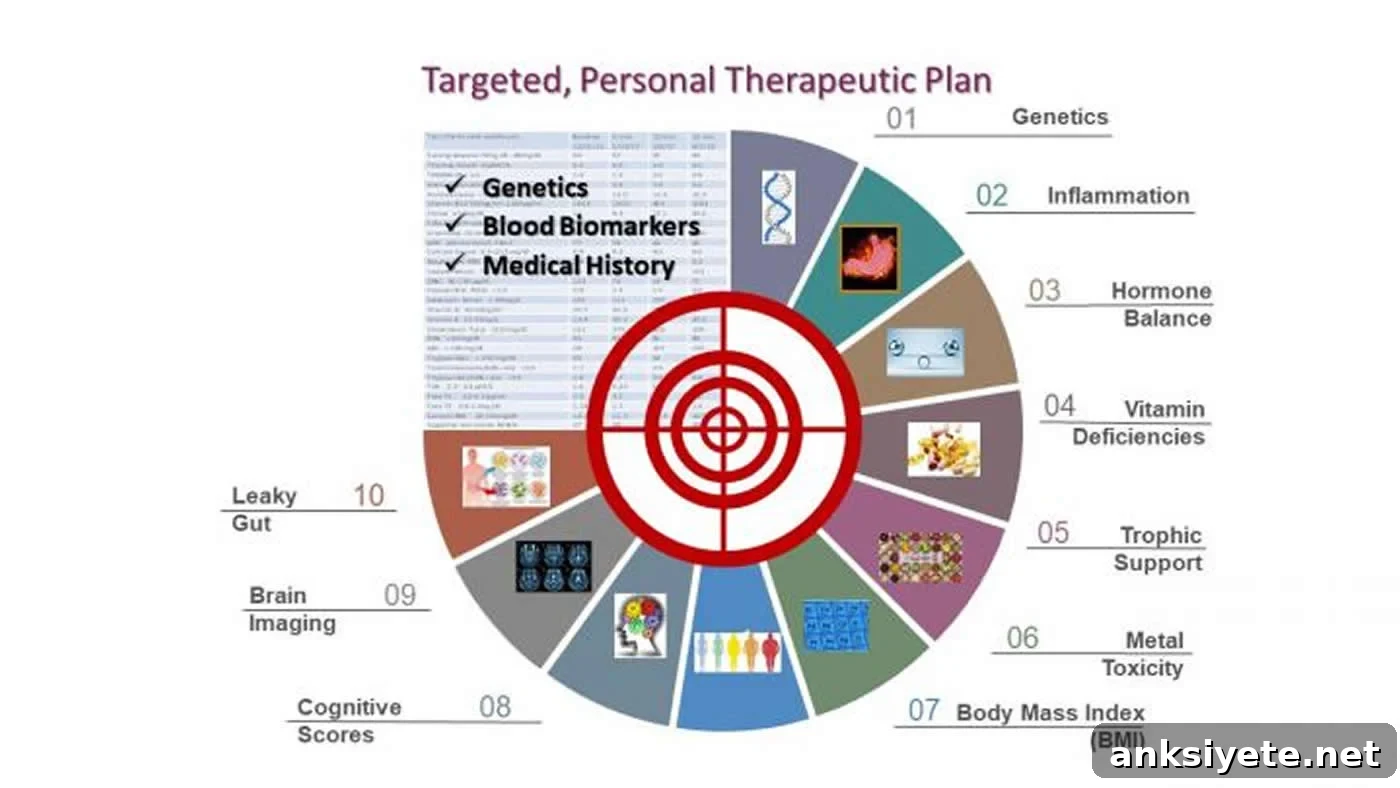
The Affirmativ Health research team reviewed the scientific literature and developed a comprehensive program addressing well-supported risk factors linked to cognitive decline. Their multi-modal protocol combines advanced laboratory testing, genetic analysis, and in-person clinical coaching to strengthen resilience and support brain health. The personalized therapeutic plan gathers genetic data, an extensive blood panel, medical history, and lifestyle information to identify metabolic risks and nutrient deficiencies relevant to cognition. “Target laboratory levels differ from standard ranges because the goal is achieving optimized levels for cognitive health,” said Ginger Schechter, MD, Chief Medical Officer at Affirmativ Health.
The program evaluates more than 35 factors known to influence cognitive decline, from metabolic measures to nutrient status and lifestyle contributors. Results from the study indicate that some of these factors are more responsive to intervention than others, highlighting the importance of tailored treatment plans. “This study supports the need for a one-size-fits-one rather than a one-size-fits-all model, comprehensively assessing the range of risk factors that affect memory,” said Denise M. Kalos, CEO of Affirmativ Health.
Alongside the study’s publication, the Affirmativ Health team released a book, Outsmart Your Brain – an Insider’s Guide to Life-Long Memory, to share practical strategies for maintaining cognitive health. “Memory should not be accepted as an inevitable loss with age. It’s never too early to build habits that support long-term brain function,” the authors note. The book distills the scientific basis of the program into clear, actionable guidance on lifestyle and dietary choices that support cognitive resilience. “Too few people recognize how powerful lifestyle and nutrition are for brain health. Outsmart Your Brain is a practical resource written in plain language for anyone who wants to preserve or improve memory,” said Ryan R. Fortna, MD, PhD, Chief Medical/Scientific Officer, ADx Healthcare.
About this Alzheimer’s disease research article
Source:
IOS Press
Media Contacts:
Denise M. Kalos – IOS Press
Image Source:
Image credited to Affirmativ Health.
Original Research (open access):
“A Comprehensive, Multi-Modal Strategy to Mitigate Alzheimer’s Disease Risk Factors Improves Aspects of Metabolism and Offsets Cognitive Decline in Individuals with Cognitive Impairment” by Schechter, Ginger; Azad, Gajendra Kumar; Rao, Rammohan; McKeany, Allison; Matulaitis, Matthew; Kalos, Denise M.; Kennedy, Brian K., published in JAD Reports. DOI: 10.3233/ADR-200185
Abstract
A Comprehensive, Multi-Modal Strategy to Mitigate Alzheimer’s Disease Risk Factors Improves Aspects of Metabolism and Offsets Cognitive Decline in Individuals with Cognitive Impairment
Background:
Alzheimer’s disease (AD) is a chronic, progressive condition. Although multiple therapies have been explored, none have yet produced a clear, disease-modifying effect. One reason may be that AD arises from multiple interacting factors rather than a single cause.
Objective:
Using the Affirmativ Health Personal Therapeutic Program (PTPr), the study investigated whether a comprehensive, personalized intervention could improve cognitive and metabolic measures in people diagnosed with subjective cognitive impairment, mild cognitive impairment, or early-stage Alzheimer’s disease.
Methods:
Thirty-five participants provided blood samples, completed the Montreal Cognitive Assessment (MoCA), and submitted detailed intake information. Each participant and caregiver attended a four-day immersion program that produced an individualized Personal Therapeutic Plan (PTP), offered consultations with clinicians, and explained the PTPr and PTP. Follow-up occurred via telemonitoring, repeat blood testing, lifestyle and medication reviews, and at least one MoCA reassessment between three and twelve months after the initial program.
Results:
Comparing baseline to follow-up measures, the study found improvements in several risk factors, including blood glucose and insulin markers, and vitamin levels such as B12, D3, and E—either across the entire group or specifically among participants who started with abnormal values. Overall MoCA scores remained stable for the entire cohort, while participants with baseline MoCA scores of 24 or lower showed significant cognitive improvement.
Conclusion:
These results support the idea that a comprehensive, personalized program targeting multiple AD risk factors can improve metabolic risk profiles and stabilize or improve cognitive function. The findings justify larger, placebo-controlled clinical trials to further evaluate this approach.