
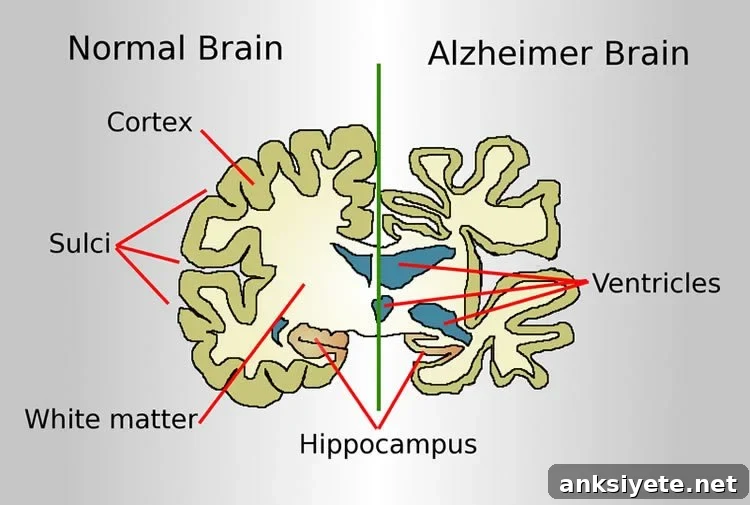
Researchers at University of Florida Health have added evidence linking the brain’s stress response to a protein associated with Alzheimer’s disease.
In experiments using a mouse model and human neurons, the team found that a brain hormone involved in coping with stress increases production of protein fragments called amyloid beta. These fragments can aggregate in the brain and initiate the neurodegenerative processes that characterize Alzheimer’s disease.
The study, led by investigators including Todd Golde, M.D., Ph.D., director of the UF Center for Translational Research in Neurodegenerative Disease and a professor in the College of Medicine’s department of neuroscience, was published in The EMBO Journal.
The findings build on the growing body of research exploring how non‑genetic factors such as chronic stress may influence Alzheimer’s risk. While Alzheimer’s is known to result from a combination of genetic, lifestyle and environmental influences, this work clarifies one plausible molecular pathway that connects stress to increased amyloid production.
“This work provides detailed insight into stress-related mechanisms that can promote at least one hallmark pathology of Alzheimer’s disease,” Golde said. Understanding these mechanisms could inform future strategies to reduce risk and develop targeted interventions.
Key findings of the research:
- Stress triggers release of the neuropeptide corticotrophin releasing factor (CRF) in the brain, and CRF exposure leads to higher production of amyloid beta.
- In acutely stressed mice, researchers observed greater levels of amyloid beta compared with non‑stressed controls, including an increase in a particularly harmful form of amyloid beta implicated in the progression of Alzheimer’s disease.
- Treating human neurons in culture with CRF similarly raised amyloid beta production, supporting the translational relevance of the mouse results to human cells.
- Mechanistically, CRF enhances the activity of γ‑secretase, an enzyme that generates amyloid beta from its precursor proteins. CRF also promotes co‑localization and interaction between γ‑secretase and the CRF receptor, implicating both receptor‑dependent and receptor‑independent pathways in increased amyloid generation.
Laboratory studies showed that CRF treatment promotes internalization of CRF receptor 1 (CRFR1) along with γ‑secretase and increases γ‑secretase activity in vitro. Co‑immunoprecipitation and fractionation experiments demonstrated an association between CRFR1 and γ‑secretase and an accumulation of γ‑secretase in lipid raft membrane fractions after CRF exposure. Together, these observations explain how stress signaling can translate into elevated amyloid production at the molecular level.
Efforts to block the pathway by targeting CRFR1 were not successful and, unexpectedly, some CRFR1 antagonists increased amyloid production. Because of this complexity, the investigators are now exploring other approaches, including strategies to neutralize CRF directly with an antibody as a way to prevent the stress‑induced increase in amyloid beta.
Modifying environmental contributors such as chronic stress offers a complementary route to genetic approaches for reducing Alzheimer’s risk. While addressing these softer, non‑genetic risk factors is challenging, they may be more amenable to intervention than inherited genetic mutations. The research highlights the need for novel therapeutic strategies that target stress‑related pathways in Alzheimer’s disease.
“These non‑genetic contributors to Alzheimer’s risk are difficult to address, but they are important targets if we want a broader range of preventive and therapeutic options,” Golde said. The investigators emphasize that more research is needed to translate these molecular insights into safe and effective interventions.
The research team included Seong‑Hun Kim, M.D., Ph.D.; Hyo‑Jin Park, Ph.D.; Kevin Felsenstein, Ph.D.; and others who contributed to the experimental design, data acquisition and analysis. Much of the experimental work was conducted by Hyo‑Jin Park while a postdoctoral associate; Park is now an assistant scientist in the College of Medicine’s department of aging and geriatric research.
Source: Doug Bennett – University of Florida
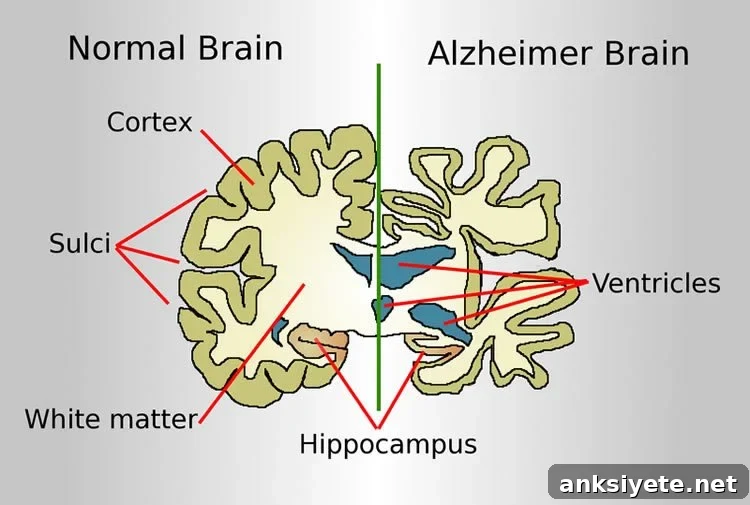
Image credit: Public domain image used for illustration
Original research: Abstract for “The stress response neuropeptide CRF increases amyloid‑β production by regulating γ‑secretase activity,” published in The EMBO Journal (online June 12, 2015). The study describes how CRF influences Aβ production through effects on CRFR1, γ‑secretase localization and direct modulation of γ‑secretase activity, and it discusses the unexpected effects of CRFR1 antagonists on Aβ generation.
Abstract
The stress response neuropeptide CRF increases amyloid‑β production by regulating γ‑secretase activity
The biological mechanisms that link stress to Alzheimer’s disease (AD) risk are not well understood. This study examined how corticotrophin releasing factor (CRF), a key mediator of the brain’s stress response, affects production of amyloid‑β (Aβ). In cell models, CRF treatment increased Aβ levels and promoted internalization of CRFR1 together with γ‑secretase. Biochemical experiments showed that γ‑secretase associates with CRFR1 via β‑arrestin binding motifs, and CRF treatment led to increased γ‑secretase accumulation in lipid raft fractions. CRF also increased γ‑secretase enzymatic activity in vitro, indicating a receptor‑independent mechanism as well. Notably, CRFR1 antagonists unexpectedly elevated Aβ production in some contexts. Collectively, the results link CRF to increased Aβ through effects on γ‑secretase and provide mechanistic insight into how stress may elevate AD risk. The authors suggest that directly targeting CRF could be necessary to modulate this pathway for therapeutic benefit, since CRFR1 antagonists may have complex effects on γ‑secretase and Aβ species.