
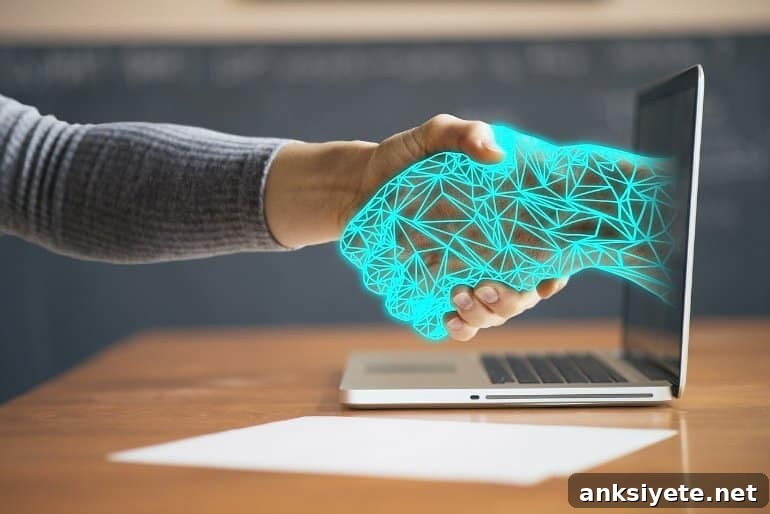
Summary: Researchers studying human–machine interaction found that during the COVID-19 pandemic people became more altruistic not only toward other humans but also toward machines. The shift may be tied to increased reliance on digital assistants and greater trust in technology.
Source: USC
Many people normally treat machines differently than they treat other humans. That impatience or disregard extends beyond a slot machine that ate your coins, a vending machine that failed to deliver a drink, or a GPS that routed you the wrong way.
However, researchers at the University of Southern California report that people who were affected by the COVID-19 pandemic showed increased goodwill both toward other people and toward humanlike autonomous machines.
“Our research shows that when people are distracted or distressed by something like the pandemic, they tend to treat machines more like they treat other people,” said Jonathan Gratch, senior author of the study and director for virtual humans research at the USC Institute for Creative Technologies. “We observed greater faith in technology and a narrowing of the social gap between humans and machines.”
The study, published in the journal iScience, was conducted by teams at USC, George Mason University and the U.S. Department of Defense.
Previous research has shown that people generally dispense with social norms when interacting with machines, even as those machines adopt more humanlike voices or personalities—think Alexa, in-car navigation assistants, and other virtual agents. This tendency is often explained by heuristic thinking, the rapid, intuitive judgments people use to manage daily complexities.
To explore how the pandemic affected behavior, the researchers measured participants’ stress and pandemic impact, then used the dictator game to assess altruism. The dictator game is a standard behavioral economics tool that quantifies how much one individual will give to another when given unilateral control over a resource. In this study, participants played the game with both human and computer partners.
The results were unexpected: participants who reported stronger COVID-19 impact displayed increased generosity not only toward human partners but also toward computer partners. As participants’ pandemic-related concerns rose, so did their compassion toward machines.
A mediation analysis indicated two mechanisms behind this shift. First, increased heuristic thinking made participants more likely to apply social norms to machines—treating them as social actors rather than mere tools. Second, heightened faith in technology—possibly reinforced by rapid scientific achievements during the pandemic, such as the unprecedented speed of vaccine development—appeared to bolster favorable responses to machines.
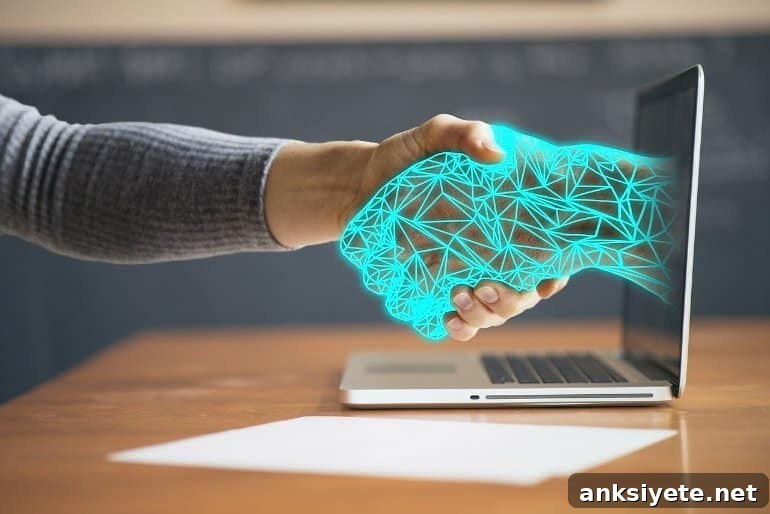
These findings align with prior observations that disasters and crises can increase prosocial behavior among people who feel compelled to help. During the COVID-19 pandemic, reliance on machines and digital services surged: people bought goods online, worked and learned remotely, and turned to automated systems for information and services. That increased dependence may have contributed to a greater perception of the value of technology and, consequently, more generous responses to machines.
The study also highlights potential risks. If people are increasingly inclined to trust machines and treat them as social partners, malicious actors could exploit that trust by designing machines that mimic human traits to deceive or defraud users. The findings underscore the need for careful design, transparency, and safeguards in future technologies that aim to emulate human behavior or emotions.
In addition to Gratch, the study’s authors are Celso M. de Melo of the U.S. Army Research Laboratory and Frank Krueger of George Mason University.
Funding: Support for the research was provided by the U.S. Army and the Minerva Research Initiative in partnership with the Air Force Office of Scientific Research (grant nos. FA9550-18-1-0182 and FA9550-18-0455).
About this robotics and psychology research news
Source: USC
Contact: Gary Polakovic – USC
Image: The image is in the public domain
Original Research: Open access.
“Heuristic thinking and altruism toward machines in people impacted by COVID-19” by Celso M. de Melo, Jonathan Gratch, Frank Krueger. iScience
Abstract
Heuristic thinking and altruism toward machines in people impacted by COVID-19
Highlights
- •Participants played a dictator experiment with both human and computer partners
- •Impact of COVID-19 was measured using a PTSD-style scale
- •Higher pandemic impact was linked to increased heuristic thinking, stronger faith in technology, and greater altruism toward computers
- •These results highlight both opportunities and ethical concerns for future technology design
Summary
Autonomous machines are becoming more common in daily life, yet people typically treat machines differently and are less likely to extend social norms or altruism to them. This study reports an unexpected effect: individuals impacted by the COVID-19 pandemic—assessed via a post-traumatic stress disorder scale—showed a marked reduction in the behavioral gap between humans and machines.
When participants took part in the dictator game, those affected by the pandemic exhibited increased generosity toward other humans, consistent with prior disaster research. Unexpectedly, the same participants showed comparable generosity toward machine partners. Mediation analyses suggest that increased reliance on heuristic thinking and greater faith in technology explained this shift, offering insight into how crises can reshape human–machine relations.
While these findings provide valuable understanding of social responses to autonomous systems, they also raise important design and policy questions about trust, manipulation, and the ethical development of humanlike machines.