
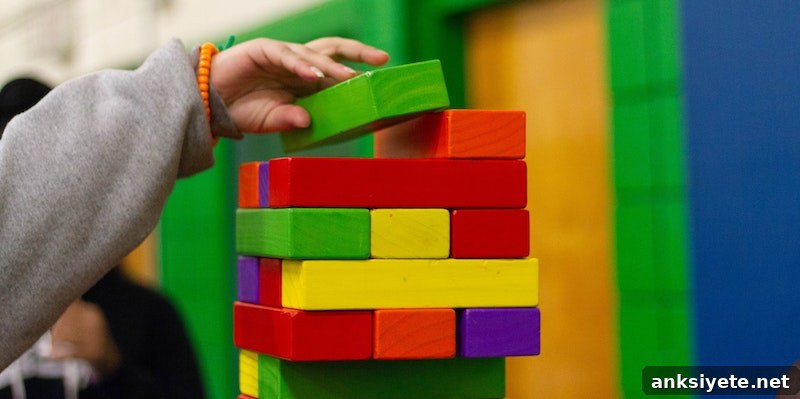
 Self-expression is a vital part of healing through play. For children especially, playful activities trigger dopamine release, making tasks more enjoyable and helping them stay focused and motivated.
Play therapy is useful across the lifespan. Structured therapy games can support older children and adults as they process events and developmental issues from earlier stages (O’Connor et al., 2016).
Play strengthens therapeutic relationships, lowers barriers in one-to-one and group settings, and provides a safe space to practice skills learned in therapy.
This article highlights a range of therapy games you can use in sessions or at home to support healing for children and adults.
Before you continue, consider downloading our five positive psychology tools for free — these science-based exercises provide practical CBT-based techniques you can apply in therapy or coaching.
This Article Contains:
- 3 Best Therapy Games for Adults & Kids
- Top 2 Games for Toddlers
- 2 Games for Group Sessions
- 3 Family and Couples Therapy Games
- A Look at Board and Online Games
- 10 Helpful Occupational Therapy Games
- A Note on Video Game Therapy
- Resources From PositivePsychology.com
- A Take-Home Message
- References
3 Best Therapy Games for Adults & Kids
Therapists use games to build rapport, create enjoyment, and foster trust between clinicians and clients and among group members (Hill, 2016).
While “games” often involve rules and competition, “play” can be open and unstructured. Both formats can increase engagement and produce therapeutic benefits for people of all ages (Hill, 2016).
Play and games are familiar experiences that help clients to (Hill, 2016):
- Relax and lower inhibition
- Practice winning and losing graciously
- Recognize social cues and pragmatic language
- Develop self-control, communication, and persistence
- Improve planning, organization, and working memory
Therapy activities can be custom-made or adapted from commercially available games (O’Connor et al., 2016; Drewes, 2009). Below are approachable games and exercises clinicians often use, with suggested therapeutic aims and interpretations (Hill, 2016; O’Connor et al., 2016; Gruzewski & Choi, 2020).
1. Uno
Uno is an accessible, colorful card game that is easy to learn. Players match numbers or colors or draw cards when they cannot play. The goal is to empty your hand.
Because it’s simple and social, Uno helps children and adults practice strategy, pattern recognition, turn-taking, and coping with loss. Young children can pair with an adult if needed.
Uno is inexpensive and widely available in toy and game stores.
2. Celebrating successes
Focusing on successes balances the brain’s tendency to prioritize negative events. This simple activity encourages recognition of personal wins.
- Place five horizontal lines of tape on the floor to mark progress points.
- Discuss why celebrating wins matters. Give each person time to think of a recent success and why it mattered.
- When someone shares a win, they jump over the tape and move to the next section.
- In small groups, participants can take turns arriving together at the same line before moving forward.
- At the end, celebrate with a small reward such as a certificate, a group hug, or applause.
Emphasize that wins look different for everyone but are all meaningful and worthy of attention.
3. Future worries
Anxiety often centers on uncertain futures. This exercise helps clients identify worries across different timeframes and distinguish what they can control.
- On a sheet of paper, draw four columns labeled: tomorrow, next week, next month, next year.
- Spend a few minutes listing sources of stress for each period.
- Highlight items that are within personal control.
- For controllable items, write three actions that could reduce stress or increase a sense of agency.
Collect lists and discuss common themes: which worries can be managed, which must be accepted, and how acceptance or action affects mood and well-being.
Top 2 Games for Toddlers
 Play provides an accessible way to explore feelings with very young children. Toddlers will usually need guidance and encouragement so they can experience success (Mehlomakulu, 2012).
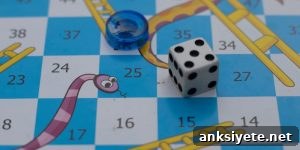
1. Chutes and Ladders (Snakes and Ladders)
In this classic board game, players roll a die and advance along a board. Ladders move a player up; chutes slide them down. Use the ups to discuss experiences that made the child feel happy, and the downs to talk about moments that caused sadness.
2. Jenga
Jenga is a balance and coordination game where removing the wrong block can topple the tower. It’s a playful way to talk about how it feels when things go well and when they fall apart, and to practice patience and careful planning.
Download 3 Free Positive CBT Exercises (PDF)
These practical, science-based exercises can help clients build skills to cope with life’s stressors and reduce suffering.
2 Games for Group Sessions
Games are especially effective in group therapy as icebreakers, skill builders, and opportunities to practice social behaviors (O’Connor et al., 2016).
1. Juggling thoughts
This activity illustrates how mental chatter distracts us and how mindfulness can restore focus (Gruzewski & Choi, 2020):
- Form a small standing circle and hand an object to one person.
- Pass the object quickly around the circle, then add more objects so the pace increases.
- Pause and explain that the objects represent mental chatter—constant inner talk.
- Repeat the exercise more quickly, then slow it down and compare the experiences.
Debrief: how did the fast-paced passing feel compared with the slowed version? Discuss how mindfulness can ease stress by slowing mental activity.
2. Identifying self-talk
Small groups provide a safe space to explore helpful and unhelpful internal messages (Gruzewski & Choi, 2020).
- Explain how self-talk influences mood and behavior.
- Give each person ten sticky notes and a pencil. Have them write one example of self-talk—helpful or unhelpful—on each note.
- Label three containers: positive, negative, neutral.
- Take turns reading notes aloud, crumpling them, and placing them in the appropriate container while explaining the choice.
Optionally, track correct categorizations and discuss common patterns and ways to shift negative self-talk into more supportive messages.
3 Family and Couples Therapy Games
 These activities include a short mindfulness exercise that can help calm tensions before or after more emotionally charged work.
1. Clouds in the sky
A brief mindfulness exercise to help couples or families observe and release intrusive thoughts (Gruzewski & Choi, 2020):
- Guide everyone to take a few deep breaths and imagine a clear blue sky.
- When thoughts arise, visualize placing each one on a cloud and letting it drift away, then returning attention to the blue sky.
- Continue for about five minutes, gently bringing attention back to the breath and the sky image.
Debrief by asking how noticing thoughts as temporary influenced their feelings and interactions.
2. Icebreaker questions
Simple, light-hearted questions can ease communication when relationships are strained (Shuy, 2021):
What funny story have you never told the other person?
What embarrassing moment would you share?
What did you want to become when you grew up?
Who was your best childhood friend?
3. Trust fall
The classic trust fall—one person leaning back to be caught by another—can be a powerful experiential exercise to build confidence and repair trust when practiced safely and consensually (Shuy, 2021).
World’s Largest Positive Psychology Resource
The Positive Psychology Toolkit© includes hundreds of science-based exercises, activities, interventions, questionnaires, and assessments developed by experts to support clinical and coaching work.
Updated regularly and grounded in research, it is a practical resource for practitioners and educators.
A Look at Board and Online Games
Board games often get overlooked in therapeutic settings, yet research shows they can be effective icebreakers, educational tools, and rapport builders (O’Connor et al., 2016).
In therapy, board games can be therapist-led or client-led and help players learn frustration tolerance, strategic thinking, social communication, and collaborative skills (O’Connor et al., 2016).
1. Catchphrase
Players give clues to prompt others to guess a word or phrase. The game encourages expressive language and flexible thinking. Removing strict time limits can reduce anxiety and make the game more inclusive for children and clients who find verbal expression challenging.
2. Set
Set is a fast pattern-recognition game that strengthens working memory, attention, and perceptual skills. It can be especially helpful for clients with attention or cognitive challenges, and for building quick decision-making.
3. Virtual sand play
Online sand trays reproduce the tactile experience of sand play in a digital format. They can help younger children relax, tell stories, and explore scenarios safely during remote sessions.
4. Marble jar
Digital marble jars provide a visual way to reinforce group goals and positive behaviors. Marbles can represent participation, acts of kindness, coping skills used, or naming emotions.
10 Helpful Occupational Therapy Games
 Occupational therapy games that target fine motor skills, balance, sensory processing, and coordination are useful for children, older adults, and people recovering from injury.
Many of these activities require little or no special equipment and can use common household items (Gwen, n.d.):
- Jump rope
- Hopscotch
- Twister
- Drawing and coloring
- Finger painting
- Non-toxic slime
- Modeling clay
- Blowing bubbles
- Blowing up balloons
- Animal walking (movements that imitate animals)
A Note on Video Game Therapy
Emerging research suggests that commercial video games may have therapeutic applications and potential for preventative and clinical interventions (Colder Carras et al., 2018).
Because a large portion of the population plays video games, integrating therapeutic elements or evidence-based interventions into engaging game formats offers promising avenues for reaching clients and encouraging healthy behaviors.
17 Science-Based Ways To Apply Positive CBT
This collection of validated Positive CBT exercises offers ready-made templates to help clients develop healthier thoughts, behaviors, and coping strategies.
Created by experts and based on current research, these tools support clinicians working with individuals, couples, and groups.
Resources From PositivePsychology.com
There are many free and paid resources therapists can use to integrate games into therapeutic work. Free tools include printable activities designed for groups and individuals:
- Empathy Bingo — a worksheet to help players distinguish empathy from other reactions.
- What I Want to Be — a worksheet that invites children to describe the person they want to become versus behaviors they want to avoid.
- Assertive Message Role-Play — scripts and prompts for practicing honest, respectful communication.
- Nonverbal Mood-Spotting Game — activities to practice reading facial expressions and body language.
Paid collections, such as practitioner toolkits, expand these activities into structured lesson plans, group exercises, and assessments that clinicians can adapt for therapy, coaching, or classroom use.
A Take-Home Message
Games and play offer therapeutic benefits for people of all ages. They foster connection, lower social barriers, and release neurochemicals that improve mood and openness. In a playful setting clients can safely practice social skills, communication, problem solving, and emotional regulation.
Play-based interventions range from simple board games to online tools and therapist-designed activities. Used flexibly, games can add lightness to a heavy session, reduce defensiveness, or provide skill practice in a low-stakes environment. The skilled clinician tailors the timing and type of play to each client’s needs.
For more practical exercises and CBT-based tools, remember to download the five positive psychology tools available for clinicians and clients.
- Colder Carras, M., Van Rooij, A. J., Spruijt-Metz, D., Kvedar, J., Griffiths, M. D., Carabas, Y., & Labrique, A. (2018). Commercial video games as therapy: A new research agenda to unlock the potential of a global pastime. Frontiers in Psychiatry, 8.
- Drewes, A. A. (2009). Blending play therapy with cognitive behavioral therapy: Evidence-based and other effective treatments and techniques. Wiley.
- EduKate & Inspire. (2021). Free games and tools for virtual counseling. Confident Counselors.
- Gruzewski, K., & Choi, A. (2020). Therapy games for teens: 150 activities to improve self-esteem, communication, and coping skills. Rockridge Press.
- Gwen. Learning through play: 56 Occupational therapy activities and tips for kids. Meraki Lane.
- Hill, M. D. (2016). Using popular games therapeutically. Psychotherapy Bulletin, 51(2), 22–28.
- Mehlomakulu, C. (2012). Feelings games. Creativity in Therapy.
- O’Connor, K. J., Schaefer, C. E., & Braverman, L. D. (2016). Handbook of play therapy. John Wiley & Sons.
- Shuy, M. (2021). 26 Must-try couples therapy exercises and activities. CleverMemo.