
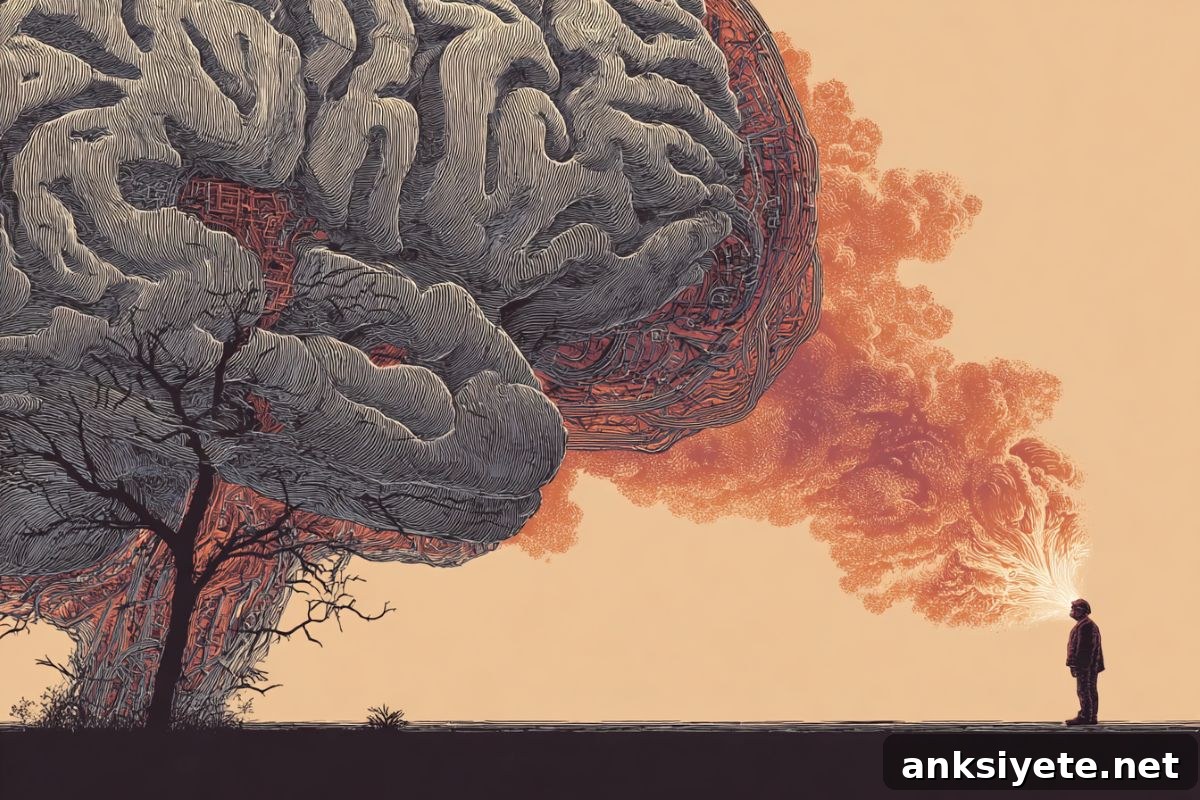
Summary: For many people, the sharp pain of losing a loved one gradually eases and becomes a bearable memory. For roughly 5% of bereaved individuals, however, that ache persists. Recognized in 2018 as Prolonged Grief Disorder (PGD), this condition is now being charted by neurobiologists seeking its brain-based signatures.
A recent review synthesizes neuroimaging and clinical studies to show that PGD is associated with dysfunction in reward-related brain networks. Rather than being only an emotional regulation problem, PGD appears to involve a persistent craving or longing that keeps the brain focused on the deceased, preventing natural recovery.
By pinpointing patterns of activity in regions such as the nucleus accumbens and orbitofrontal cortex, researchers aim to distinguish PGD from major depression and to guide targeted interventions for people who remain unable to move forward after loss.
Key Facts
- The reward trap: PGD is linked to amplified or dysregulated activity in brain areas that drive desire and motivation, suggesting the brain treats memories of the deceased like an unrewarded craving.
- The six-month threshold: While normal grief fluctuates and gradually attenuates, PGD is diagnosed when intense yearning and emotional pain persist beyond six months after the death.
- Distinct from depression: Although PGD shares symptoms such as rumination and low mood with depression, its core neurobiology appears more closely tied to reward and motivation circuits than to classic depressive networks.
- Identity and meaning: People with PGD often report a profound sense that part of their identity is gone or that life has lost meaning, beyond typical sadness.
- Research gaps: Most studies use small samples and varied methods. Larger, longitudinal research is needed to map how grief-related brain activity changes as some people recover and others remain stuck.
Source: Cell Press
Overview: For most people, the intense sorrow following a loved one’s death lessens over time and daily life resumes. For a minority, however, grief persists in an intense, disabling form called prolonged grief disorder (PGD). A review published February 18 in Trends in Neurosciences examines current evidence about the neurobiology of PGD, focusing on how disruptions in reward and motivation systems may underpin this prolonged state and how PGD differs from depression and anxiety.
Lead author Richard Bryant, a trauma researcher at the University of New South Wales, notes that PGD is a relatively recent psychiatric diagnosis, formally recognized in 2018. Although grief has been studied extensively, isolating the biological processes unique to PGD is new territory.
Clinically, PGD shares many features with normal grief—yearning, longing, and emotional pain—but in PGD these experiences persist and interfere with functioning beyond six months. Those affected may describe an inability to accept the death, a sense that life has lost meaning, or that a piece of themselves has vanished.
To probe why some people remain “stuck,” researchers have used neuroimaging approaches that expose bereaved participants to reminders of the deceased while measuring brain activity. Converging results implicate the nucleus accumbens and orbitofrontal cortex—regions central to reward processing and motivational drive—alongside emotion-processing areas like the amygdala and insula.
These findings support the idea that PGD involves a persistent, craving-like response: the brain continues to search for the lost person as if pursuing a reward that can never be obtained. That unresolved motivational drive may maintain the intense longing and prevent emotional integration of the loss.
Some neural patterns seen in PGD overlap with changes observed in depression and post-traumatic stress disorder, reflecting shared features such as rumination and heightened emotional distress. This overlap presents a challenge: researchers must disentangle which brain changes are specific to PGD and which reflect broader distress-related processes. It remains unclear whether the identified neural differences are causes of prolonged grief or consequences of prolonged suffering.
Bryant and colleagues emphasize the need for larger, longitudinal studies that follow bereaved people over time. Such work can reveal how activity in reward and emotion networks evolves as some individuals recover and others remain trapped in prolonged grief, and can help refine diagnostic markers and treatment targets.
Recognition matters: identifying PGD as a distinct disorder allows clinicians to screen for it and apply specialized interventions designed to re-engage motivation systems and help people reorient to life after loss. Evidence-based therapies that focus on processing the loss and restoring engagement with rewarding activities show promise when PGD is properly diagnosed.
Funding: This work was supported by National Health and Medical Research.
Key Questions Answered:
A: Research indicates PGD resembles a biological “stuck” state more than only extreme sadness. Neuroimaging shows increased activity in reward-related regions, suggesting the brain maintains an unresolved craving for the deceased that blocks acceptance and adaptation.
A: Although counterintuitive, the nucleus accumbens is central to longing and desire. In PGD, memory cues for the deceased can repeatedly trigger a craving response, activating reward circuits without ever satisfying the urge to reconnect, which perpetuates yearning.
A: Yes—when correctly identified. Treating PGD as a distinct condition enables clinicians to use therapies tailored to re-engage motivation and meaning-making, helping patients shift attention from the past to the present and rebuild rewarding connections.
Editorial Notes:
- This article was edited by a Neuroscience News editor.
- Journal paper reviewed in full.
- Additional context added by our staff.
About this grief and neuroscience research news
Author: Julia Grimmett
Source: Cell Press
Contact: Julia Grimmett – Cell Press
Image: The image is credited to Neuroscience News
Original Research: The findings will appear in Trends in Neurosciences