
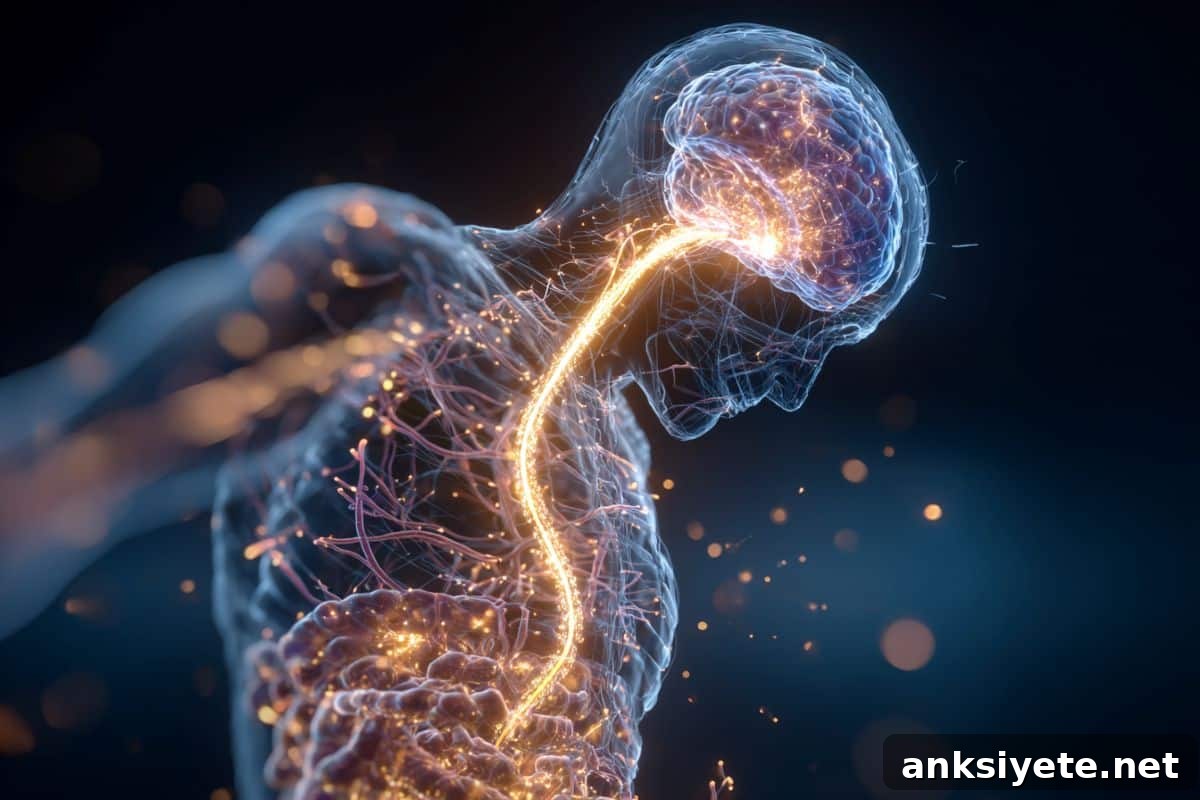
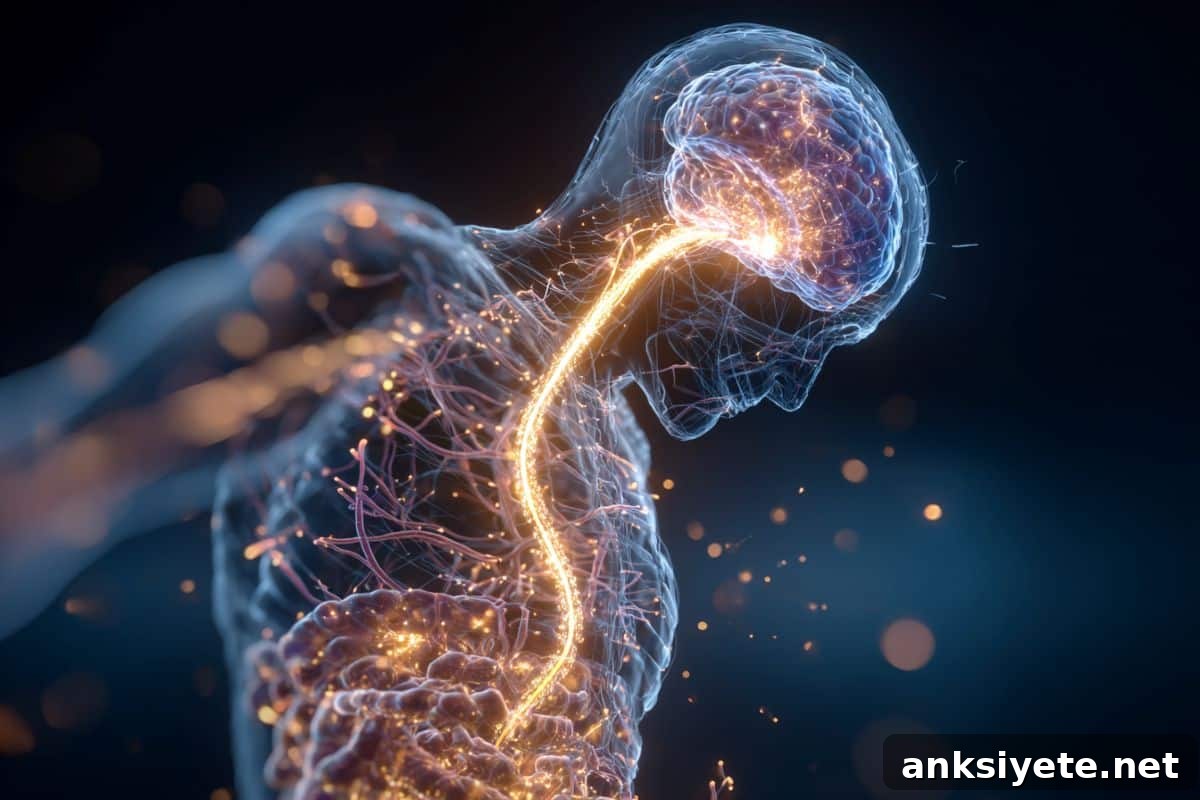
Summary: Memory loss is usually thought to begin and end in the brain, but new research points to a surprising origin: the gut. In mice, aging shifts the gut microbiome toward certain bacteria—most notably Parabacteroides goldsteinii—which provokes intestinal inflammation that silences the vagus nerve, the primary conduit of gut-to-brain signals. When vagal signaling is suppressed, the hippocampus becomes less responsive and memory formation suffers. Restoring vagus nerve activity or rebalancing the gut microbiome reversed memory deficits in aged mice, showing that age-related cognitive decline can be driven and potentially reversed by gut-brain communication.
Key Facts
- Interoception and aging: Aging impairs interoception—the brain’s ability to sense internal bodily signals—so weakened gut-to-brain signaling is a direct contributor to memory decline.
- A bacterial link: The bacterium Parabacteroides goldsteinii becomes more abundant with age and produces metabolites that trigger gut inflammation and interfere with vagus nerve activity.
- Reversible decline: Stimulating the vagus nerve or altering the gut microbiome restored memory and spatial navigation in older mice to the level seen in young adults, indicating cognitive aging is modifiable through peripheral systems.
Source: Stanford
We often respond to food visually and by smell long before a bite is taken. Those external sensations are relayed to the brain by our senses, but the reverse flow—information sent from our gut to the brain—travels along a vital pathway called the vagus nerve. New mouse experiments from Stanford Medicine and the Arc Institute reveal that changes in that gut-to-brain channel are a key driver of cognitive decline during aging.
“Memory loss varies widely across individuals. Some very old people remain sharp while others notice decline in middle age,” said Christoph Thaiss, PhD, assistant professor of pathology. “Our work shows that this variability is not simply programmed inside the brain; it can be actively shaped by signals that originate in the gastrointestinal tract.”
The study mapped how the gut microbiome changes across the mouse lifespan. These microbial shifts alter the types and amounts of metabolites present in the intestine. Immune cells in the gut detect those changes and trigger inflammation that dulls vagus nerve signaling to the hippocampus, the brain region essential for memory encoding and spatial navigation.
When researchers stimulated the vagus nerve in older mice, the animals showed dramatic recovery in tasks that measure memory and spatial learning: they recognized new objects and escaped mazes as effectively as young mice. Conversely, young mice exposed to the microbiome of older animals developed memory impairments, showing this effect can be transferred via the gut community.
Thaiss, also a core investigator at the Arc Institute, noted the unexpected degree of reversibility. “We commonly regard memory decline as intrinsic to the aging brain. Our findings demonstrate that memory formation and hippocampal activity can be enhanced by changing the composition of the gastrointestinal tract—effectively a remote control for cognitive function.”
Maayan Levy, PhD, an assistant professor of pathology and Arc Institute innovation investigator, emphasized the accessibility of the gut. “Because the gastrointestinal tract is easy to reach orally, modifying gut metabolites presents an attractive, noninvasive strategy for influencing brain function,” she said.
The experimental evidence
To test the idea that the gut microbiome drives aging-related memory loss, the team cohoused young (2-month-old) and old (18-month-old) mice so they shared microbial communities. After a month, young mice exposed to older microbiomes performed worse on object-recognition and maze tests, showing reduced curiosity and poorer spatial memory. Young and old mice raised germ-free (without gut bacteria) retained strong memory performance, but transplanting old microbiomes into germ-free young mice reproduced the cognitive deficits.
Treating young mice that had acquired “old” microbiomes with broad-spectrum antibiotics for two weeks restored their memory and maze performance, further demonstrating the microbiome’s causal role.
What changes in the gut?
The research highlighted a specific microbial shift: greater abundance of Parabacteroides goldsteinii in aged mice. This bacterium is associated with higher levels of medium-chain fatty acids in the gut. Those metabolites activate myeloid immune cells through the GPR84 receptor, sparking local inflammation that suppresses vagal afferent neuron function. The weakened interoceptive signal leads to reduced hippocampal activation and poorer memory encoding.
Targeted interventions—such as phage therapy against Parabacteroides, blocking GPR84 signaling, or direct stimulation of the vagus nerve—restored hippocampal function and improved memory in aged mice. These results outline a three-step pathway: gastrointestinal aging changes the microbiome and metabolites; gut immune cells respond with inflammation; that inflammation impairs gut–brain signaling and drives memory decline.
The authors are now exploring whether a similar gut–brain pathway operates in humans and whether noninvasive monitoring or modulation of peripheral neurons can be developed for clinical use. Vagus nerve stimulation is already approved for conditions such as depression, epilepsy, and stroke recovery, which may help accelerate translation of these findings.
“Ultimately we hope these insights lead to treatments that counteract age-related cognitive decline in people,” Thaiss said.
Additional contributors to the work include researchers from Monell Chemical Senses Center; the University of California, Irvine; University College Cork; Calico Life Sciences; and the Children’s Hospital of Philadelphia.
Funding: The study was supported by the Arc Institute; the National Institutes of Health (multiple grants); the Burroughs Wellcome Fund; the American Cancer Society; Pew, Searle and Mallinckrodt foundations; the W.W. Smith Charitable Trust; the Blavatnik Family Fellowship; the Prevent Cancer Foundation; the Polybio Research Foundation; the V Foundation; the Kathryn W. Davis Aging Brain Scholar Program; the McKnight Brain Research Foundation; the Kenneth Rainin Foundation; the IDSA Foundation; and the Human Frontier Science Program.
Key Questions Answered:
A: Yes. The study demonstrates that age-related changes in gut bacteria produce metabolites that provoke intestinal inflammation and blunt vagus nerve signaling. When the brain receives weaker interoceptive signals, hippocampal memory formation is impaired.
A: Not always. In mice, cognitive decline caused by altered gut–brain communication was reversible. Restoring vagal activity or modifying the gut microbiome returned memory performance in old animals to youthful levels.
A: Specific “memory probiotics” are not yet established. Researchers are investigating how targeting gut metabolites and microbial composition could influence brain function. Oral interventions that safely modulate the gut microbiome are a key goal for future human trials.
Editorial Notes:
- This article was edited by a Neuroscience News editor.
- The journal paper was reviewed in full.
- Additional context was added by staff.
About this aging research news
Author: Krista Conger
Source: Stanford
Contact: Krista Conger – Stanford
Image credit: Neuroscience News
Original Research: Open access. “Intestinal interoceptive dysfunction drives age-associated cognitive decline” by Timothy O. Cox et al., published in Nature. DOI: 10.1038/s41586-026-10191-6
Abstract
Intestinal interoceptive dysfunction drives age-associated cognitive decline
Aging is accompanied by heterogeneous declines in memory. Peripheral signals—especially those from the gastrointestinal tract—are promising targets for interventions, but mechanisms have been unclear. By mapping microbiome changes across the mouse lifespan, the authors identify a mechanism in which accumulation of gut bacteria that produce medium-chain fatty acids, such as Parabacteroides goldsteinii, activates myeloid inflammation via GPR84. This inflammation impairs vagal afferent neurons, weakens interoceptive signaling to the brain, reduces hippocampal activation, and diminishes memory encoding. Interventions including phage targeting of Parabacteroides, GPR84 inhibition, and restoration of vagal activity improved memory in aged mice, highlighting interoceptive dysfunction as a driver of brain aging and suggesting new strategies to counteract age-associated cognitive decline.