
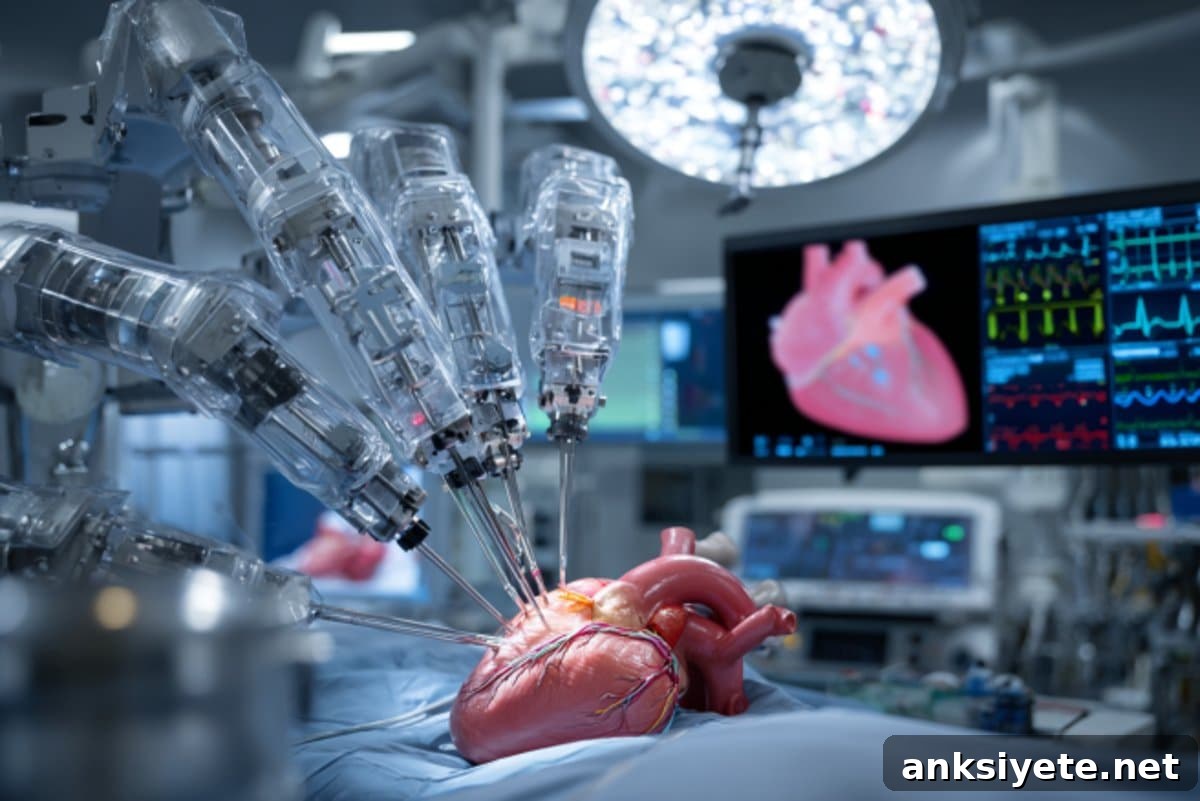
Summary: Surgeons at Baylor St. Luke’s Medical Center performed the first fully robotic heart transplant reported in the United States, using advanced robotic instruments to remove the diseased heart and implant a donor heart without opening the chest through a traditional sternotomy. The team accessed the heart through small, precise incisions and the preperitoneal space, preserving the chest wall and avoiding disruption of the breastbone.
This minimally invasive, fully robotic technique offers important clinical advantages for transplant patients. By preserving the integrity of the chest wall, the procedure reduces infection risk, limits blood loss, and supports faster recovery. Those benefits are particularly important for transplant recipients, who require lifelong immunosuppression and face elevated risks from wound complications and transfusion-related immune responses. The 45-year-old patient in this case recovered without complications and was discharged from the hospital about one month after surgery.
Key Facts:
- Minimally invasive approach: The robotic procedure eliminated the need to open the chest or divide the breastbone, using small incisions instead.
- Faster, safer recovery: Preserving the chest wall reduces infection risk, helps maintain respiratory mechanics, and supports earlier mobility during rehabilitation.
- Lower blood loss and transfusion need: Avoiding bone cutting decreases bleeding and reduces the likelihood of transfusions that can stimulate antibody formation against a transplanted organ.
Institution: Baylor College of Medicine / Baylor St. Luke’s Medical Center
Details of the procedure and clinical context
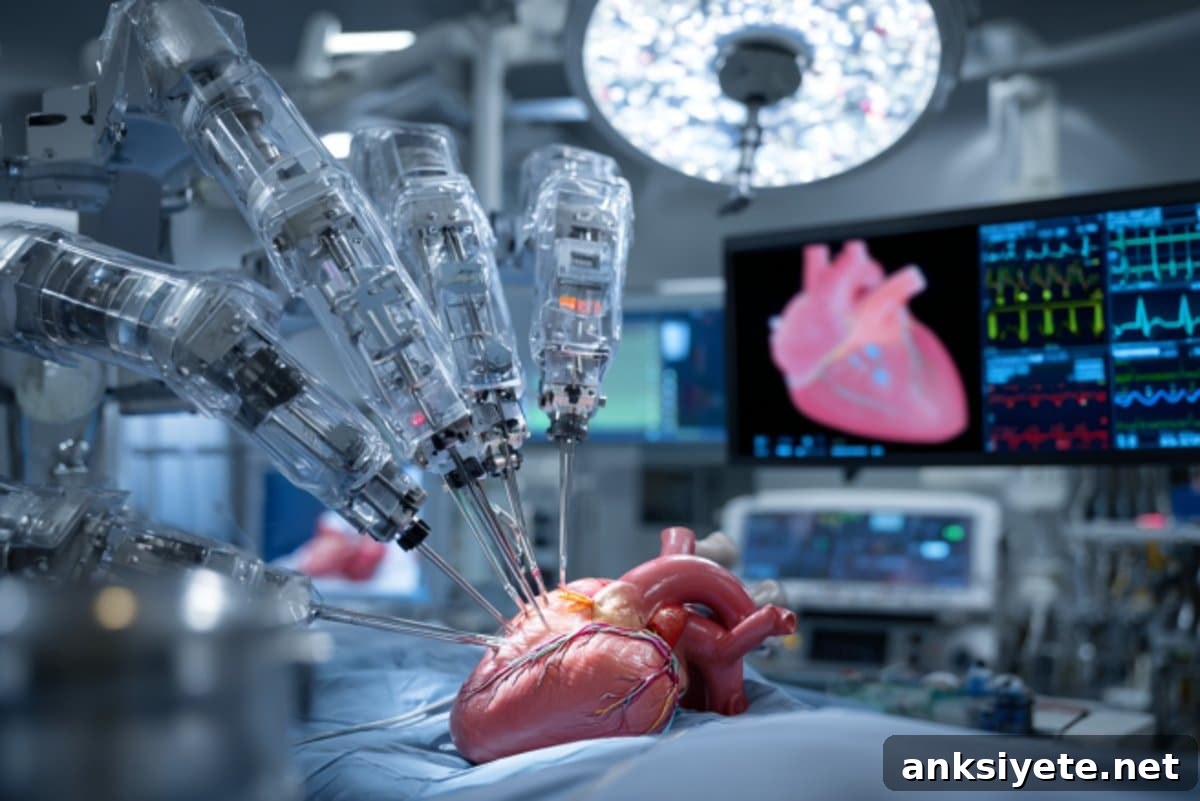
The operation was led by Dr. Kenneth Liao, professor and chief of cardiothoracic transplantation and circulatory support at Baylor College of Medicine, and chief of cardiothoracic transplantation and mechanical circulatory support at Baylor St. Luke’s Medical Center. Using robotic surgical systems, Dr. Liao and his team made several small, targeted incisions and removed the failing heart. The donor heart was implanted through the preperitoneal space rather than by performing a full chest incision or splitting the breastbone.
“Opening the chest and spreading the breastbone can affect wound healing and delay rehabilitation, especially in heart transplant patients who take immunosuppressants,” said Dr. Liao. “With the robotic approach, we preserve the integrity of the chest wall, which reduces the risk of infection and helps with early mobility, respiratory function and overall recovery.”
Beyond the mechanical advantages of smaller incisions, robotic heart transplantation can limit surgical trauma that contributes to blood loss. By avoiding osteotomy (cutting bone), surgeons can reduce intraoperative bleeding and the subsequent need for blood transfusions, which in turn lowers the risk of sensitization and antibody development that could threaten the transplanted organ’s long-term function.
In this reported case, the patient is a 45-year-old who had been hospitalized with advanced heart failure since November 2024 and required multiple mechanical circulatory support devices prior to transplantation. The donor heart was implanted in early March 2025. Following the operation, the patient recovered without complications and was discharged about one month later.
Hospital leadership highlighted the significance of this milestone. “Becoming the home of this medical breakthrough in robotic heart transplantation further establishes Baylor St. Luke’s Medical Center as a worldwide healthcare leader,” said Dr. Bradley T. Lembcke, hospital president. “This pinnacle in heart transplantation brings great pride to our hospital and adds to its legacy of medical achievements and caring for the most complex health conditions that only advanced healthcare systems can treat successfully.”
Dr. Liao emphasized the role of innovation paired with surgical experience. “This transplant shows what is possible when innovation and surgical experience come together to improve patient care. Our goal is to offer patients the safest, most effective and least invasive procedures, and robotic technology allows us to do that in extraordinary ways.”
Dr. Todd Rosengart, chair of the Michael E. DeBakey Department of Surgery at Baylor, described the operation as a major step forward: “This robotic heart transplantation represents a remarkable, giant step forward in making even the most complex surgery safer and we are delighted to offer this great success to the world.”
About this robotics surgery research news
Author: Taylor Barnes
Source: Baylor College of Medicine
Contact: Taylor Barnes – Baylor College of Medicine
Image: The image is credited to Neuroscience News