
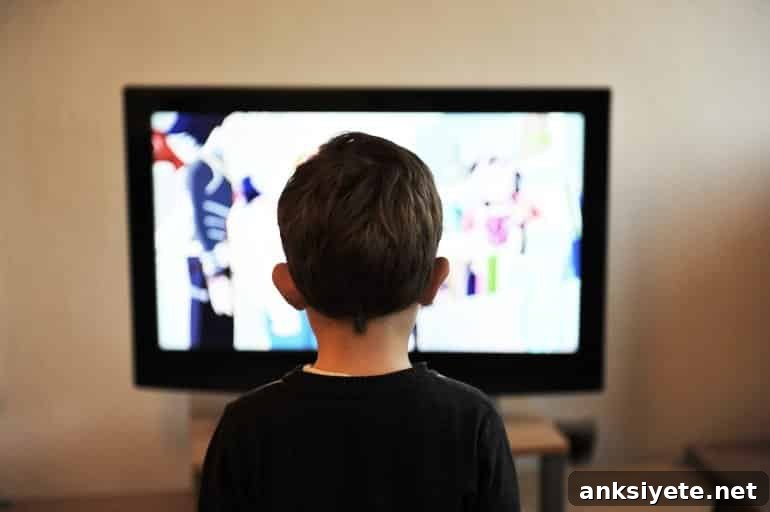
Summary: New reanalysis indicates that ordinary television exposure in early childhood does not, by itself, increase the risk that toddlers will develop attention-deficit problems.
Source: APS
A rigorous re-examination, published in the journal Psychological Science, revisits prior research that purported a direct causal link between early television viewing and later attention problems in children. The new review applies extensive sensitivity testing and finds that the evidence does not support the claim that early TV exposure causes attention deficits.
Wallace E. Dixon, Jr., professor of psychology and department head at East Tennessee State University and a coauthor of the new study, emphasized that the earlier findings do not hold up under closer inspection. “The findings from the original study, upon further scrutiny, are not borne out. We found that there is still no evidence that TV, by itself, causes ADHD or any kind of attention problems in young children,” he said.
The research team urges caution about dramatic headlines that suggest everyday behaviors directly harm child development. “Our research also tells us that it’s important to be skeptical of earth-shattering findings that come in the form of ‘something that everybody is doing harms our children.’ Extraordinary claims require extraordinary evidence,” Dixon added.
The authors note that this reassessment can reduce undue parental guilt and misplaced blame. “What excites us about the research is that we can ease up on blaming parents or making them feel guilty for letting their children watch television when they are very young,” said Dixon.
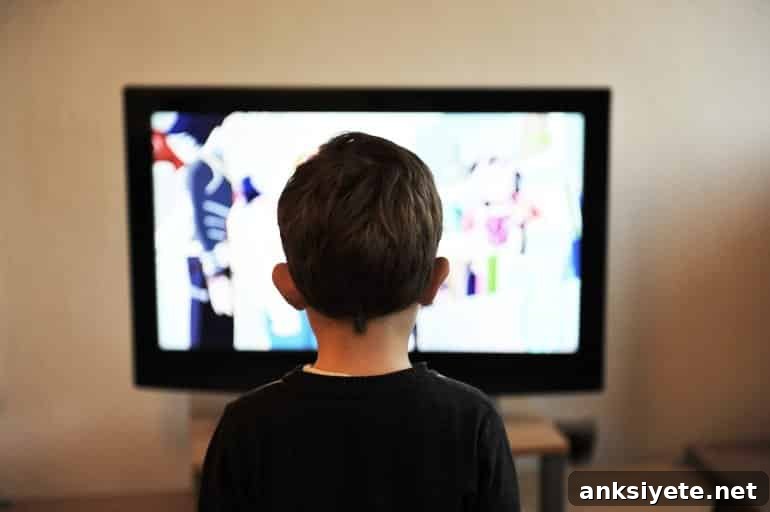
To test the robustness of the original claim, the researchers reanalyzed the same National Longitudinal Survey of Youth 1979 dataset used in the 2004 study. They employed a multiverse analysis approach, which systematically explores many defensible analytical choices to see whether the core result persists under different reasonable decisions.
In practice, the team ran 848 distinct analyses, including logistic and linear regression models as well as two types of propensity-score analyses. If early television exposure truly caused later attention problems, most of these justifiable analyses would be expected to show a consistent, statistically significant effect in the predicted direction. Instead, the vast majority of analyses produced no significant association.
Only 166 out of the 848 models (19.6%) produced statistically significant relationships, and many of those relied on analytic choices the authors consider questionable or not well justified. The researchers therefore conclude that the dataset does not provide compelling evidence that early TV exposure has a harmful effect on later attention.
About this neurodevelopment research news
Source: APS
Contact: Press Office – APS
Image: The image is in the public domain
Original Research: Closed access.
“Challenging the Link Between Early Childhood Television Exposure and Later Attention Problems: A Multiverse Approach” by Matthew T. McBee, Rebecca J. Brand, Wallace E. Dixon. Psychological Science
Abstract
Challenging the Link Between Early Childhood Television Exposure and Later Attention Problems: A Multiverse Approach
In 2004, Christakis and colleagues published a paper asserting that greater television exposure during early childhood increases the likelihood of attention problems later in life. That conclusion has been widely cited and repeatedly amplified in popular media coverage.
Using the same National Longitudinal Survey of Youth 1979 dataset (N = 2,108), the current study applied two multiverse analytical frameworks to evaluate whether the original result is robust to different reasonable analytic choices. The team ran 848 alternative models, spanning logistic regression, linear regression, and two propensity-score approaches.
If the original causal claim were strong, the majority of defensible analyses should yield significant effects in the same direction. Instead, only 166 models (19.6%) showed a statistically significant association, and many of those significant findings depended on analytic decisions the authors argue are questionable. On balance, the reanalysis does not provide convincing evidence that early television exposure causes later attention problems.
These findings highlight the importance of robustness checks, transparency in analytic decisions, and cautious interpretation of initial results—especially when those results lead to widespread public concern. Rather than pointing to a direct causal effect of ordinary TV viewing on attention disorders, the evidence suggests that the relationship is weak at best and sensitive to modeling choices.