
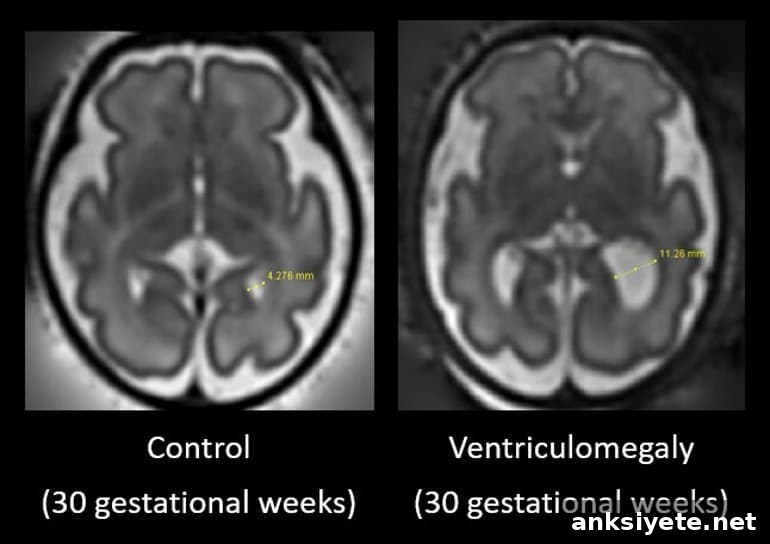
Summary: Researchers at King’s College London report a link between autism traits and isolated fetal ventriculomegaly — the most commonly detected antenatal brain abnormality. Using fetal and childhood MRI together with comprehensive developmental assessments, the study highlights the potential value of early identification, counseling and timely intervention for affected families.
Source: King’s College London
King’s College London researchers used fetal and childhood MRI scans to measure neurodevelopment in children diagnosed antenatally with isolated fetal ventriculomegaly and investigated the presence of autism spectrum disorder (ASD) traits at primary school age.
Published in Nature Communications, the study by the Centre for the Developing Brain examined children who had been scanned in utero and followed up with developmental testing at two years and again at school age. The research team evaluated cognitive and behavioral outcomes to better understand the long-term implications of isolated fetal ventriculomegaly for neurodevelopment and ASD-related symptoms.
The study compared two groups: children with an antenatal diagnosis of isolated ventriculomegaly and a control group with normal fetal brain MR assessments. Participants received a range of standardized developmental measures including IQ testing, autism diagnostic observation (ADOS-2), assessments of sustained attention, neurological functioning, behavior, executive function, sensory processing, coordination and adaptive behavior. Pre-school language development was assessed at two years.
Fetal ventriculomegaly is diagnosed when the lateral ventricles of the fetal brain measure larger than expected on antenatal ultrasound or MR imaging. It is the most commonly identified fetal brain anomaly during routine prenatal screening. Previous imaging studies have reported enlarged ventricles and cortical overgrowth in antenatally diagnosed isolated ventriculomegaly, features that overlap with observations in some children with autism spectrum disorder.
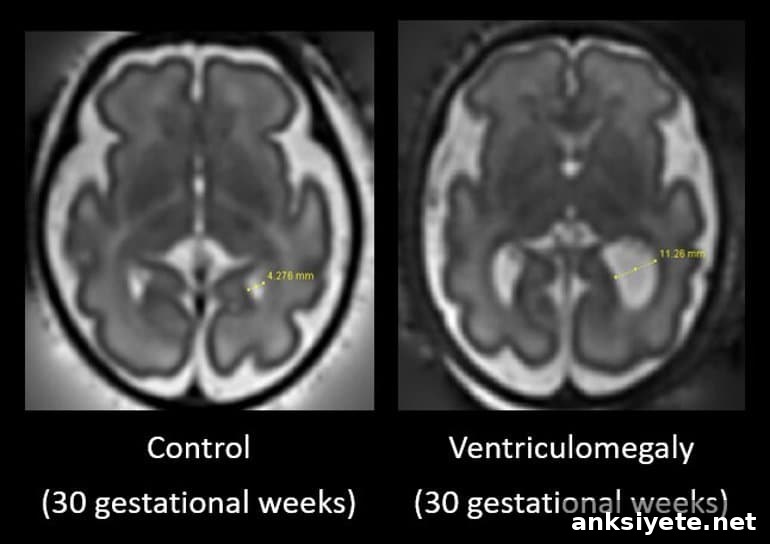
Key findings from the cohort indicate a higher prevalence of ASD traits among children who had isolated fetal ventriculomegaly compared with controls. In this sample, 37.5% of children in the ventriculomegaly group — all male — scored above the clinical threshold for autism or ASD on standardized assessment. The investigators also found associations between early language delay at two years and later ASD classification: preschool language delay predicted ADOS-2 autism/ASD classification with 73.3% specificity and 66.7% sensitivity. Greater early language delay correlated with more pronounced ASD symptoms at school age.
Beyond autism traits, the neurodevelopmental profile of children in the ventriculomegaly group included difficulties with sustained attention and working memory as well as increased sensation-seeking behaviors. These findings align with the imaging evidence of altered cortical development seen in antenatally diagnosed ventriculomegaly and reinforce the importance of combining high-quality brain imaging with long-term developmental follow-up.
“While this approach offers only a partial indicator of future outcomes, better prediction may have important implications for the long-term support of families,” says Dr. Vanessa Kyriakopoulou, senior research associate in Neuroscience & Neuroimaging. “Early identification means parents can be counseled about potential outcomes and increased awareness of emerging autism traits could allow faster access to support programs.”
Professor Mary Rutherford, Perinatal Imaging & Health, emphasises the need for extended longitudinal research. “There is a clear need for more long-term data combining high-quality brain imaging with developmental follow-up in children with antenatally diagnosed isolated ventriculomegaly or other common fetal brain anomalies to improve our understanding of susceptibility to developing autism,” she says.
About this autism research news
Author: Press Office
Source: King’s College London
Contact: Press Office – King’s College London
Image: The image is credited to King’s College London
Original Research: Open access. “Characterisation of ASD traits among a cohort of children with isolated fetal ventriculomegaly” by Vanessa Kyriakopoulou et al., Nature Communications.
Abstract
Characterisation of ASD traits among a cohort of children with isolated fetal ventriculomegaly
This study addresses the developmental outcome of children with antenatally diagnosed isolated fetal ventriculomegaly, the most common prenatal brain anomaly. Imaging findings in such cases can include enlarged lateral ventricles and features of cortical overgrowth — characteristics that overlap with observations in children with autism spectrum disorder.
The research cohort consisted of 24 children with isolated fetal ventriculomegaly (20 males, 4 females) and 10 control children (6 males, 4 females). Neurodevelopment at school age was measured across multiple domains: general intelligence (IQ), ASD traits using ADOS-2, sustained attention, neurological functioning, behavior, executive function, sensory processing, coordination and adaptive behaviors. Pre-school language development was assessed at two years of age.
Results showed that 37.5% of children in the ventriculomegaly cohort met the threshold for autism/ASD classification on ADOS-2, and those children were all male. Early language delay at two years was a meaningful predictor of later autism/ASD classification, demonstrating reasonable specificity and sensitivity in this sample. Overall, children with isolated fetal ventriculomegaly showed a neurodevelopmental profile that included ASD traits, attention and working memory difficulties, and sensation-seeking behaviors.
These findings underscore the importance of integrating prenatal imaging findings with systematic, long-term developmental follow-up. Continued research in larger cohorts is needed to confirm these initial observations, refine risk prediction and guide early intervention strategies that can support better outcomes for children and families affected by fetal ventriculomegaly.