How Incel Culture Connects Work Avoidance to Group Loyalty

featured 109916

Summary: A new study finds that many self-identified incels (involuntary celibates) reject employment not only because of mental health or practical barriers, but as a deliberate expression of identity reinforced by online communities. By analyzing more than 1,200 forum posts, researchers discovered that incel spaces frequently celebrate unemployment and social withdrawal as badges of ideological … Read more

Work Stress from Long Hours Can Physically Change Your Brain

featured 109912

Summary: Preliminary research indicates that consistently working more than 52 hours per week may be associated with measurable changes in brain regions involved in emotional regulation, memory, and decision-making. MRI scans of healthcare workers showed increased grey matter volume in areas such as the middle and superior frontal gyri and the insula. These anatomical differences … Read more

Why Disgust, Not Taste, Makes People Avoid Plant-Based Meat

featured 109908

Summary: New research from the University of Exeter shows that many people who avoid meat experience a genuine emotion of disgust toward animal flesh, not merely dislike. That disgust closely resembles the revulsion others feel toward universally taboo items such as human flesh, faeces, or dog meat. By contrast, foods commonly rejected among plant-based options—like … Read more

New Research Explains Why Stress Is So Hard to Treat

featured 109904

Summary: A new review clarifies important differences between primate and rodent stress-hormone systems, offering insight into why many treatments for stress-related disorders have failed to translate from animals to humans. The authors report that corticotropin releasing factor (CRF) engages dopamine circuits in primates in broader and more complex ways, and that many primate dopamine neurons … Read more

Hormone Cycles Reshape the Brain and Improve Learning

featured 109892

Summary: New research shows that natural hormone fluctuations across the estrous cycle produce striking changes in the structure and activity of neurons in the mouse hippocampus, a region central to learning and memory. Using high-resolution two-photon laser microscopy and in vivo calcium imaging, the team found that peaks in estradiol increase dendritic spine density and … Read more

How the Brain Converts Sound into Meaning

featured 109888

Summary: Researchers have mapped how the brain retrieves words during speech and identified two distinct but overlapping networks in the prefrontal cortex. Using high-resolution electrocorticography (ECoG) in 48 neurosurgical patients, the study shows that semantic processing and articulatory planning occur in neighboring yet functionally separate regions, and highlights a dorsal prefrontal hub that links sounds … Read more

How Social Status Affects Addiction Risk Through Dopamine

featured 109884

Summary: A new study uncovers how social rank reshapes dopamine circuits and alters vulnerability to addiction. In male mice, low social status corresponds with stronger reward signaling and weaker executive control, increasing methamphetamine (METH) seeking. Higher-ranking males show a better balance between reward and control pathways and resist drug-seeking. Female mice, however, displayed METH-seeking behavior … Read more

Protein Differences Between Men and Women Are Not Just Genetic

featured 109880

Summary: An international analysis of roughly 6,000 blood proteins measured in 56,000 people finds widespread differences in protein levels between males and females, but shows that these differences are rarely driven by sex-specific genetics. Only about 100 proteins exhibited sex-specific genetic regulation, indicating that non-genetic influences — including hormones, environment, and social and lifestyle factors … Read more

Why Water Wrinkles Could Reveal Your Identity

featured 109870

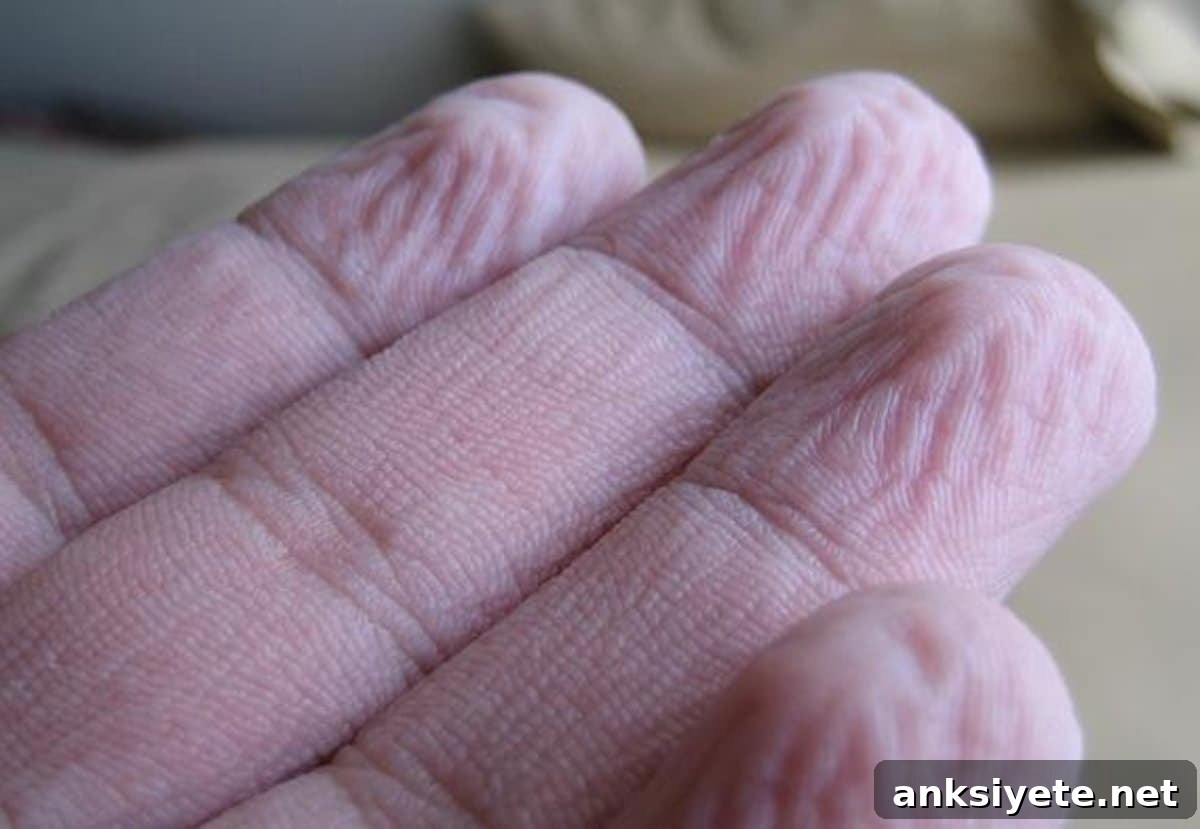
Summary: New research confirms that the characteristic wrinkles that form on fingers after prolonged water exposure follow a consistent pattern each time. That repeatability appears to arise from the fixed arrangement of blood vessels beneath the skin, which constrict during immersion and produce the familiar loops and ridges in the skin’s surface. Scientists tested the … Read more

How Diverse Social Connections Improve Wellbeing in Older Adults

featured 109865

Summary: A decade-long study following more than 1,500 older adults finds a clear link between the kinds of social networks people maintain and their health as they age. Older adults with broad, active, and diverse social ties reported better self-rated health, while those whose networks were small and family-centered reported worse health and were unlikely … Read more