How Rivalry Rewires the Brain and Sparks Fan Outbursts
featured 113857

Summary: New brain-imaging research shows that soccer fans undergo rapid shifts in neural circuits for reward and self-control when their team wins or loses against a rival. Victories produce heightened activity in brain reward networks, while defeats suppress the dorsal anterior cingulate cortex (dACC), a region crucial for emotion regulation and cognitive control. These neural … Read more
How Estrogen Shapes Dopamine and Reward Learning

featured 113853

Summary: A new study from NYU demonstrates that estrogen naturally modulates dopamine signaling in the brain and thereby alters how female rats learn from reward cues across their reproductive cycle. When estrogen levels rise, dopamine responses in the brain’s reward center strengthen, and learning about rewards improves. Suppressing estrogen signaling weakens reward learning, revealing a … Read more

How Your Everyday Speech Could Reveal Early Cognitive Decline

featured 113849

Summary: Researchers report that everyday speech timing — including pauses, filler words, and subtle pacing patterns — closely reflects executive function, a core set of cognitive abilities that support memory, planning, and flexible thinking. By applying AI-driven analysis to natural speech recordings, the team showed that these linguistic timing features can predict performance on standard … Read more

How AI Models Develop Theory of Mind

featured 113845

Summary: Researchers found that large language models (LLMs) rely on a very small, specialized subset of parameters to perform Theory-of-Mind (ToM) reasoning, even though the models activate their full network during every task. This internal, sparse circuitry depends strongly on positional encoding—especially rotary positional encoding—which governs how the model represents and tracks beliefs, perspectives, and … Read more

Chronic Stress Cuts Brain Blood Flow, Heightens Dementia Risk

featured 113837

Summary: Researchers discovered that a rare class of neurons—type-I nNOS neurons—has a central role in regulating cerebral blood flow and coordinating neural activity in mice. Selective removal of these stress-vulnerable cells caused large reductions in vascular oscillations and widespread decreases in electrical signaling, indicating a critical connection between neuron loss, reduced perfusion, and impaired brain … Read more

Autism and ADHD Share Common Brain Biology

featured 113832

Summary: A new study finds that the severity of autistic symptoms — rather than the formal diagnostic label — corresponds to common brain connectivity patterns across children diagnosed with either autism spectrum disorder (ASD) or attention-deficit/hyperactivity disorder (ADHD). Greater autistic traits were associated with increased functional connectivity between the frontoparietal and default-mode networks, brain systems … Read more

Why Your Brain Struggles to Switch Between Learned Motor Skills

featured 113824

Summary: A recent study from Johns Hopkins University reveals that people commonly struggle to switch between familiar motor behaviors and newly learned movement patterns, producing predictable mistakes. Even when instructed to change, volunteers often defaulted to the prior movement strategy, highlighting how strongly motor habits persist. The research also shows that switching between two newly … Read more

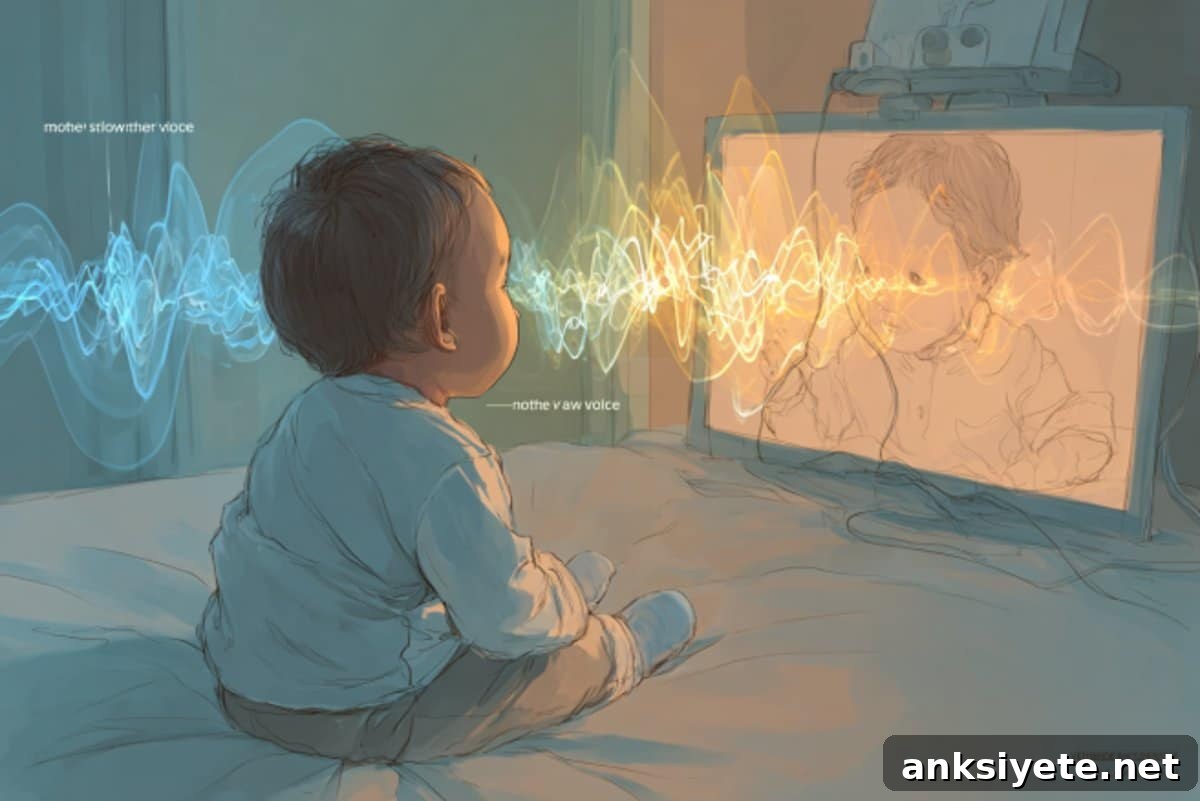
Mom’s Voice Shapes How Babies Recognize New Faces

featured 113820

Summary: New research reveals that seven-month-old infants are highly attuned to their mothers’ voices, showing stronger neural tracking when hearing their mother than when hearing a stranger. When a stranger’s voice played while infants viewed an unfamiliar face, their brains showed enhanced processing of that face, suggesting that maternal speech shifts how infants allocate attention … Read more

Psychedelics Calm Stress Circuits to Reduce Alcohol Consumption

featured 113815

Summary: New preclinical research indicates that psilocin—the active metabolite produced when the psychedelic psilocybin is metabolized—can reduce alcohol consumption by calming stress-sensitive neurons in the central amygdala. In female mice exposed to prolonged alcohol intake, psilocin lowered hyperactivity of these neurons and produced a temporary decrease in drinking. These findings help clarify how psychedelic-based interventions … Read more

Why People with Alzheimer’s Forget Family and Friends

featured 113808

Summary: Researchers at the University of Virginia have identified a structural cause for the heartbreaking loss of recognition seen in many people with Alzheimer’s disease. They found that degradation of perineuronal nets — mesh-like extracellular structures that wrap neurons — in the hippocampal CA2 region disrupts social memory. In mouse models, loss of these nets … Read more