
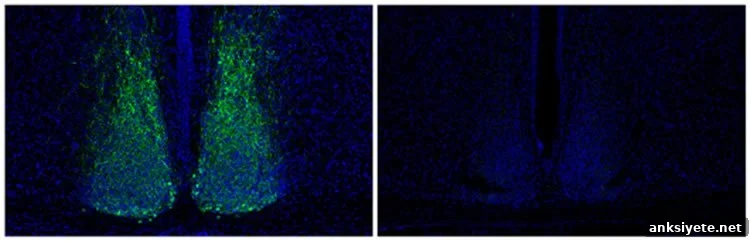
Salk researchers identify a master gene that coordinates sleep and wake cycles, pointing to possible drugs that could reset the internal clock.
Investigators at the Salk Institute for Biological Studies have pinpointed a gene that plays a central role in regulating daily sleep–wake rhythms in the brain.
The gene, called Lhx1, emerged as a key regulator of the suprachiasmatic nucleus (SCN) — the brain’s master circadian clock — and could offer a therapeutic target to help night-shift workers, frequent travelers, or people with sleep disturbances adapt more quickly to changing schedules. The findings, published in eLife, also have implications for sleep disruptions linked to neurological disorders.
“Sleep disruption contributes substantially to the decline seen in many dementias,” says Satchidananda Panda, an associate professor at Salk and leader of the study. “Restoring normal sleep patterns may significantly improve outcomes.”
Nearly every cell in the body contains molecular clocks whose protein levels oscillate over roughly 24 hours. The SCN, a compact cluster of about 20,000 neurons located in the hypothalamus, acts as the master pacemaker that synchronizes these cellular rhythms. SCN neurons are tightly coupled and communicate continuously, and their activity is entrained by light input through visual pathways. This strong intercellular coupling helps keep the organism on a stable daily schedule but also makes the SCN relatively resistant to abrupt shifts, so only a fraction of SCN cells respond immediately to light changes, contributing to prolonged jet lag.
To discover genes that specifically respond to light in the SCN, the team disrupted light–dark cycles in mice and compared gene expression changes across multiple tissues. From thousands of candidates they identified 213 SCN-specific expression changes and focused on 13 transcriptional regulators. Only one of these, Lhx1, was acutely suppressed by light exposure.
“The involvement of Lhx1 in adult SCN function was unexpected,” says Shubhroz Gill, a postdoctoral researcher and co-first author. Lhx1 is already known for its crucial role in neural development — mice lacking the gene during development do not survive — but this study is the first to reveal its role as a master regulator of genes that maintain SCN synchrony in response to light.
Electrophysiological recordings from SCN tissue with reduced Lhx1 showed that individual neurons continued to oscillate, but they lost coordinated timing with one another. “The core problem was a breakdown in communication — the neurons weren’t talking,” explains Ludovic Mure, a postdoctoral author on the paper. Future work will map how Lhx1 controls the downstream genes that enable this intercellular communication.
In a mouse model of jet lag, where the light–dark cycle was shifted by eight hours, mice lacking Lhx1 adapted to the new schedule far more quickly than normal mice. The researchers interpret this as a consequence of weaker coupling: neurons that are less tightly synchronized can shift phase more readily, although maintaining a stable rhythm afterward becomes more difficult.
One important downstream effect of Lhx1 loss was reduced expression of the gene encoding vasoactive intestinal peptide (Vip). In the brain, Vip is a secreted peptide that mediates communication among SCN neurons. The team found that supplying Vip restored synchrony among SCN cells, indicating that Vip is a key mediator of Lhx1’s effects.
“Vip appears to compensate for loss of Lhx1 in the SCN,” Panda says. Because Vip is secreted and acts at cell-surface receptors, it may be a more accessible drug target than the intracellular transcription factor Lhx1. Blocking Vip signaling, or otherwise modulating Vip levels, could provide a pharmacological strategy to accelerate resetting the circadian clock during jet lag or shift work.
These results move the field closer to therapies that could repair or regenerate SCN function and correct sleep disorders. To support further research, the authors have made their SCN gene expression data available through a searchable online interface, providing a resource for investigators studying circadian regulation and light-responsive genes.
Other contributors to the study include Megumi Hatori (now at Keio University School of Medicine), Martyn Goulding and Dennis D.M. O’Leary of the Salk Institute. Funding came from multiple fellowships and foundations, including The Japan Society for the Promotion of Science, the Leona M. and Harry B. Helmsley Charitable Trust, the National Institutes of Health, and others.
Source Salk Communications – Salk Institute
Contact: Salk Institute press release
Image Source: Image credit: Salk Institute (adapted from the press release)
Original Research Full open-access research: “Lhx1 maintains synchrony among circadian oscillator neurons of the SCN” by Megumi Hatori, Shubhroz Gill, Ludovic S. Mure, Martyn Goulding, Dennis D.M. O’Leary, and Satchidananda Panda in eLife. Published online July 17, 2014. doi:10.7554/eLife.03357
Lhx1 maintains synchrony among circadian oscillator neurons of the SCN
The master circadian clock in the suprachiasmatic nucleus (SCN) relies on strong intercellular communication among its neurons to remain robust and resistant to change. Factors that create this coupling were previously unknown. This study identifies Lhx1 as a regulator of SCN coupling: a light pulse acutely reduces Lhx1 and its target genes involved in intercellular signaling. Mice lacking Lhx1 in the SCN preserve individual cellular oscillators but show reduced coupling factors, rapid phase shifts under jet lag conditions, and progressive deterioration of behavioral rhythms under constant conditions. Ex vivo recordings reveal rapid desynchronization of SCN unit oscillators. By controlling genes that mediate cell-to-cell communication, Lhx1 ensures the synchrony among SCN neurons necessary for consolidated daily activity and rest.
“Lhx1 maintains synchrony among circadian oscillator neurons of the SCN,” Megumi Hatori et al., eLife, July 17, 2014. doi:10.7554/eLife.03357.