
Summary:
Researchers at Washington University School of Medicine in St. Louis have unraveled a key molecular mechanism behind Angelman syndrome, a rare neurodevelopmental disorder caused by loss of the maternal UBE3A gene. Published in Nature, the study shows that loss of UBE3A allows the metabolic enzyme asparagine synthetase (ASNS) to accumulate. That buildup falsely signals metabolic stress to developing neurons, triggering a sustained emergency response that shuts down protein synthesis and restricts brain growth. Blocking ASNS accumulation in mice restored normal neuronal protein production, corrected brain size, and improved behavior.
Key Facts:
- False metabolic alarm: Loss of the ubiquitin ligase encoded by UBE3A leads to an abnormal rise in asparagine synthetase, which tricks neurons into sensing severe metabolic stress.
- Growth arrested: Neurons responding to that false alarm conserve resources by dramatically reducing protein synthesis, producing microcephaly and cognitive and motor deficits typical of Angelman syndrome.
- Phenotype reversal in mice: Genetic or pharmacological interventions that prevent ASNS overabundance normalize neuronal protein synthesis, restore brain growth, and reverse behavioral deficits in mouse models.
Source: Washington University School of Medicine in St. Louis
Angelman syndrome affects roughly one in 20,000 births and presents in infancy with severe developmental delays, motor and balance problems, absence of speech, seizures, and often smaller brain size (microcephaly).
Although the genetic cause—loss of maternal UBE3A—has been known for decades, translating that information into treatments has been difficult because UBE3A participates in many brain pathways. The new study from WashU Medicine, led by senior author Jason Yi, PhD, maps a direct molecular cascade that explains why neurons fail to grow properly when UBE3A is missing.
Unraveling a cellular housekeeping failure
UBE3A encodes an E3 ubiquitin ligase, a core cellular quality-control protein that tags unwanted or excess proteins for degradation. Because this enzyme touches many biochemical processes in the brain, finding which of its substrates actually cause Angelman symptoms has been challenging. To identify the key downstream effector, Yi’s team created cell and animal models lacking functional UBE3A and performed unbiased proteomic screens to find proteins that accumulate in its absence.
From a shortlist of candidates, the metabolic enzyme asparagine synthetase (ASNS) emerged as a prominent and consistent hit. ASNS normally synthesizes the amino acid asparagine for protein production and is not harmful at typical levels. But in UBE3A-deficient models, ASNS protein abundance rises abnormally.
How an otherwise harmless enzyme triggers a crisis
Surprisingly, ASNS does not cause frank cellular damage. Instead, its excess appears to act as an aberrant biochemical signal that activates persistent neuronal stress pathways. The neurons interpret that signal as a sign of resource depletion and switch into a conservation mode: global protein synthesis is reduced and dendritic growth stalls. Over time during critical developmental windows, this arrested growth produces the smaller brain volumes and severe neurological impairments seen in Angelman syndrome.
“The neurons are tricked into thinking they’re under stress when they’re not — that’s bad because they then do not grow normally,” said Dr. Yi, noting that the pattern helps explain the reduced brain size commonly observed in affected children. This represents a form of maladaptive stress signaling rather than direct toxicity from accumulated proteins.
Resetting the stress response restores development
To test whether clearing the false alarm could rescue brain development, the researchers blocked ASNS accumulation downstream of UBE3A loss in mouse models. Interfering with ASNS prevented the abnormal stress signaling, allowing neurons to resume normal protein synthesis. Treated animals showed restored cortical growth and significant improvements in motor coordination and learning tasks.
This work is the first direct link between ASNS overabundance and a neurodevelopmental disorder. It highlights a new concept: imbalances in proteins that do not directly damage cells can nevertheless hijack stress-response pathways and arrest development. The findings point to ASNS and the associated stress signaling cascade as promising targets for therapeutic development.
Dr. Yi’s laboratory is now mapping the receptors and signal transduction routes through which ASNS triggers stress responses, and identifying the brain regions and developmental stages where intervention would be most effective.
“We still don’t know everything the missing gene does or all the ways its absence affects the brain,” Yi said. “But these results provide a clearer molecular path from UBE3A loss to the developmental arrest we observe, and they suggest avenues we might be able to correct.”
Editorial Notes:
- This article was edited by a Neuroscience News editor.
- The original journal paper was reviewed in full.
- Additional explanatory context was added by staff for clarity.
About this genetics and neurodevelopment research:
- Media contact: Abeeha Shamshad
- Source: WashU Medicine
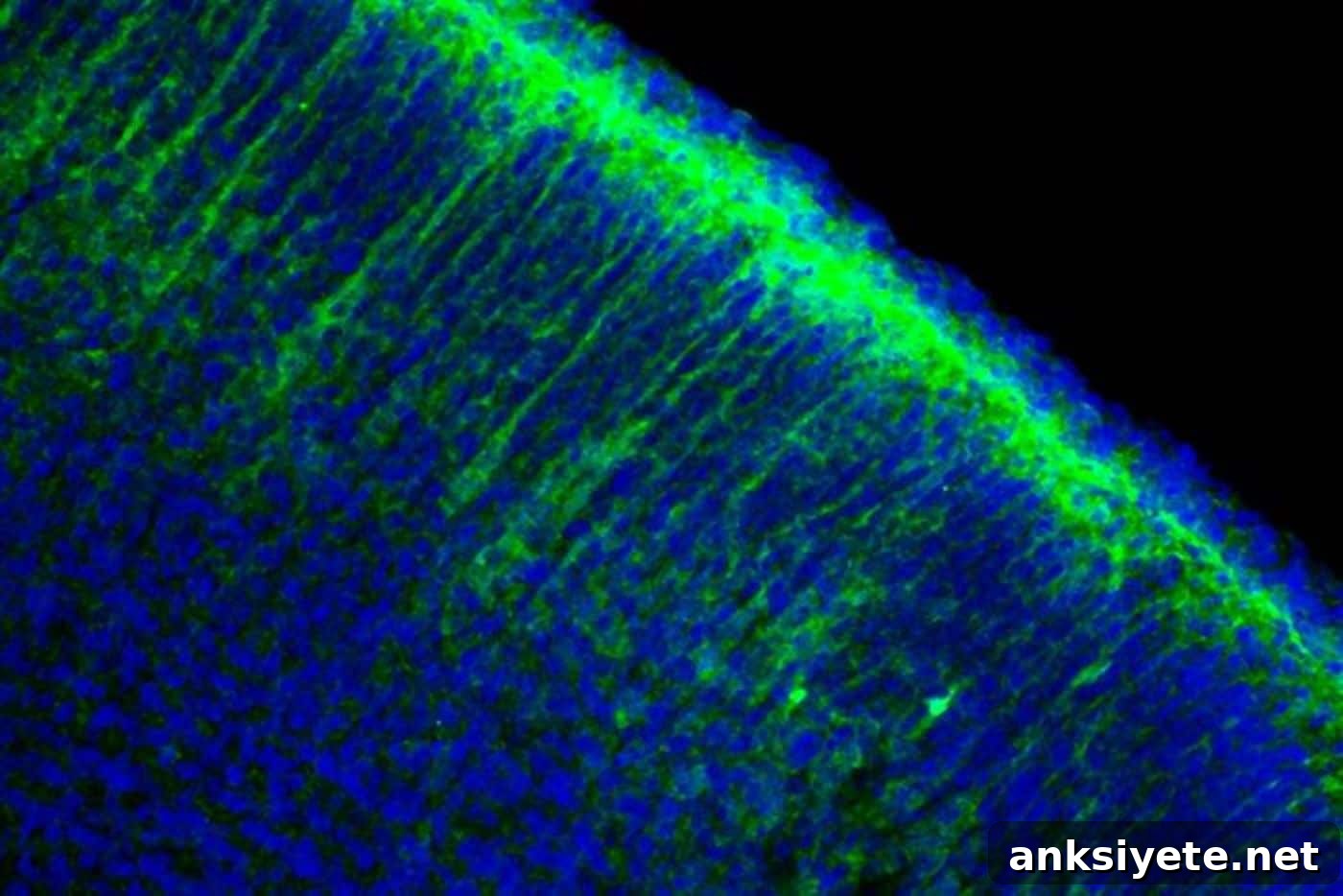
- Image credit: Jason Yi
- Original research (open access): Nature (Oct 1, 2026). Title: “Persistent neuronal stress signaling underlies Angelman syndrome phenotypes.” Authors: Kwang-Soo Kim, Cory Gardner, Alissa Cullen, Jalin A. Stelzer, Kevin Cho, Ashish Sharma, Mati T. Nemera, Travis Law, Huma Naz, Guoyan Zhao, Harrison W. Gabel, Gary J. Patti, Erik S. Musiek, Tae-Hyuk Ahn & Jason J. Yi.
- DOI: 10.1038/s41586-026-11165-4
Abstract
Persistent neuronal stress signaling underlies Angelman syndrome phenotypes
Angelman syndrome results from loss of UBE3A, which encodes an E3 ubiquitin ligase. The molecular links between UBE3A substrates and the disease phenotype have been unclear. Using gain- and loss-of-function UBE3A models and unbiased proteomics, the study identifies asparagine synthetase (ASNS) as a UBE3A target whose protein levels rise in Ube3a-null mouse brains and in human neurons.
Genetic correction of ASNS overabundance rescues microcephaly and many behavioral deficits in mice. Detailed molecular analysis shows that ASNS accumulation activates stress signaling and causes a global reduction in neuronal protein synthesis. These results suggest that loss of UBE3A traps neurons in a persistent stressed state, stunting neuronal growth during critical developmental periods and indicating that targeting ASNS and stress-response pathways may hold therapeutic potential for Angelman syndrome.